Navigating butter measurements can be surprisingly tricky, even for seasoned bakers. From understanding how many cups are in a stick to converting between ounces and grams, getting it right is crucial for perfect culinary creations. This comprehensive guide aims to demystify butter measurements, offering clear conversions, practical tips, and a free printable chart to ensure your baking is always a success.
Accurate ingredient measurements are the cornerstone of successful baking. Unlike cooking, where a pinch of this or a dash of that can often suffice, baking is a precise science. This is especially true when it comes to butter, an ingredient that plays a pivotal role in the texture, flavor, and structure of countless recipes, from rich bread puddings to chewy oatmeal fudge bars.
Why Accurate Butter Measurement is Essential for Baking Success
Butter is more than just a flavor enhancer; it’s a structural component in baking. Its fat content contributes to tenderness, richness, and moisture. In pastries, it creates flakiness; in cakes, it adds a tender crumb; and in cookies, it provides that desirable chewy or crisp texture. Errors in butter measurement can lead to:
- Dry or Tough Bakes: Too little butter means insufficient fat, resulting in a dry, crumbly, or tough product.
- Greasy or Flat Bakes: Too much butter can make items greasy, overly dense, or cause them to spread too much and become flat.
- Altered Texture: The delicate balance of ingredients is disrupted, affecting the desired chewiness, crispness, or rise of your baked goods.
Understanding the precise quantities required ensures consistent results and the perfect texture every time you bake.
Demystifying Butter Measurements: Sticks, Cups, Tablespoons & Beyond
One of the biggest sources of confusion stems from regional differences in how butter is packaged and measured. In many countries, butter is sold and measured by weight (grams), offering a straightforward approach. However, in the United States and Canada, butter is commonly sold in “sticks,” leading to a reliance on volumetric measurements like cups and tablespoons, which can be less intuitive. Let’s break down these common conversions.
How Many Cups in a Stick of Butter?
This is perhaps the most fundamental conversion for American bakers: One stick of butter equals 1/2 cup. This is a crucial measurement to commit to memory, as many recipes call for butter in cup increments. Understanding this baseline allows you to easily scale recipes up or down.
How Many Tablespoons in a Stick of Butter?
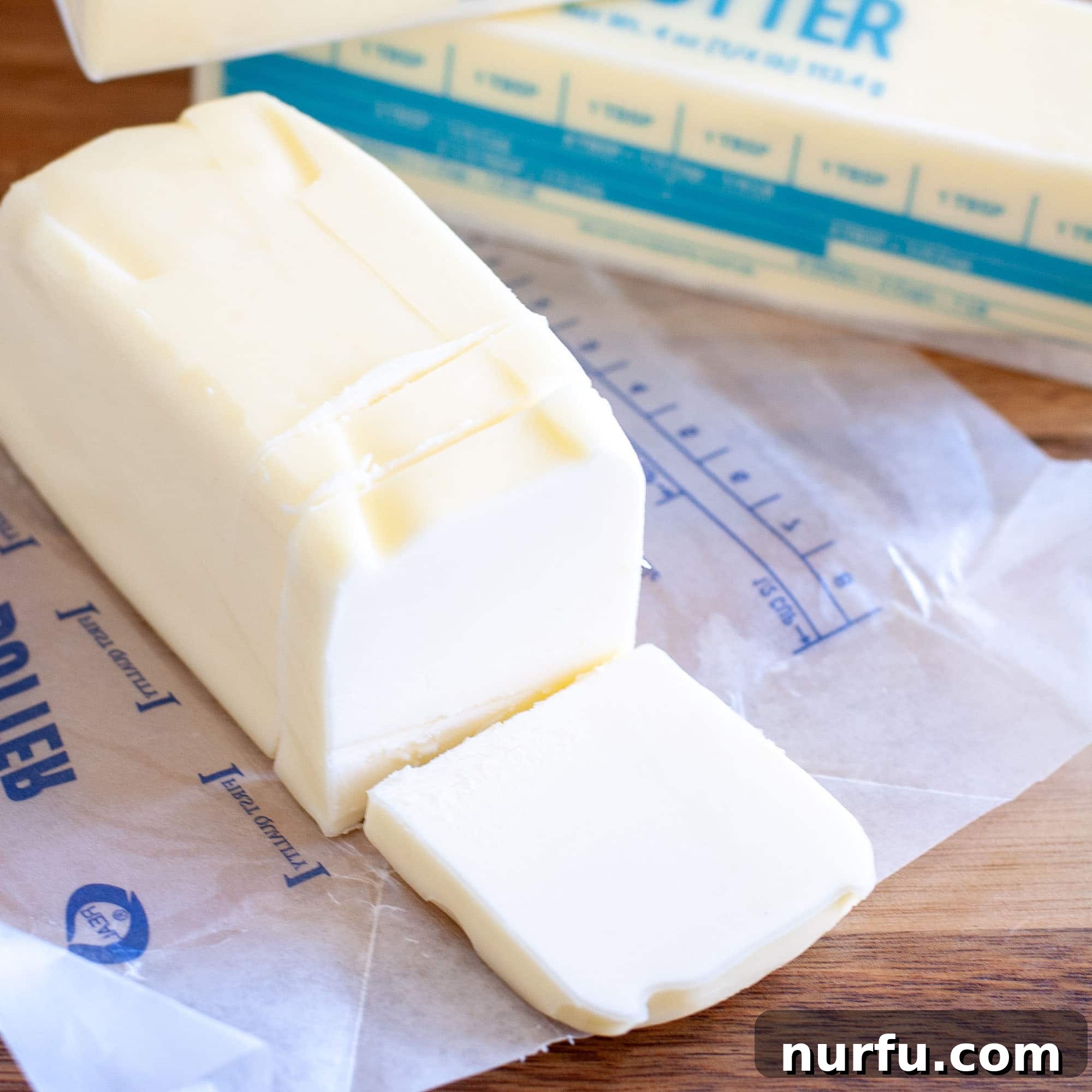
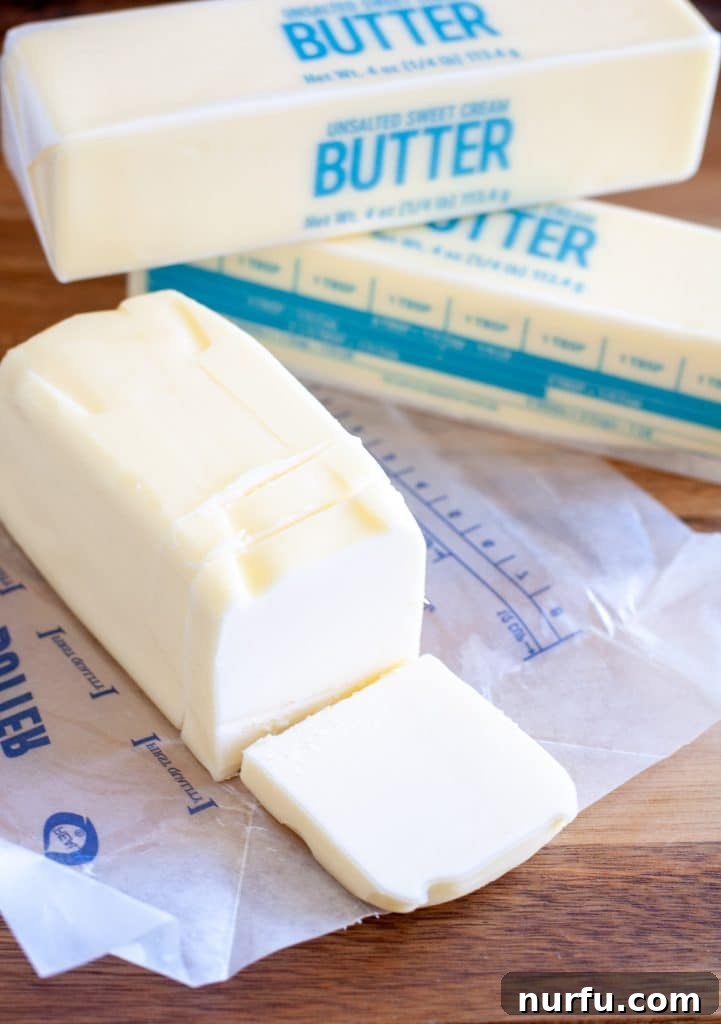
When a recipe requires smaller, more precise amounts, knowing the tablespoon conversion is incredibly useful. One stick of butter equals 8 tablespoons. This measurement is often printed on the butter wrapper itself, allowing for easy visual measurement by cutting directly on the marked lines.
How Many Ounces in a Stick of Butter?
While often used interchangeably with volume measurements, ounces refer to weight. One stick of butter weighs 4 ounces. This is particularly helpful when a recipe specifies weight, or when you need to convert to grams for international recipes.
How Many Grams in a Stick of Butter?
For bakers working with international recipes or those who prefer the precision of a kitchen scale, converting to grams is essential. One stick of butter is approximately 113 grams. This conversion is vital for seamless baking, especially when adapting recipes from different culinary traditions.
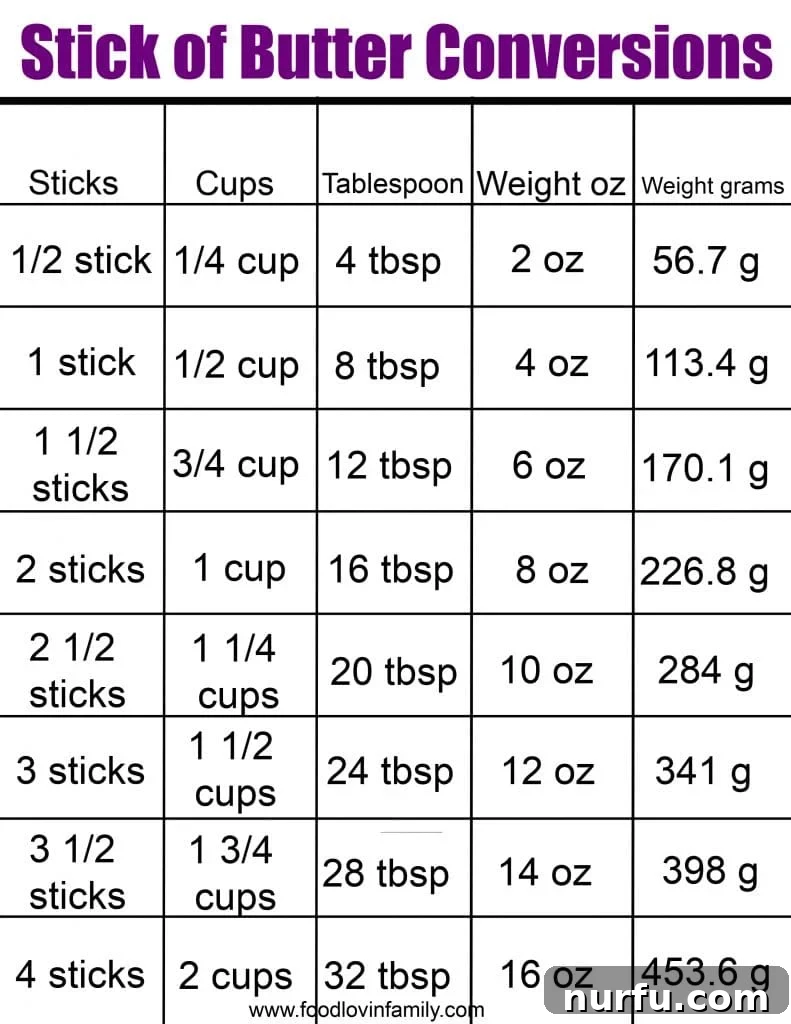
Download Your Free Printable Stick Of Butter Conversion Chart Here!
How Many Sticks of Butter in a Pound?
Butter is often sold in larger blocks, sometimes weighing a full pound. Understanding how a pound of butter breaks down into sticks, ounces, and cups is incredibly practical for bulk baking or larger recipes. A standard pound of butter typically consists of four individual sticks.
| Volume | Ounces | Pounds |
| 1 stick of butter | 4 oz | 1/4 pound |
| 2 sticks of butter | 8 oz | 1/2 pound |
| 3 sticks of butter | 12 oz | 3/4 pound |
| 4 sticks of butter | 16 oz | 1 pound |
Essential Tips for Accurate Butter Measurement
Beyond knowing the conversions, there are practical techniques to ensure you’re measuring butter correctly, regardless of its consistency.
Using the Butter Wrapper Markings
Most sticks of butter sold in the United States and Canada come with tablespoon and sometimes ounce measurements clearly marked on the wrapper. These lines serve as convenient guides. To measure, simply use a sharp knife to cut directly along the designated line for the amount you need. Always aim for a clean, straight cut for accuracy.
Measuring Softened or Melted Butter
Measuring butter that’s already softened or melted can be a bit trickier, as air pockets can affect volume in softened butter, and melted butter changes density. For softened butter, pack it firmly into a dry measuring cup or spoon, ensuring no air gaps, then level it off with a straight edge (like a knife or spatula). For melted butter, pour it into a liquid measuring cup and read at eye level.
The Water Displacement Method (Without a Scale)
If you need to measure a specific amount of butter but don’t have a scale or your stick butter isn’t marked, the water displacement method is a clever workaround, especially useful for solid butter:
- Fill a liquid measuring cup with water up to a mark that, when combined with your desired butter volume, will reach a clear higher mark. For example, if you need 1/4 cup of butter, fill the cup with 1/2 cup of water.
- Carefully add chunks of butter to the water until the water level rises to the desired total volume (e.g., from 1/2 cup to 3/4 cup for 1/4 cup butter). The difference in water level will be your butter amount.
- Pour out the water and butter, then proceed with your recipe.
The Ultimate Tool: A Kitchen Scale
While volumetric measurements are common, a kitchen scale offers the highest level of accuracy, especially for recipes that specify weights in grams or ounces. Using a scale eliminates variables like air pockets in softened butter or slight inconsistencies in measuring cups. Simply place your bowl on the scale, tare it to zero, and add butter until you reach the exact weight required. This is highly recommended for professional-level precision in baking.
Achieving the Perfect Butter Consistency: Softening and Melting
Many recipes call for butter at a specific temperature – usually softened or melted. Getting this right is as important as the measurement itself.
How to Soften Butter
The ideal method for softening butter is to leave it out at room temperature for about an hour. It should be pliable enough to leave an indentation when gently pressed but not oily or melted. If you’re in a rush, here are a few methods to speed up the process without melting it:
- Cut into Smaller Pieces: Slice the cold butter into 1-inch cubes. Spreading them out on a plate will expose more surface area to room temperature air, helping it soften much faster, usually within 15-30 minutes.
- Grate the Butter: Use a cheese grater to grate cold butter directly into your mixing bowl. The small shreds will soften almost instantly.
- Rolling Pin Method: Place the butter between two pieces of wax paper or parchment paper and roll it with a rolling pin. This flattens and warms the butter quickly, allowing it to soften in minutes.
Resist the Microwave for Softening! While tempting, using a microwave to soften butter is generally not recommended. Microwaves heat unevenly, often leaving some parts cold and others completely melted, which can negatively impact the texture of your final baked good.
How to Melt Butter
When a recipe specifically calls for melted butter, there are a couple of effective methods:
- Stovetop: Place butter in a small saucepan over low heat. Stir occasionally until fully melted. Remove from heat immediately to prevent browning, unless brown butter is desired.
- Microwave (with caution): If using a microwave, cut the butter into pieces and place it in a microwave-safe bowl. Microwave in short bursts (15-30 seconds), stirring in between, until just melted. Be careful not to overheat, which can cause it to separate.
Salted vs. Unsalted Butter: A Baker’s Choice
Most baking recipes will specify either salted or unsalted butter. As a general rule, it is always recommended to use unsalted butter unless a recipe explicitly calls for salted.
Here’s why:
- Control Over Salt Content: Unsalted butter allows you to precisely control the amount of salt in your recipe. Different brands of salted butter contain varying amounts of salt, making it difficult to achieve consistent results.
- Flavor Balance: Salt plays a crucial role in enhancing flavors and balancing sweetness. Using unsalted butter ensures that the salt you add serves its intended purpose without making your baked goods too salty.
While salted butter might be convenient for spreading on toast or in some savory dishes, for the precision of baking, stick with unsalted and add salt separately according to the recipe’s instructions.
Storing Butter for Freshness
Proper storage ensures your butter remains fresh and ready for baking. Butter can be kept in the refrigerator for several weeks (check the expiry date on the package). For longer storage, butter freezes exceptionally well for up to 6-9 months. Wrap it tightly in its original packaging and then in an additional layer of plastic wrap or foil to prevent freezer burn and absorption of other food odors.
Conclusion: Bake with Confidence
Mastering butter measurements is a fundamental skill that will elevate your baking. While knowing the key conversions (1 stick = 1/2 cup = 8 tablespoons = 4 ounces = 113 grams) is essential, understanding the nuances of different measurement methods and butter consistencies will truly set you up for success. Always remember, for the most accurate results, especially with intricate recipes or for global conversions, a kitchen scale is your best friend.
Armed with this knowledge, you can approach any recipe with confidence, knowing you’re measuring butter accurately every time. Happy baking!
Be sure to also check out our other helpful kitchen measurement guides: How Many Teaspoons in a Tablespoon and How Many Cups In A Quart for more free printable kitchen measurement conversion charts.