
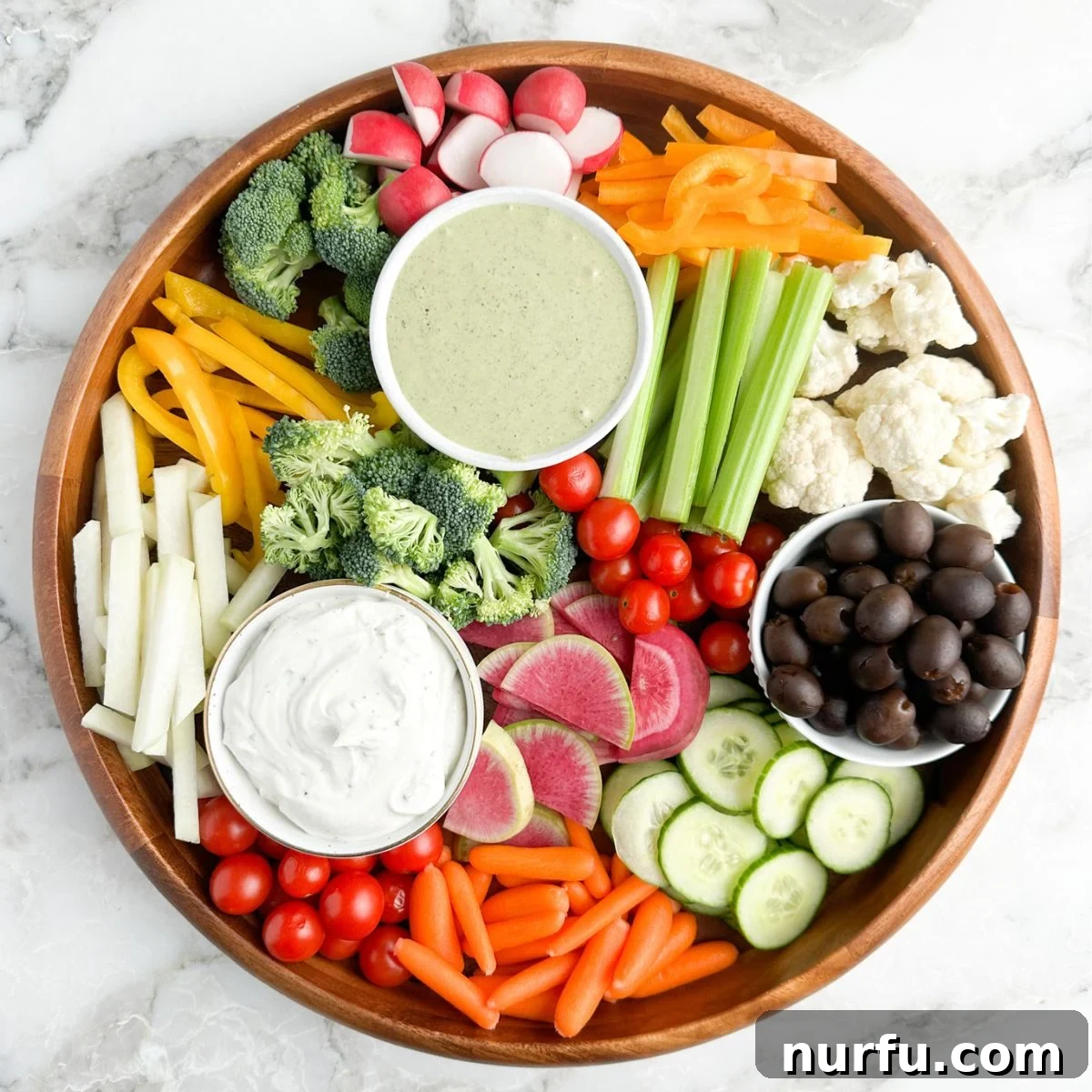
Creating a beautiful and delicious homemade veggie tray is far simpler than you might imagine. Forget the expense of store-bought platters; crafting your own allows for complete customization, ensuring a vibrant assortment of fresh vegetables and delectable dips that perfectly suit your taste and your guests’ preferences. Whether you’re hosting a casual get-together, a holiday party, a potluck, or just want a healthy snack option readily available, a well-prepared vegetable platter is always a crowd-pleaser.
This versatile appetizer pairs wonderfully with other popular finger foods, enhancing any spread. Imagine serving it alongside savory bacon-wrapped water chestnuts, classic sausage balls, delightful vegetable pinwheels, creamy stuffed celery, or satisfying turkey roll-ups. For an even more elaborate presentation, you could feature it alongside an elegant artisanal cheese board or a robust charcuterie board, offering a fresh, light contrast to richer fare. Learning how to make a veggie tray is a valuable skill for any home entertainer looking to impress with minimal effort.
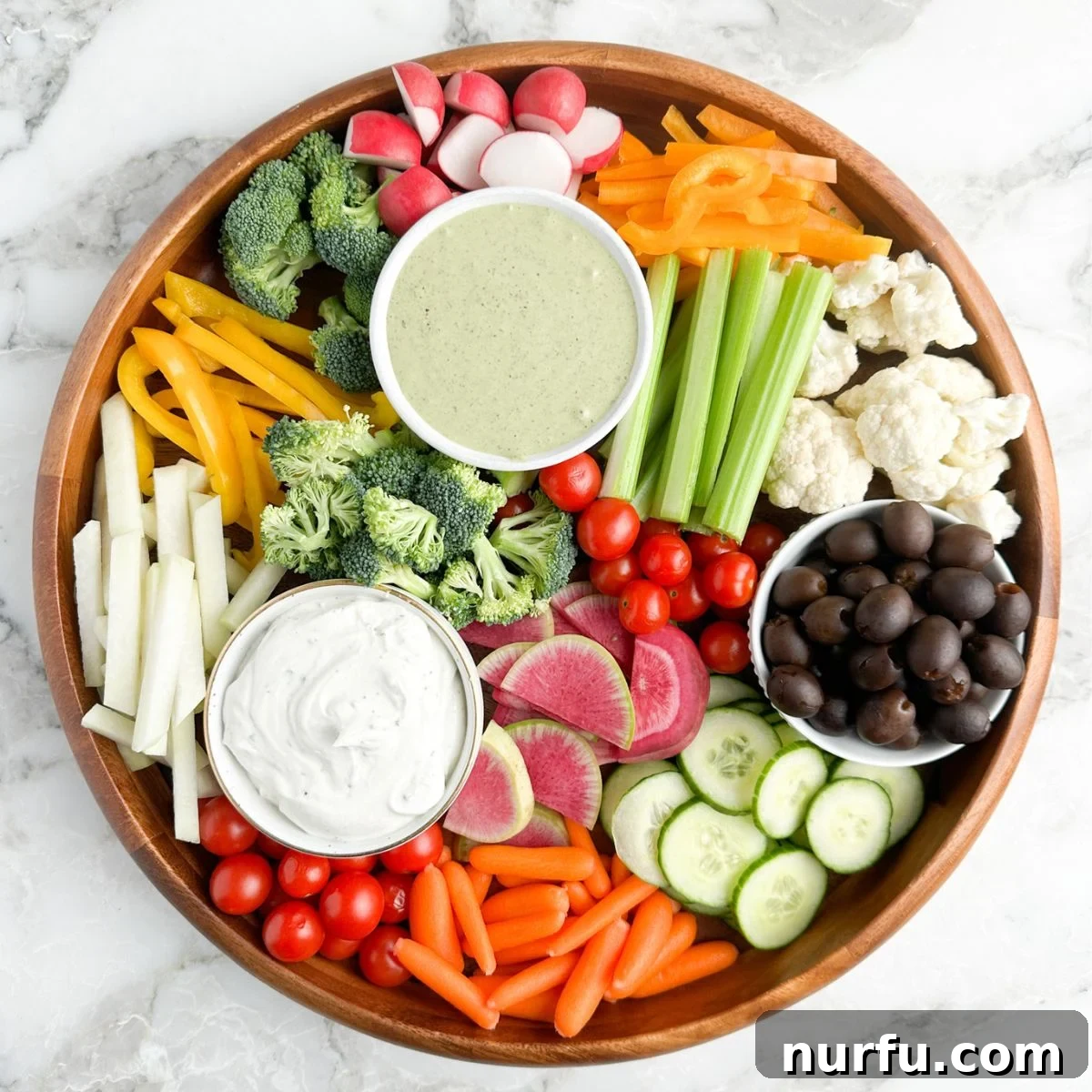
Vegetable trays are truly an ideal appetizer for virtually any event. Their appeal lies in their beautiful presentation, satisfying crunch, and refreshing taste. From festive holiday gatherings and birthday celebrations to casual backyard barbecues and game-day parties, a generous spread of crisp, colorful veggies and flavorful dips consistently disappears fast. Beyond being a tasty addition to your party menu, a fresh vegetable platter also offers a wholesome and nutritious option for guests, ensuring there’s something healthy for everyone to enjoy. It’s a simple way to add essential vitamins and fiber to your entertaining spread.
There’s no need to spend extra money on pre-made, often less-than-fresh, vegetable platters from the grocery store. With just a little planning, you can easily assemble your own impressive and appetizing homemade veggie platter in a fraction of the time, and with the added benefit of choosing only the freshest, highest-quality produce and your absolute favorite dip flavors. This guide will walk you through everything you need to know, from selecting the best ingredients to arranging a stunning display, making you a pro at crafting the perfect crudite platter for any occasion.
Table of Contents
- Why Choose a Homemade Veggie Tray?
- Ingredients Needed for Your Perfect Platter
- How to Make a Veggie Tray: Step-by-Step Guide
- Tips for a Great Platter: Presentation and Preparation
- Creative Veggie Tray Ideas
- Delectable Vegetable Platter Dip Options
- How to Store Your Veggie Tray
- More Easy Appetizer Recipes
- How To Make A Veggie Tray Recipe Card
Why Choose a Homemade Veggie Tray?
Beyond the obvious cost savings, making your own veggie tray offers numerous advantages. You have complete control over the freshness and quality of your ingredients, ensuring your platter is packed with peak-season produce. This also allows you to cater to specific dietary needs or preferences, such as organic options or allergen-free dips. Furthermore, the creative process of selecting and arranging vegetables and dips can be incredibly rewarding, letting you design a visually appealing centerpiece that reflects your personal style. It’s an opportunity to experiment with different flavor combinations and textures, ultimately creating a more memorable and personalized appetizer than anything you could buy pre-made.
Ingredients Needed for Your Perfect Platter
The beauty of a vegetable platter, often called a crudités platter, lies in its incredible versatility and customizability. You are the chef and the artist! For a truly show-stopping display, focus on selecting a wide array of vegetables that offer contrasting colors, diverse textures, and varying shapes. This not only makes your platter visually appealing but also ensures a delightful eating experience for your guests.
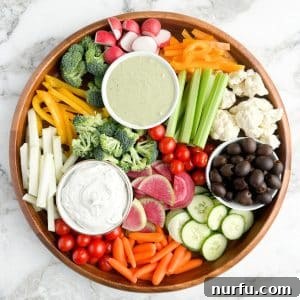
For our example crudités platter, we’ve chosen a vibrant mix of raw vegetables, including:
- Bell Peppers: Red and yellow bell peppers add sweetness, crunch, and bold color. Slice them into strips for easy dipping.
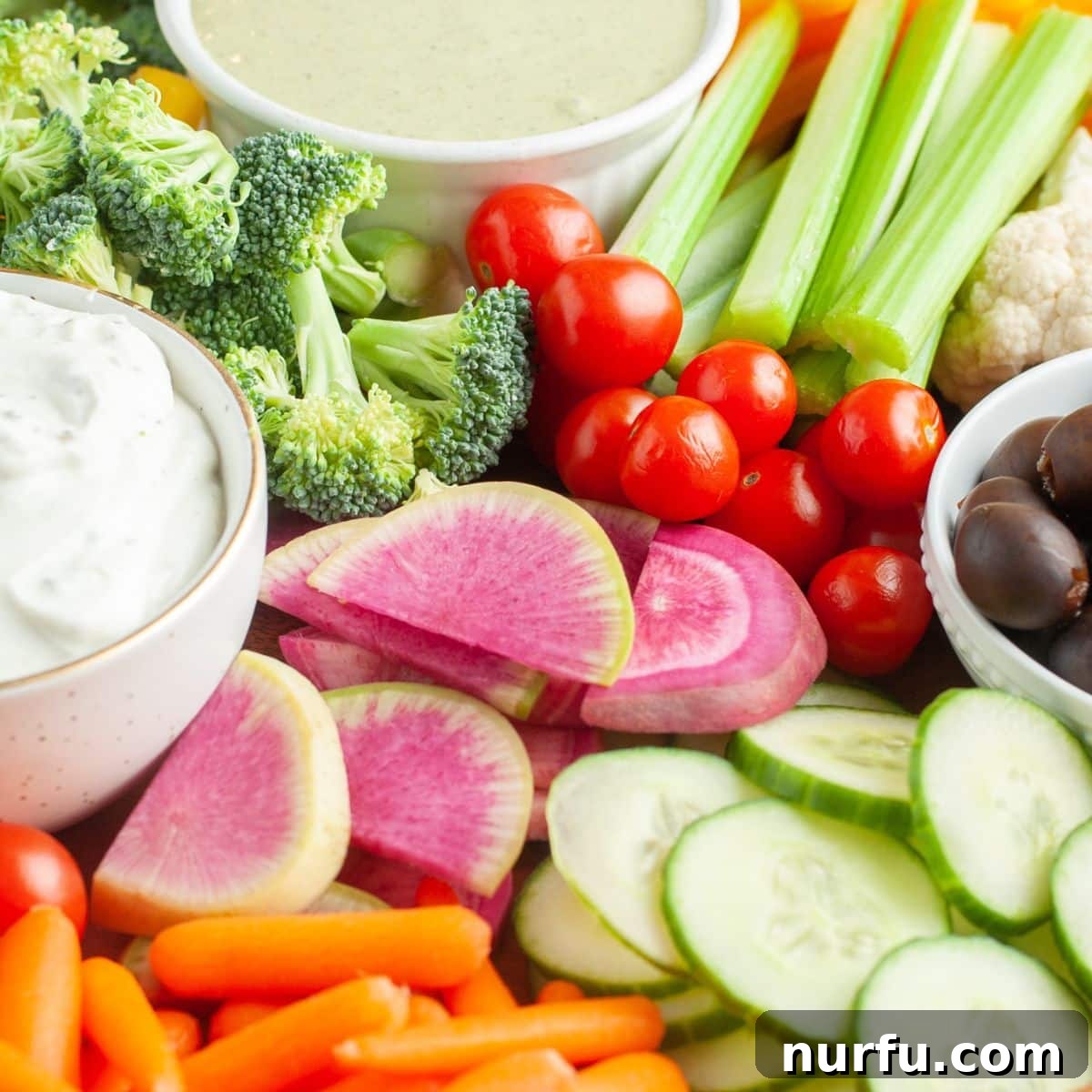
- Radishes: Offer a peppery bite and a beautiful pop of color. Try traditional red radishes and unique watermelon radishes for stunning pink interiors.
- Celery: Classic crunchy sticks, perfect for scooping up thicker dips.
- Baby Carrots: Sweet, convenient, and a beloved staple on any veggie tray.
- Cucumbers: Refreshing slices or spears provide a cool, crisp texture.
- Broccoli Florets: Nutritious, vibrant green, and offer a satisfying crunch.
- Cauliflower Florets: A milder alternative to broccoli, providing a lovely white contrast.
- Cherry Tomatoes: Bursting with flavor and adding a juicy, vibrant red element.
- Black Olives: A briny, savory addition that complements the fresh vegetables beautifully.
In addition to this colorful selection, we recommend offering at least two different dips to cater to varied tastes. This ensures there’s something for everyone to enjoy and adds another layer of flavor and interest to your fresh veggie tray.
How to Make a Veggie Tray: Step-by-Step Guide
Assembling an eye-catching and delicious veggie tray is a straightforward process that can be broken down into three simple steps. Following these guidelines will help you create a platter that’s both appealing and easy to enjoy.
Step One: Select and Prepare Your Vegetables
Begin by deciding which vegetables you’d like to feature. The key to an attractive platter is variety in color, shape, and texture. Think about the rainbow! Aim for a mix of reds (bell peppers, cherry tomatoes, radishes), oranges (carrots, mini bell peppers), yellows (yellow bell peppers, corn kernels), greens (broccoli, cucumber, celery, sugar snap peas), and whites/purples (cauliflower, jicama). Once you’ve made your selections, thoroughly clean all vegetables under cool running water. Pat them dry to ensure dips adhere well. Then, prepare them by cutting them into bite-sized pieces or sticks that are easy to pick up and dip. For instance, bell peppers can be sliced into long strips, cucumbers into rounds or spears, and florets of broccoli and cauliflower should be small enough for single servings.
Step Two: Choose Your Dips
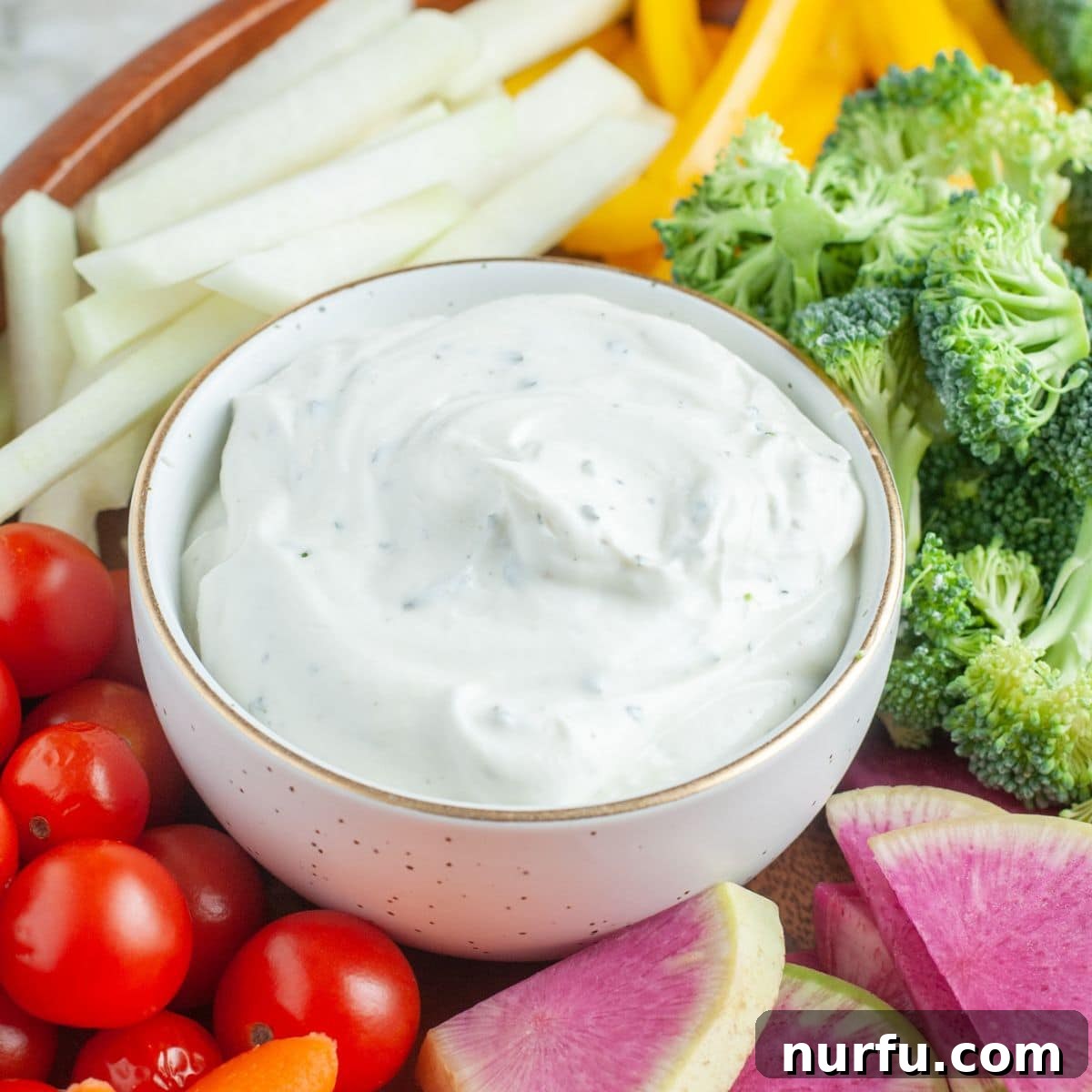
Dips are the heart of any vegetable platter, adding moisture, flavor, and excitement. We highly recommend offering at least two different dip options to provide variety for your guests. Consider a creamy, classic dip like ranch or a simple homemade yogurt-dill dip, alongside something bolder like hummus, a spicy black bean dip, or a tangy blue cheese dressing. Feel free to serve as few or as many as you like, depending on the size of your gathering and the adventurousness of your guests. Offering diverse flavors ensures there’s a perfect pairing for every vegetable and palate.
Step Three: Arrange for Visual Appeal
Now for the fun part: assembly! Start by spooning your chosen dips into small, attractive serving bowls. Place these bowls strategically on your main serving tray or platter first. Often, placing them in the center or spaced out creates natural anchors for your vegetable arrangements. Next, begin arranging the prepared vegetables around the dip bowls. Don’t just pile them! Take a moment to think about color contrast and texture. For example, place red bell pepper strips next to green cucumber slices, or bright orange carrots next to white cauliflower florets. Create distinct sections for each vegetable, fanning them out or arranging them in neat rows for a polished look. Utilizing a variety of vegetables in different shapes and colors will add significant interest and visual appeal to your finished veggie tray, making it irresistible.
Tips for a Great Platter: Presentation and Preparation
To elevate your veggie tray from simple to spectacular, consider these expert tips for both presentation and preparation. A thoughtful approach ensures your platter is not only delicious but also a feast for the eyes.
- Choosing the Right Platter: The vessel for your vegetables plays a significant role in the overall aesthetic. Select a platter that suits the number of guests you’ll be serving. For smaller gatherings, a compact round or square platter works perfectly. For larger parties, a rectangular tray, a large cutting board, or even a clean sheet pan lined with parchment paper can serve as an excellent base. Consider materials like ceramic, wood, slate, or glass to complement your table setting. The goal is to choose a size that allows for a generous, yet uncrowded, display of vegetables and dips.
- Make Ahead for Stress-Free Entertaining: One of the best aspects of a veggie tray is its make-ahead potential. You can prepare most components the day before your event. Wash and cut all your chosen vegetables, then store them in separate airtight containers or zip-top bags in the refrigerator. Prepare your dips as well, transferring them to airtight containers. On the day of your gathering, simply arrange the chilled vegetables and dips on your chosen platter. This crucial step saves valuable time and minimizes last-minute stress.
- Estimating Serving Sizes: To ensure you have enough fresh vegetables for all your guests, a good rule of thumb is to estimate about 1 cup of prepared vegetables per person. If your veggie tray is one of many appetizers, you might slightly reduce this estimate. If it’s a primary healthy snack, lean towards the higher end. It’s always better to have a little extra than to run out!
- Creative Dip Options for Every Palate: Dips are fundamental to a great vegetable platter. While store-bought bottled dressings (like ranch or blue cheese) are convenient, don’t shy away from simple homemade options. A classic ranch dip can be effortlessly made by combining sour cream or Greek yogurt with a dry ranch seasoning packet. Other quick ideas include blending cream cheese with herbs, making a quick hummus with canned chickpeas, or even a simple vinaigrette. Offer a variety of textures and flavors – creamy, tangy, spicy, and herbaceous – to cater to all tastes.
- Garnish for a Professional Touch: A simple garnish can elevate your veggie tray. A sprinkle of fresh herbs (like dill, parsley, or chives) over the dips, a few lemon wedges for a spritz of brightness, or even a scattering of edible flowers can make your platter look professionally prepared.
Creative Veggie Tray Ideas
The possibilities for veggie tray ingredients are virtually endless, allowing you to tailor your platter to themes, seasons, or personal preferences. Here are even more ideas to inspire your next vegetable creation:
- Green Vegetables: Expand beyond the usual! Think crisp green bell pepper strips, crunchy broccoli florets, sweet sugar snap peas, refreshing celery sticks, cool cucumber slices, delicate asparagus spears (blanched if preferred), or even vibrant green beans.
- Red Vegetables: Add a festive touch with bright red peppers, sweet mini peppers, juicy cherry tomatoes, crisp radishes, and visually striking watermelon radishes. Red endive leaves can also offer a sophisticated serving cup for dips.
- Yellow and Orange Vegetables: Inject sunshine with yellow bell peppers, tiny yellow cherry tomatoes, classic carrot sticks, or convenient baby carrots. Consider sweet potato sticks (blanched or roasted lightly) for a heartier option.
- White, Purple, and Other Hues: Include beautiful cauliflower florets, crunchy jicama strips, an assortment of black and green olives, purple cabbage wedges for a pop of color, or even tender artichoke hearts (marinated or fresh).
- Beyond Just Veggies – Adding Accompaniments: To make your platter even more substantial and interesting, feel free to incorporate other dippable elements:
- Cheese and Crackers: Add cubes of cheddar, provolone, or Monterey Jack cheese alongside a selection of your favorite crackers.
- Bread: Offer slices of baguette or pita bread, toasted or fresh.
- Nuts and Dried Fruits: A small bowl of mixed nuts or dried cranberries/apricots can add a different texture and flavor profile.
- Pickled Items: Cornichons, pickled asparagus, or even pickled green beans add a tangy counterpoint.
- Seasonal Themes:
- Spring: Focus on asparagus, snap peas, tender radishes, and baby carrots.
- Summer: Highlight cherry tomatoes, cucumbers, bell peppers, and maybe some fresh zucchini or yellow squash.
- Fall: Consider blanched green beans, colorful bell peppers, and perhaps some roasted butternut squash cubes (chilled).
- Winter: Offer crisp endive, cauliflower, and a medley of root vegetables.
Delectable Vegetable Platter Dip Options
The right dip can transform fresh vegetables into an irresistible snack. While a simple veggie dip is always a hit, expanding your dip repertoire will ensure your platter caters to every taste. Here are some of our favorite dips that pair beautifully with a variety of vegetables, along with suggestions for their appeal:
- Ranch Dip: A timeless classic, loved for its creamy texture and savory herb flavor. It’s universally popular and pairs well with almost any vegetable, from carrots to broccoli.
- Avocado Lime Dip: A refreshing and zesty option that offers a creamy, slightly tangy profile. The avocado provides a rich, healthy fat, while lime adds a bright kick. Excellent with cucumbers and bell peppers.
- Blue Cheese Dip: For those who enjoy a bold, pungent flavor, blue cheese dip offers a creamy, tangy, and distinctively savory experience. It pairs wonderfully with celery and carrots.
- Spinach Dip: A hearty and flavorful dip, often made with cream cheese or sour cream, spinach, and various seasonings. It’s substantial and offers a different texture, great with bell peppers and bread.
- Bagel Dip: Typically a creamy, herby, and oniony dip reminiscent of a savory cream cheese spread. It’s rich and comforting, perfect for carrots, celery, and crackers.
- French Onion Dip: A beloved classic made from sour cream and dehydrated onion soup mix, or caramelized onions. It’s savory, slightly sweet, and incredibly addictive, fantastic with crunchy vegetables like potato chips (if you allow them!) or carrot sticks.
- Hummus: A Mediterranean staple, this chickpea-based dip is healthy, creamy, and comes in many flavors (classic, roasted red pepper, garlic). It’s a great vegan option.
- Guacamole: Fresh, vibrant, and packed with healthy fats, guacamole is always a hit. Serve with bell peppers, jicama, or even blanched green beans.
- Yogurt-Dill Dip: A light and tangy option made with Greek yogurt, fresh dill, lemon juice, and garlic. It’s refreshing and complements lighter vegetables.
- Spicy Feta Dip: For those who like a kick, blend feta cheese with roasted red peppers and a touch of chili.
How to Store Your Veggie Tray
Proper storage is essential to keep your veggie platter fresh, crisp, and delicious for as long as possible. If you’ve prepared elements of your tray in advance or have leftovers, follow these guidelines:
- Dips: Always transfer any leftover dips into clean, airtight containers. Cover them tightly with a lid or plastic wrap, pressing the wrap directly onto the surface of the dip to prevent a skin from forming, especially for creamy dips. Store them in the refrigerator. Most dairy-based dips will last 3-5 days, while hummus and guacamole might last a bit less once exposed to air.
- Vegetables: The key to keeping vegetables crisp is to minimize exposure to air and moisture. Place different types of cut vegetables into separate airtight containers or zip-top bags. If some vegetables, like carrot sticks or celery, tend to dry out, you can place a damp paper towel in the container before sealing. Store all vegetables in the refrigerator. Most cut vegetables will remain fresh for 2-3 days, though some, like cucumbers, might become slightly softer over time.
If you find yourself with an abundance of leftover vegetables, don’t let them go to waste! Get creative in the kitchen. They are perfect additions to salads, stir-fries, omelets, or even roasted vegetable medleys. For an exciting new dish, try incorporating them into a delicious veggie pizza dip, transforming your leftover crudités into another delightful appetizer.
What are your absolute favorite vegetables to include on a veggie tray? Share your ideas and creations in the comments below!
More Easy Appetizer Recipes
If you’re looking to expand your appetizer repertoire beyond the classic veggie tray, here are some other fantastic and easy-to-make recipes that are perfect for any gathering:
- BLT Dip Recipe: All the beloved flavors of a classic BLT sandwich transformed into a creamy, savory dip. It’s incredibly addictive and perfect with crackers or toasted bread.
- Slow Cooker Bourbon Meatballs: Tender meatballs simmered in a rich, sweet, and tangy bourbon sauce. These are effortlessly prepared in a slow cooker, making them ideal for entertaining with minimal fuss.
- Stuffed Mini Peppers: Colorful mini bell peppers filled with a creamy, cheesy mixture and baked until tender. They’re bite-sized, flavorful, and always a hit at parties.
How To Make A Veggie Tray
Ingredients
- 1 red bell pepper, sliced into strips
- 1 yellow bell pepper, sliced into strips
- 16 ounces baby carrots
- 16 ounces radishes
- 4 celery stalks, cut into sticks
- 1 cucumber, sliced
- 8 ounces black olives
- 16 ounces cherry tomatoes
- 1 cup broccoli, chopped
- 1 cup cauliflower, chopped
- 2-3 favorite dips
Instructions
-
Place dips in small bowls. If using olives, place them in a small bowl. Arrange bowls on a serving tray or platter.
-
Arrange cleaned and cut vegetables around the bowls of dips and olives.
-
Serve or cover and refrigerate until ready to serve.
Notes
- Platter: Choose a platter according to how many guests you will be serving. Round, rectangle, or square platters all work well. Even a sheet pan or large cutting board will work.
- Make ahead: You can prepare the dips and cut the vegetables the day before serving. When you are ready, assemble on the platter.
- Serving: You can estimate about 1 cup of vegetables per person.
- Dips: Try using bottled dressings or simply combine sour cream and a seasoning packet of ranch for a simple ranch dip.
Nutrition
Carbohydrates: 9g |
Protein: 2g |
Fat: 3g |
Saturated Fat: 0.4g |
Polyunsaturated Fat: 0.4g |
Monounsaturated Fat: 2g |
Sodium: 360mg |
Potassium: 408mg |
Fiber: 3g |
Sugar: 5g |
Vitamin A: 5917IU |
Vitamin C: 40mg |
Calcium: 51mg |
Iron: 1mg
Nutrition information is automatically calculated, so should only be used as an approximation.