
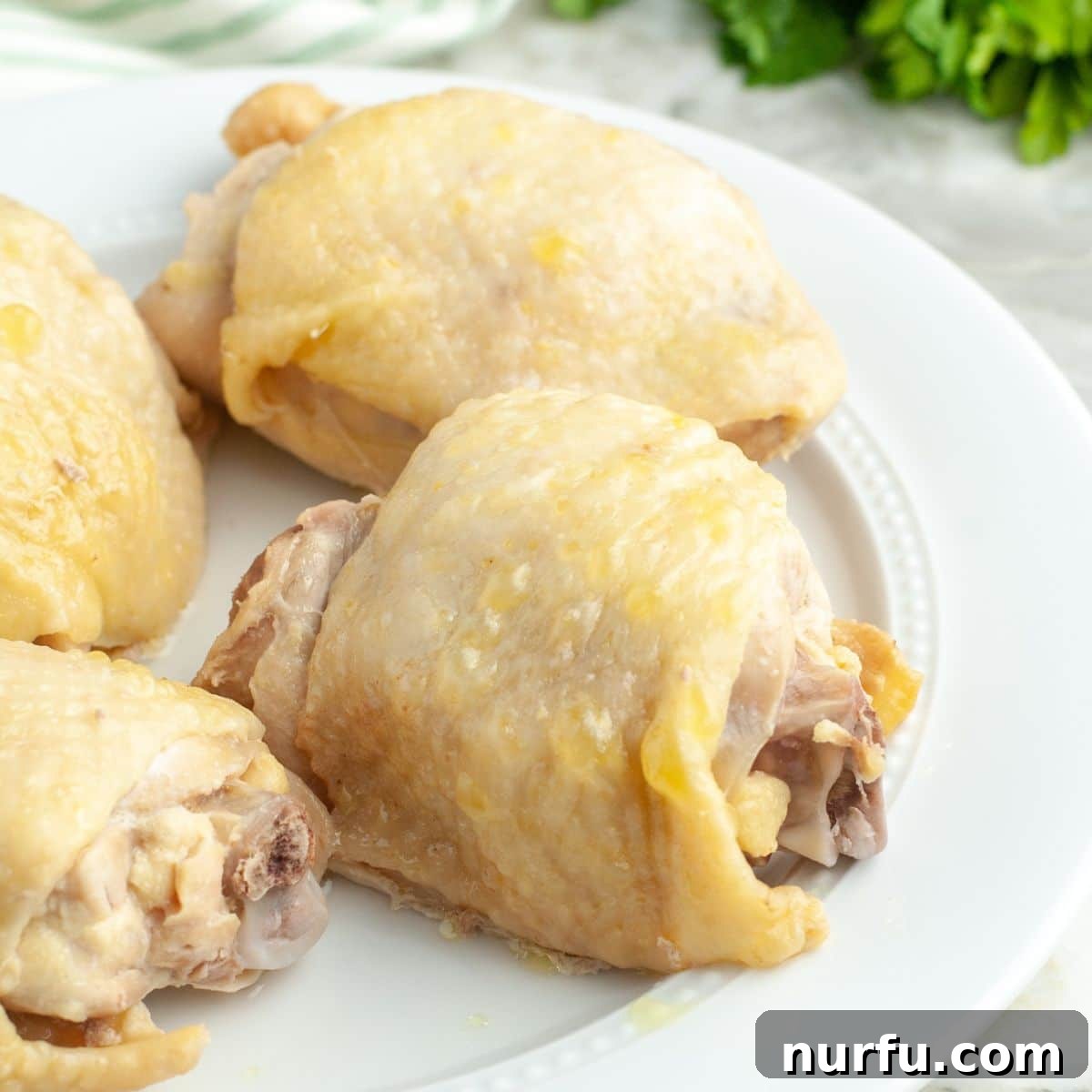
Boiling chicken thighs is a remarkably simple yet incredibly effective cooking method that yields juicy, flavorful, and tender results every time. Whether you’re preparing a quick weeknight meal, looking for versatile protein for meal prep, or simply want to master a fundamental cooking technique, understanding how long to boil chicken thighs is key to culinary success. This comprehensive guide will walk you through everything you need to know, ensuring your boiled chicken thighs are not just cooked, but perfectly delicious and ready for a multitude of recipes.
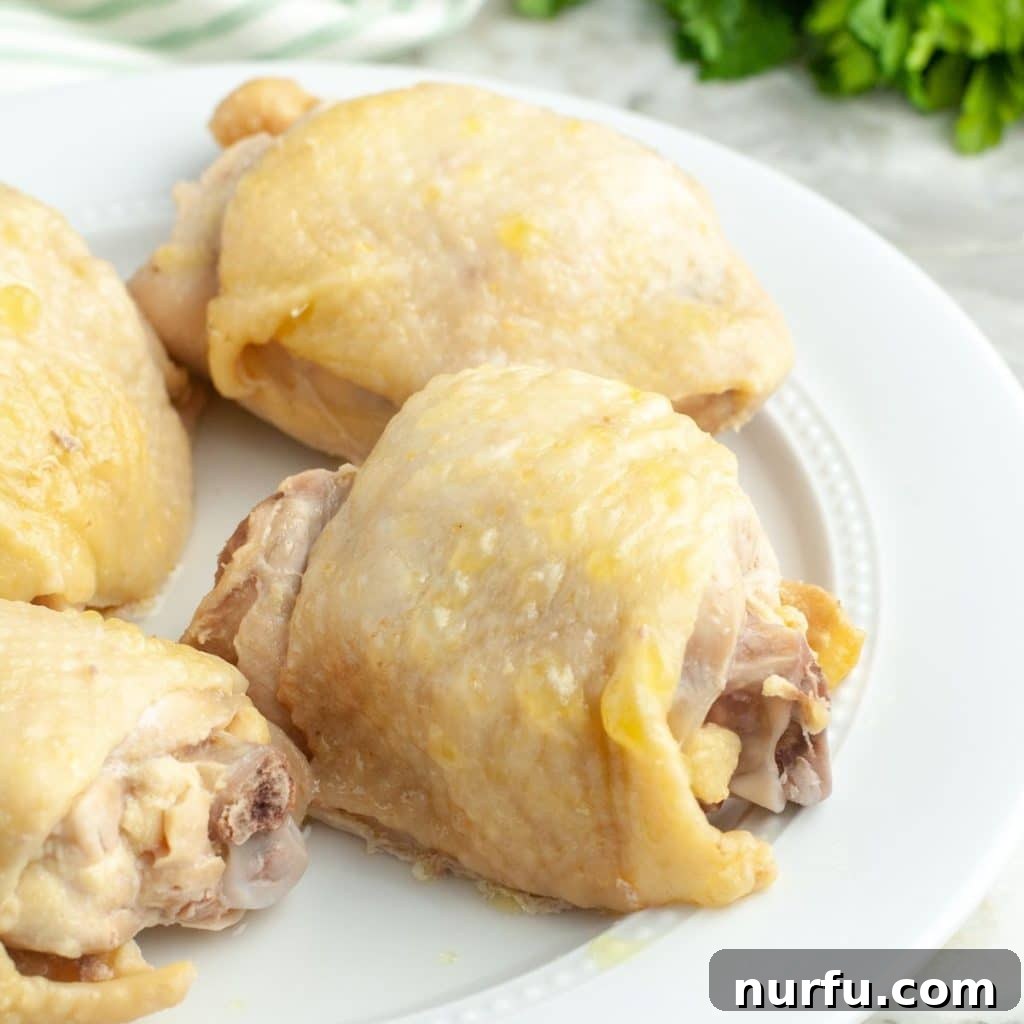
Table of Contents
- Why Boil Chicken Thighs?
- Understanding Chicken Thighs
- Essential Ingredients
- How Long To Boil Chicken Thighs: A Detailed Guide
- Step-by-Step Boiling Instructions
- Recipe Tips for Perfect Boiled Chicken Thighs
- Creative Ways to Use Boiled Chicken Thighs
- How to Store Leftover Boiled Chicken Thighs
- Frequently Asked Questions (FAQ)
- More Chicken Recipes
- Simple Boiled Chicken Thighs Recipe
Why Boil Chicken Thighs?
While there are countless ways to cook chicken thighs, from baking to air frying and even pressure cooking in an Instant Pot, boiling stands out as an exceptionally straightforward and versatile method. It’s often overlooked, but it offers numerous advantages that make it a fantastic choice for home cooks of all skill levels.
- Effortlessly Easy: Boiling chicken thighs requires minimal equipment and simple steps. You essentially need chicken, water, and seasoning. It’s almost impossible to mess up, making it perfect for beginners or busy weeknights.
- Surprisingly Fast: From start to finish, this method can have flavorful chicken ready in as little as 30 minutes, freeing up your time for other tasks or quick meal assembly.
- Incredibly Flavorful: Chicken thighs, being dark meat, are naturally more forgiving and boast a richer flavor profile than white meat like chicken breast. Boiling them gently in seasoned water helps retain their succulence and enhances their inherent taste, resulting in wonderfully juicy meat every time.
- Health-Conscious Cooking: Boiling is a low-fat cooking method that doesn’t require added oils, making it a healthy option for those watching their diet.
- Ideal for Meal Prep: Boiled chicken thighs are excellent for preparing in advance. Once cooked, they can be shredded, diced, or sliced and stored, ready to be incorporated into various meals throughout the week.
- Budget-Friendly: Chicken thighs are generally more affordable than chicken breasts, making this method an economical way to prepare a delicious and versatile protein.
Understanding Chicken Thighs
Chicken thighs are a popular cut of poultry, prized for their rich flavor and tender texture. Their higher fat content compared to chicken breasts makes them less prone to drying out during cooking, which is a huge advantage for boiling. They come in a few common forms, each with slightly different cooking considerations:
- Bone-in, Skin-on Chicken Thighs: These are the most flavorful option. The bone contributes to deeper flavor in the cooking liquid and helps the meat cook more evenly. The skin, while often removed before eating or cooking for a healthier option, can be crisped up after boiling for added texture and richness. They require a longer boiling time due to the bone.
- Boneless, Skinless Chicken Thighs: These are incredibly convenient for quick meals and recipes where you need pre-portioned meat without extra fuss. They cook faster than their bone-in counterparts and are easier to shred or dice for various dishes. While slightly less flavorful in the broth, they remain juicy due to the dark meat’s natural moisture.
No matter which type you choose, ensuring proper cooking is paramount for both safety and taste. The beauty of boiling is how consistently it delivers tender results, making chicken thighs a staple in many kitchens.
Essential Ingredients
The simplicity of boiled chicken thighs means you don’t need a long list of ingredients. The key is quality chicken and thoughtful seasoning to elevate the flavor of both the meat and the resulting broth.
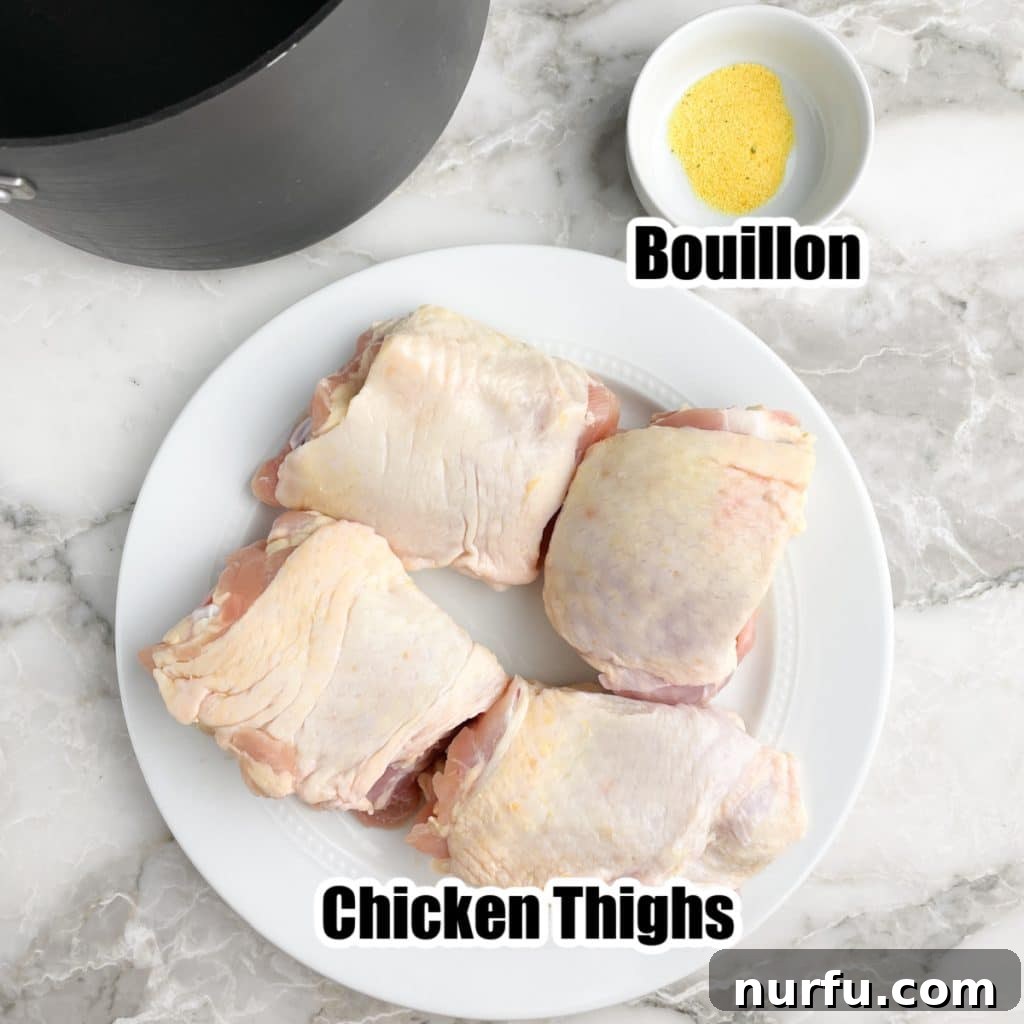
- Chicken Thighs: You can use either bone-in, skin-on chicken thighs or boneless, skinless chicken thighs. Adjust cooking times accordingly. For the best flavor, aim for thighs of similar size to ensure even cooking.
- Seasoning: A good seasoning blend is crucial. We often use chicken bouillon granules for a robust, savory base. Other excellent options include:
- Chicken Bouillon Cubes: One cube typically replaces one tablespoon of granules.
- Salt and Ground Black Pepper: A foundational seasoning that always works.
- Garlic Powder and Onion Powder: These aromatic powders add depth without needing fresh ingredients.
- Poultry Seasoning: A blend of herbs and spices specifically designed for chicken.
- Fresh Herbs: Sprigs of fresh thyme, rosemary, bay leaves, or parsley can infuse wonderful aromas and flavors into the chicken and broth.
- Vegetables & Aromatics: Adding half an onion, a few celery stalks, or a carrot to the boiling water will significantly enhance the flavor of your chicken and create a richer broth.
- Water: Enough to fully submerge the chicken thighs. This will become your flavorful chicken broth!
How Long To Boil Chicken Thighs: A Detailed Guide
The precise cooking time for chicken thighs depends primarily on whether they are bone-in or boneless, as well as their size. Always prioritize food safety by ensuring the internal temperature reaches 165°F (74°C) using an instant-read meat thermometer.
For Bone-In, Skin-on Chicken Thighs: These typically require about 30 minutes of boiling time. If your thighs are particularly large or exceptionally thick, they might need an extra 5-10 minutes. The bone acts as an insulator, slowing down the cooking process slightly.
For Boneless, Skinless Chicken Thighs: These cook much faster, usually taking around 20 minutes to boil. This estimate is for approximately 4-5 average-sized boneless thighs. Again, larger or thicker boneless thighs may extend the boiling time by a few minutes.
For Frozen Chicken Thighs: If you’re boiling chicken thighs straight from the freezer, the cooking time will increase significantly. Expect frozen bone-in thighs to take 40-50 minutes, and frozen boneless thighs to take 30-40 minutes. Always ensure the internal temperature reaches 165°F (74°C) for safe consumption.
The key to perfectly cooked chicken is not just the time, but the internal temperature. A good instant-read thermometer is your best friend in the kitchen to prevent both undercooking and overcooking.
Step-by-Step Boiling Instructions
Here’s a detailed, step-by-step guide to boiling chicken thighs to perfection, ensuring they are juicy, tender, and ready for your culinary creations.
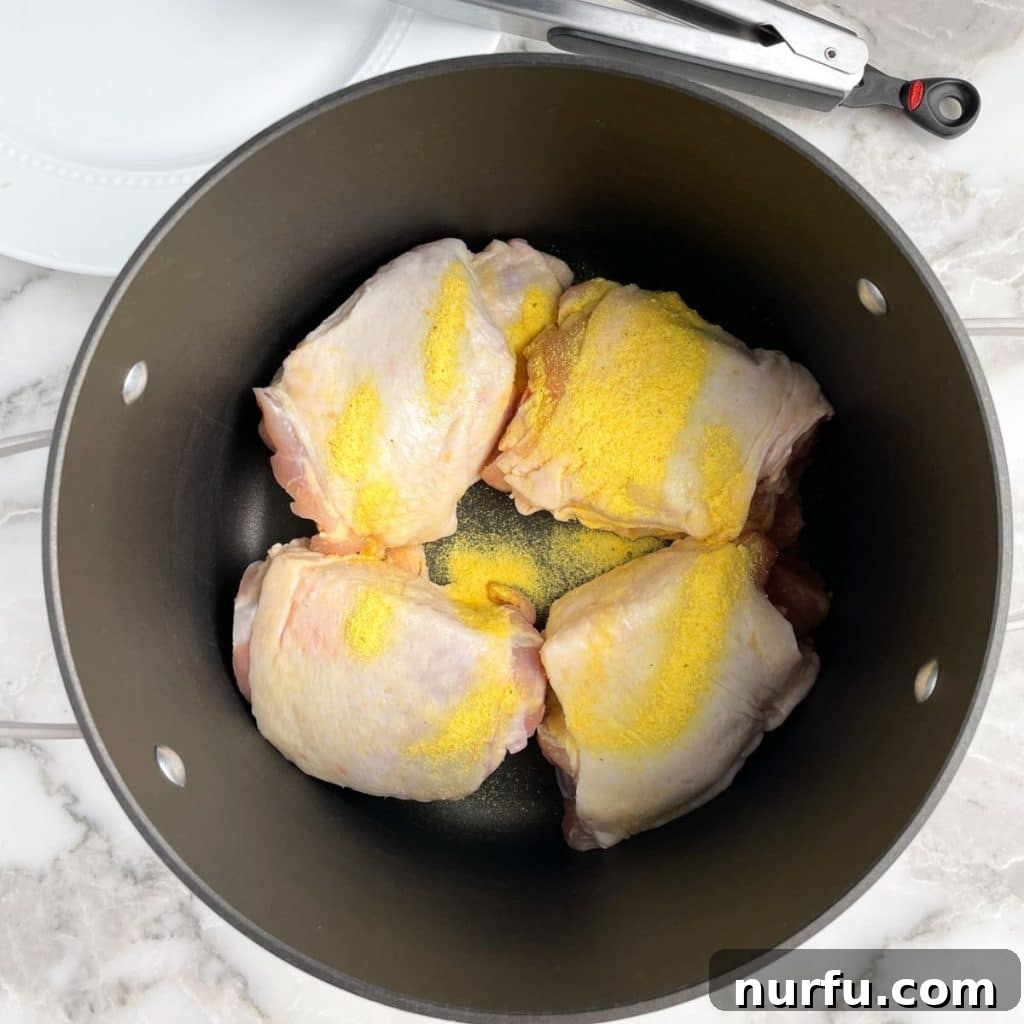
- Step One: Prepare the Chicken. Begin by patting your chicken thighs dry with paper towels to remove any excess moisture. This helps the seasoning adhere better. Place the chicken thighs in a large pot or Dutch oven, ensuring they fit in a single layer if possible for even cooking. Sprinkle generously with your chosen seasoning – whether it’s chicken bouillon, salt, pepper, or a custom blend.
- Step Two: Add Water and Bring to a Boil. Pour cold water over the chicken thighs until they are completely submerged, ideally with at least two inches of water covering the top of the chicken. Adding the chicken to cold water and bringing it to a boil together helps ensure more even cooking throughout the meat. Cover the pot with a lid (this helps trap heat and speed up the boiling process, though you can also boil uncovered) and place it on the stove over high heat. Bring the water to a rapid boil.
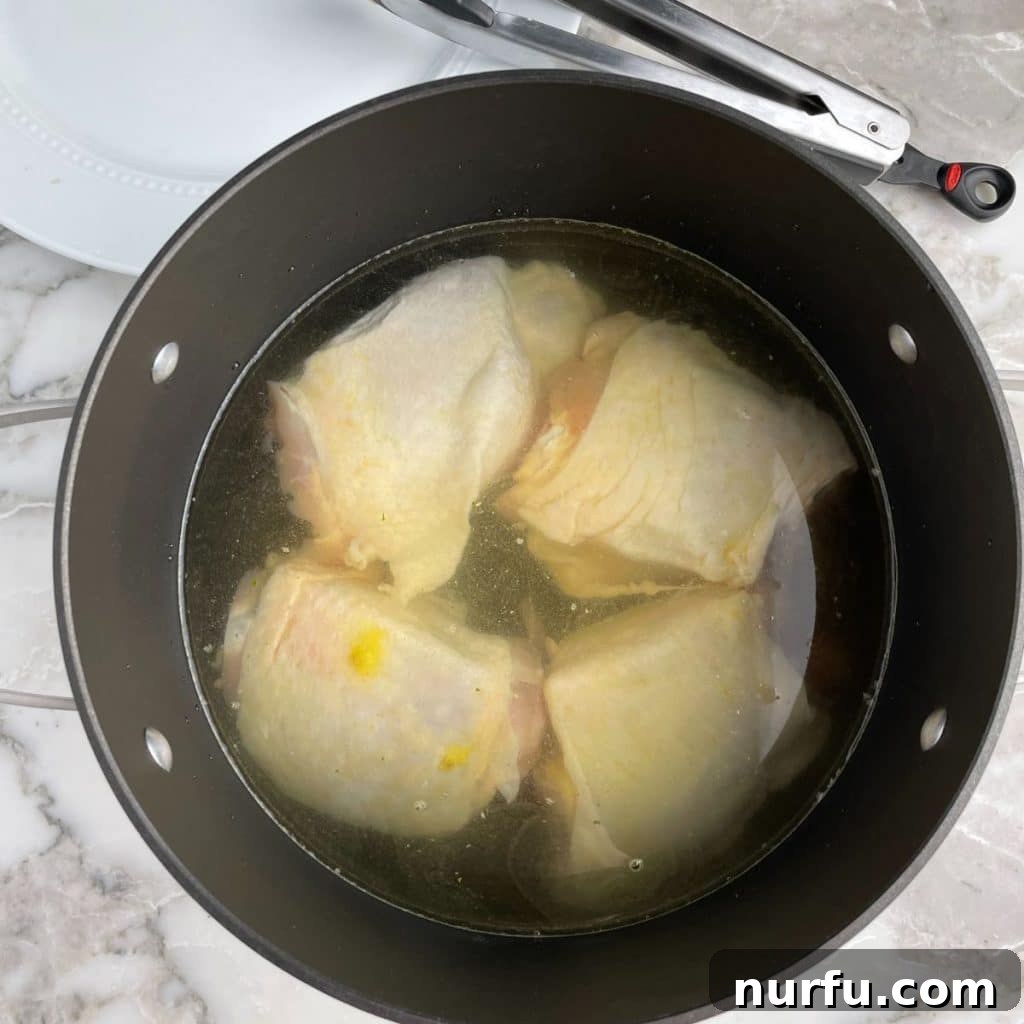
- Step Three: Simmer and Cook. Once the water reaches a rolling boil, reduce the heat to medium or medium-low to maintain a gentle, steady simmer. This prevents the chicken from becoming tough. Boil boneless thighs for about 20 minutes, or bone-in thighs for approximately 30 minutes (add 10-20 minutes if cooking from frozen). To verify doneness, carefully remove a thigh from the pot and insert an instant-read meat thermometer into the thickest part of the meat, avoiding the bone if present. The internal temperature should register 165°F (74°C). If it hasn’t reached this temperature, continue simmering and check again in 5-minute intervals.
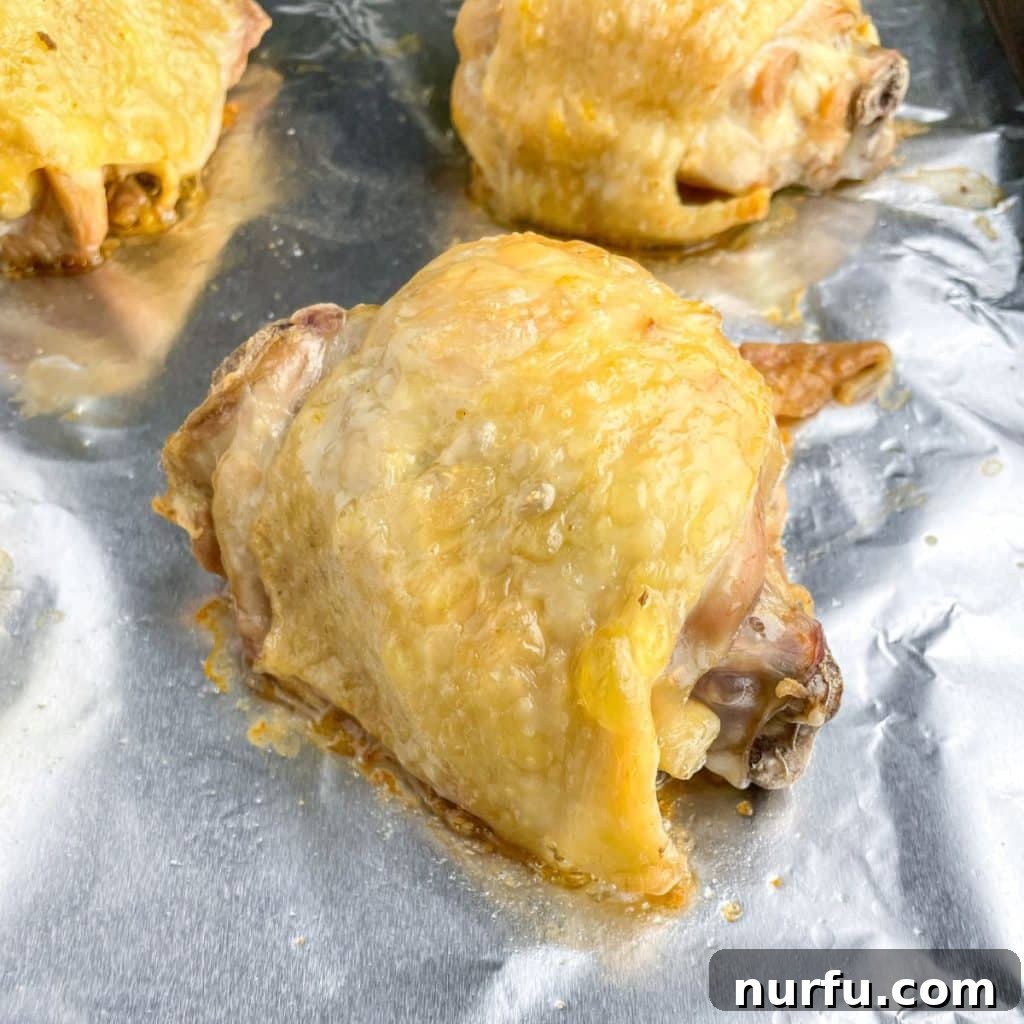
- Step Four: Optional Crispy Skin. If you started with bone-in, skin-on thighs and desire crispy skin, this is an optional but highly recommended step. Preheat your oven broiler. Carefully transfer the boiled chicken thighs to a foil-lined baking pan. Place them under the broiler for about 5 minutes, or until the skin turns golden brown and becomes crispy. Watch them closely to prevent burning. After broiling, you can serve them plain, or brush them with your favorite BBQ sauce, buffalo sauce, or any other glaze for added flavor.
Recipe Tips for Perfect Boiled Chicken Thighs
Achieving perfectly juicy and flavorful boiled chicken thighs is easy with these helpful tips and tricks:
- Start with Cold Water: Always place chicken in cold water and then bring it to a boil. This allows the chicken to heat up gradually, promoting more even cooking and preventing the exterior from cooking too quickly while the interior remains undercooked.
- Ensure Full Submersion: Make sure the chicken thighs are completely covered by water, ideally with at least two inches of liquid above them. This ensures consistent cooking and helps create a sufficient amount of broth.
- Use a Meat Thermometer: This is the most reliable way to ensure your chicken is safely cooked to an internal temperature of 165°F (74°C). Visual cues like clear juices or opaque meat are good indicators, but a thermometer guarantees accuracy.
- Flavor Boosters are Your Friend: Don’t just boil in plain water! Enhance the flavor of your chicken and the resulting broth by adding aromatics. Think carrots, celery, onion, garlic cloves, or even a halved lemon.
- Fresh Herbs Make a Difference: Incorporate fresh herbs like bay leaves, sprigs of thyme, or rosemary into the boiling water. Their essential oils will infuse into the chicken and broth, adding a wonderful aromatic quality.
- Don’t Waste the Broth: The liquid leftover from boiling chicken thighs is a rich, flavorful homemade chicken broth. Strain it and store it in the refrigerator for up to 4 days or freeze it for up to 3 months. It’s excellent for soups, stews, cooking rice or pasta, or creating sauces.
- Avoid Overcrowding the Pot: If you’re cooking a large batch, use a pot that is big enough to accommodate the chicken thighs without overcrowding. Overcrowding can lower the water temperature and lead to uneven cooking.
- Let the Chicken Rest: Once cooked, allow the chicken thighs to rest for 5-10 minutes before slicing or shredding. This allows the juices to redistribute throughout the meat, resulting in a more tender and juicy final product.
Creative Ways to Use Boiled Chicken Thighs
The beauty of boiled chicken thighs lies in their versatility. Once cooked, the tender, flavorful meat can be easily shredded, diced, or left whole, making it a fantastic base for countless recipes. Here are just a few ideas for utilizing your perfectly boiled chicken:
- Chicken Salad: Shred or dice the cooled chicken and mix with mayonnaise, celery, grapes, nuts, and your favorite seasonings for a classic and refreshing chicken salad sandwich or wrap.
- Shredded Chicken Sandwiches/Sliders: Toss shredded chicken with BBQ sauce, buffalo sauce, or a simple vinaigrette and pile onto buns for easy, delicious sandwiches.
- Hearty Chicken Noodle Soup: Use the flavorful chicken broth as a base and add shredded chicken, noodles, and vegetables for a comforting homemade soup.
- Chicken Tacos or Burritos: Season shredded chicken with taco seasoning and use it as a filling for soft tacos, crispy burritos, or vibrant burrito bowls.
- Enchiladas or Quesadillas: Mix diced chicken with cheese and other fillings for savory enchiladas or quick, cheesy quesadillas.
- Chicken Casseroles: A foundational ingredient for creamy chicken casseroles, from pasta bakes to rice dishes.
- Pasta Dishes: Stir diced chicken into pasta with pesto, Alfredo, or marinara sauce for a quick and satisfying meal.
- Stir-fries: Add sliced chicken to your favorite vegetable stir-fry for an extra protein boost.
- Salad Topping: Dice or slice chicken to add to garden salads, Caesar salads, or Cobb salads for a complete meal.
- Chicken Pot Pie: Use diced chicken in the filling for a comforting homemade pot pie.
How to Store Leftover Boiled Chicken Thighs
Proper storage ensures your leftover boiled chicken thighs remain fresh and safe to eat for future meals.
- Refrigeration: Allow any leftover cooked chicken to cool completely before storing. Once cooled, transfer the chicken to an airtight container. It will keep well in the refrigerator for up to 3-4 days. This makes it perfect for meal prepping throughout the week.
- Freezing: For longer storage, boiled chicken thighs freeze beautifully. Place the chicken meat (whole, shredded, or diced) in a freezer-safe bag or container, removing as much air as possible to prevent freezer burn. It can be stored in the freezer for up to 3 months. Thaw overnight in the refrigerator before reheating or using in recipes.
By properly storing your chicken, you can enjoy delicious, ready-to-use protein whenever you need it!
Frequently Asked Questions (FAQ)
You can boil chicken thighs with the lid on or off. Covering the pot with a lid helps to trap heat, bring the water to a boil faster, and maintain a consistent simmer, which can slightly reduce cooking time and conserve energy. Boiling uncovered is also perfectly fine, though it might take a few extra minutes to come to a boil and may cause more liquid to evaporate.
The most accurate way to determine if chicken thighs are fully cooked is to use an instant-read meat thermometer. Carefully remove a thigh from the water and insert the thermometer into the thickest part of the meat, avoiding the bone. The internal temperature should register 165°F (74°C). Other indicators include the meat being opaque throughout and the juices running clear when pierced with a fork.
If boiling frozen chicken thighs, the cooking time will be longer than for thawed chicken. For frozen boneless, skinless thighs, boil for approximately 30-40 minutes. For frozen bone-in, skin-on thighs, boil for 40-50 minutes. Always use a meat thermometer to ensure the internal temperature reaches 165°F (74°C) before serving.
Yes, you can boil chicken thighs in the microwave for a quicker method, especially for boneless cuts. Place chicken thighs in a microwave-safe dish with about 1/2 cup of water, ensuring the chicken is partially submerged. Cover the dish with microwave-safe plastic wrap, leaving a small vent. Microwave on high for 15 minutes, then check the internal temperature. Continue cooking in 5-minute increments until the internal temperature reaches 165°F (74°C). Be aware that microwave boiling may result in a less flavorful broth compared to stovetop methods.
Yes, even though dark meat is forgiving, you can overcook chicken thighs when boiling. Overcooked chicken will become dry, stringy, and tough, losing its desirable juicy texture. This is why using a meat thermometer and adhering to recommended cooking times are essential for best results.
More Chicken Recipes
Looking for more delicious ways to cook chicken? Explore these other popular chicken recipes:
- How Long to Bake Chicken Tenders
- How Long to Bake Chicken Wings
- Air Fryer Chicken Drumsticks
- How to Reheat Rotisserie Chicken
Simple Boiled Chicken Thighs
Ingredients
- 4-5 chicken thighs (bone-in or boneless)
- 1 tablespoon chicken bouillon granules (or 1 cube, or salt and pepper to taste)
- Water, enough to cover chicken thighs
Instructions
-
Pat chicken thighs dry with paper towels to remove any excess liquid. Place chicken thighs in a large pot. Sprinkle generously with chicken bouillon (or salt and pepper, or your preferred seasoning).
-
Cover the chicken thighs with cold water, ensuring they are fully submerged by at least 2 inches. Cover the pot with a lid. Place on the stove over high heat and bring the water to a rapid boil.
-
Once boiling, reduce the heat to medium-low to maintain a gentle simmer. Boil bone-in chicken thighs for about 30 minutes, or boneless chicken thighs for about 20 minutes. If cooking from frozen, boil for 40-50 minutes for bone-in or 30-40 minutes for boneless. To ensure doneness, use an instant-read meat thermometer to check that the internal temperature reaches 165°F (74°C) in the thickest part of the meat.
-
Optional Step for Crispy Skin: If you used skin-on thighs and desire crispy skin, carefully transfer the boiled chicken thighs to a foil-lined baking pan. Broil in the oven for about 5 minutes, or until the skin turns golden brown and crispy. Watch closely to prevent burning. Serve plain or with your favorite sauce.
Notes
- Starting the chicken in cold water helps ensure more even cooking throughout the meat.
- Make sure to completely cover the chicken with water for consistent results.
- Always check the internal temperature with an instant-read thermometer. It should reach 165°F (74°C) for food safety.
- You can enhance flavor by adding vegetables like carrots, celery, and onion to the pot of water.
- Consider adding fresh herbs such as bay leaves, thyme, or rosemary for an aromatic boost.
- Don’t throw away the chicken broth! Strain and save the flavorful liquid for soups, stews, or cooking grains.
Nutrition
Nutrition information is automatically calculated and should be used as an approximation.