
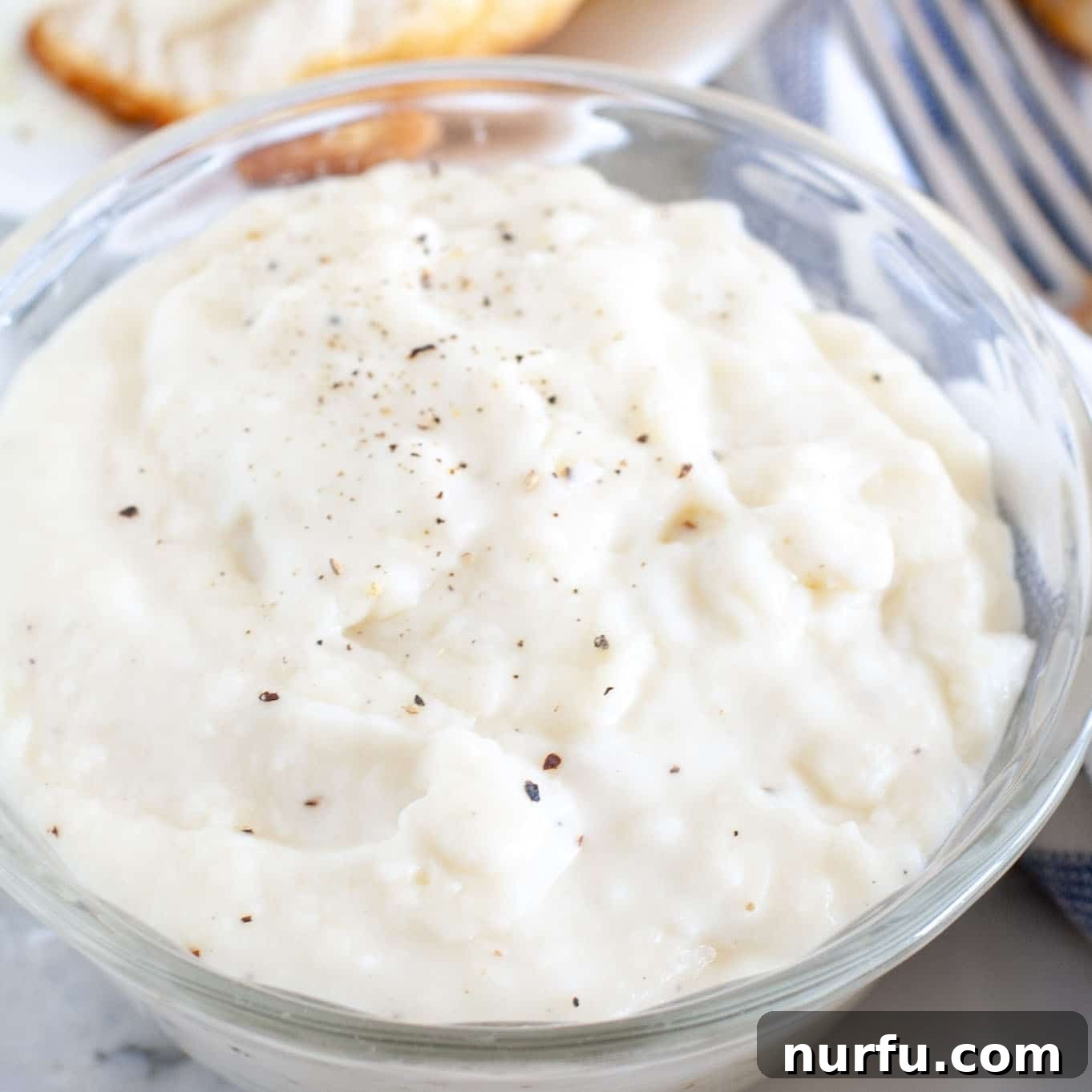
The Ultimate Guide to Homemade White Gravy: A Southern Comfort Staple
There are few things as comforting and deeply satisfying as a rich, creamy white gravy, especially when it’s made from scratch. This classic Southern staple transforms everyday meals into extraordinary feasts, adding a layer of smooth texture and savory flavor that’s simply irresistible. Whether you’re pouring it generously over fluffy biscuits for a hearty breakfast or drizzling it over crispy fried chicken for a comforting dinner, homemade white gravy is a versatile star in any kitchen. Forget complicated recipes or store-bought mixes; with just a handful of pantry essentials and about 15 minutes, you can whip up a batch of this heavenly sauce that will have everyone asking for more.
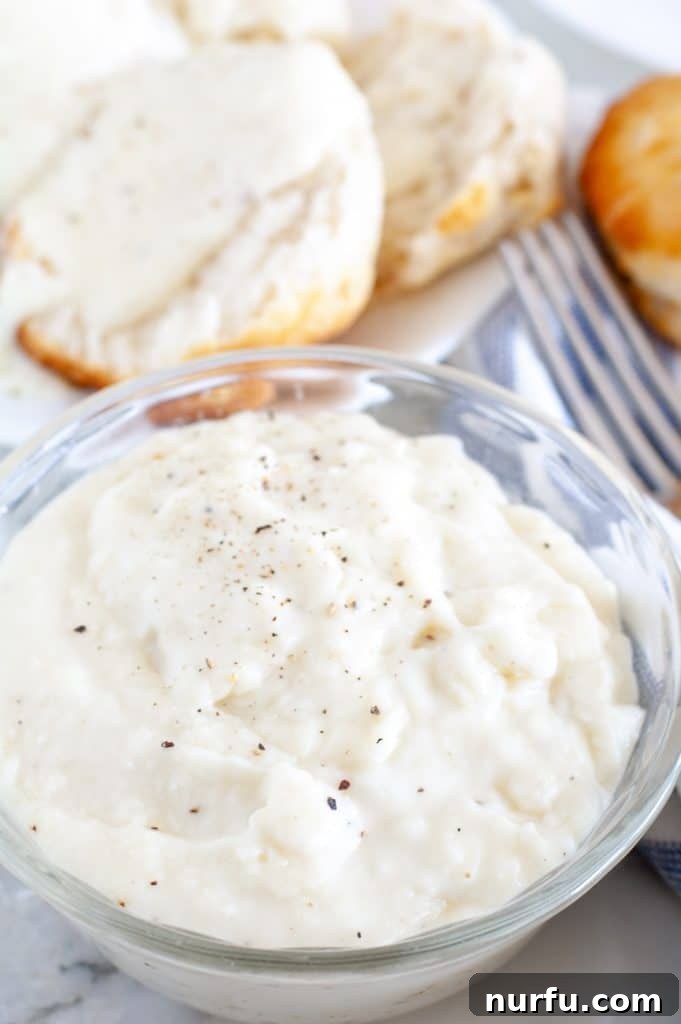
For many, white gravy evokes cherished memories of family meals and the warmth of a Southern home. Growing up, my mother’s version graced nearly every plate, from tender pork chops and fluffy mashed potatoes to, of course, a mountain of biscuits. It’s a tradition I’ve lovingly carried on, perfecting a recipe that’s not only incredibly rich and flavorful but also remarkably quick to prepare. This isn’t just a recipe; it’s an invitation to bring a piece of that cozy, comforting heritage into your own home, effortlessly transforming simple ingredients into a dish that feels like a warm hug.
Unlike some gravies that demand obscure ingredients or lengthy cooking times, this recipe celebrates simplicity. With just flour, butter, milk, salt, and pepper, you have everything you need to create a smooth, velvety sauce that elevates any dish it touches. It’s a testament to how humble ingredients can yield truly spectacular results, proving that the best comfort food is often the easiest to make.
What Exactly is White Gravy? A Culinary Exploration
White gravy, also known as country gravy, homestyle gravy, or even sawmill gravy, is a creamy, milk-based sauce that holds a special place in American comfort food, particularly in the Southern states. While many families have their unique twists passed down through generations, the core concept remains the same: a rich, smooth sauce built on a foundation of a roux and enriched with milk.
It’s important to distinguish white gravy from its brown counterpart, which often makes an appearance at holiday tables. Brown gravy typically relies on meat drippings and broth, resulting in a savory, often beefy flavor profile and a darker hue. White gravy, on the other hand, embraces the creamy, delicate taste of milk, offering a milder yet equally satisfying experience. Its light color and velvety texture are its hallmarks, making it a perfect accompaniment to a wide range of dishes.
Interestingly, while deeply entrenched in Southern American cuisine, white gravy actually shares roots with classical French cooking. It is a close cousin to Béchamel sauce, one of the five “mother sauces” of French cuisine. Béchamel also begins with a roux—a cooked mixture of butter and flour—to which milk is slowly added to create a smooth, thick sauce. The main difference often lies in seasoning; traditional Béchamel might incorporate nutmeg, whereas white gravy typically sticks to salt and plenty of black pepper, occasionally with a hint of other spices to match the accompanying dish. Understanding this connection highlights the simple elegance and foundational culinary technique at the heart of this beloved comfort food.
Why You’ll Love This Easy White Gravy Recipe
In a world where quick and convenient meals are often preferred, this white gravy recipe stands out by offering both speed and genuine homemade flavor. Many traditional recipes can be daunting, but this one is designed for efficiency without sacrificing taste. From start to finish, you’re looking at about 15 minutes of active cooking time. That’s faster than baking a batch of canned biscuits, making it an ideal choice for busy mornings or last-minute meal additions.
The beauty of this recipe lies in its simplicity. You won’t need to scour specialty stores for ingredients; everything required is likely already in your pantry or easily found at any grocery store. This accessibility makes it a fantastic go-to when you need to whip up something warm and comforting without much planning. On a chilly day, there’s nothing quite like a plate piled high with fluffy biscuits drowned in warm, creamy gravy to chase away the cold and bring a sense of home and coziness to your table. It’s the ultimate comfort food, delivered in minutes.
Essential Ingredients for Perfect White Gravy
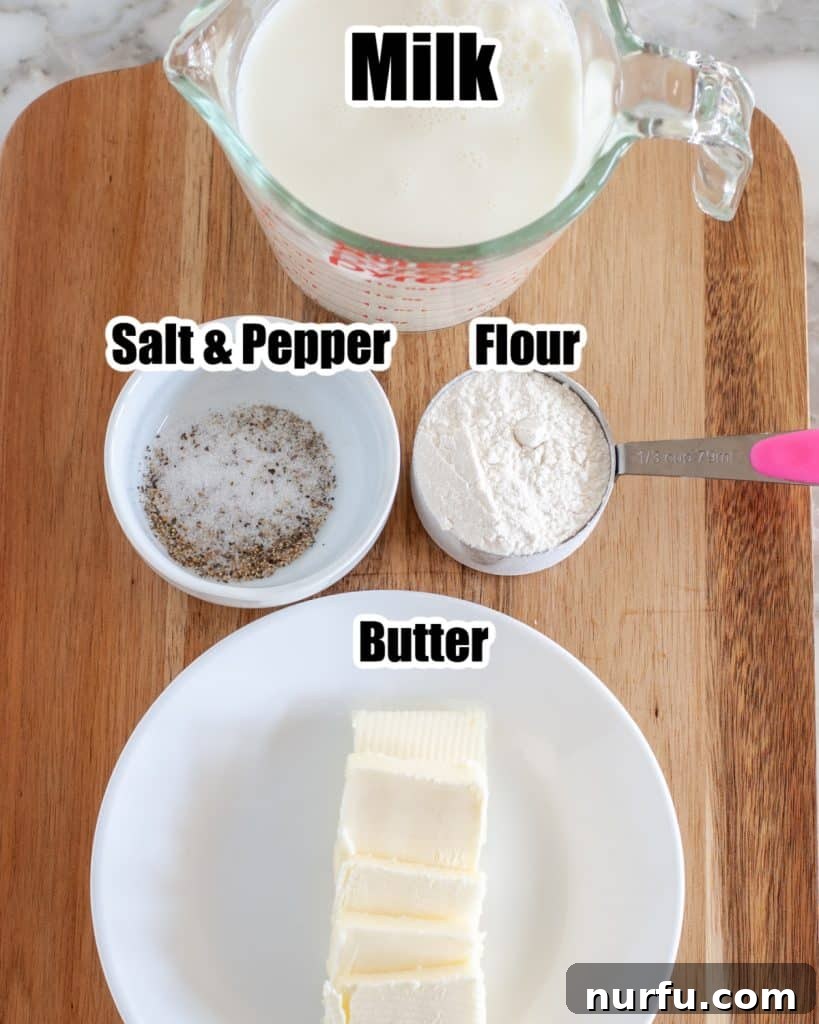
Creating a truly exceptional white gravy requires only a few core ingredients, each playing a crucial role in achieving that perfect creamy texture and balanced flavor. The quality of these simple components genuinely shines through, so choose them wisely.
- Flour: All-purpose flour is your go-to for thickening the gravy and forming the essential roux. It provides the structure and smooth consistency that defines white gravy.
- Butter: Sweet cream, unsalted butter is preferred. It contributes rich flavor and forms the fat base for the roux. Using unsalted butter allows you to control the overall saltiness of your gravy, ensuring it’s perfectly seasoned to your taste.
- Milk: The star of the show for its creamy texture and mild flavor. While whole milk is often recommended for the richest, most luxurious gravy, feel free to experiment with 2%, half-and-half, or even heavy cream for varying levels of decadence. The higher the fat content, the creamier and more indulgent your gravy will be. Dairy alternatives like unsweetened almond milk or oat milk can also be used for a dairy-free option, though the flavor profile will be slightly different.
- Seasoning: A simple yet powerful duo of salt and freshly ground black pepper is all you need. These basic seasonings enhance the inherent flavors of the milk and butter, bringing everything into delicious harmony. Don’t underestimate the impact of good quality, freshly ground black pepper for a subtle kick and aromatic depth.
Beyond these ingredients, you’ll want a reliable whisk to prevent lumps and ensure a smooth consistency, and a medium to large saucepan or skillet for cooking. The right tools make the process even smoother, helping you achieve perfect gravy every time.
How to Make Creamy White Gravy from Scratch: A Step-by-Step Guide
Making homemade white gravy is a straightforward process, but a few key techniques will ensure a smooth, lump-free, and flavorful result every time. Follow these steps for perfect creamy gravy:
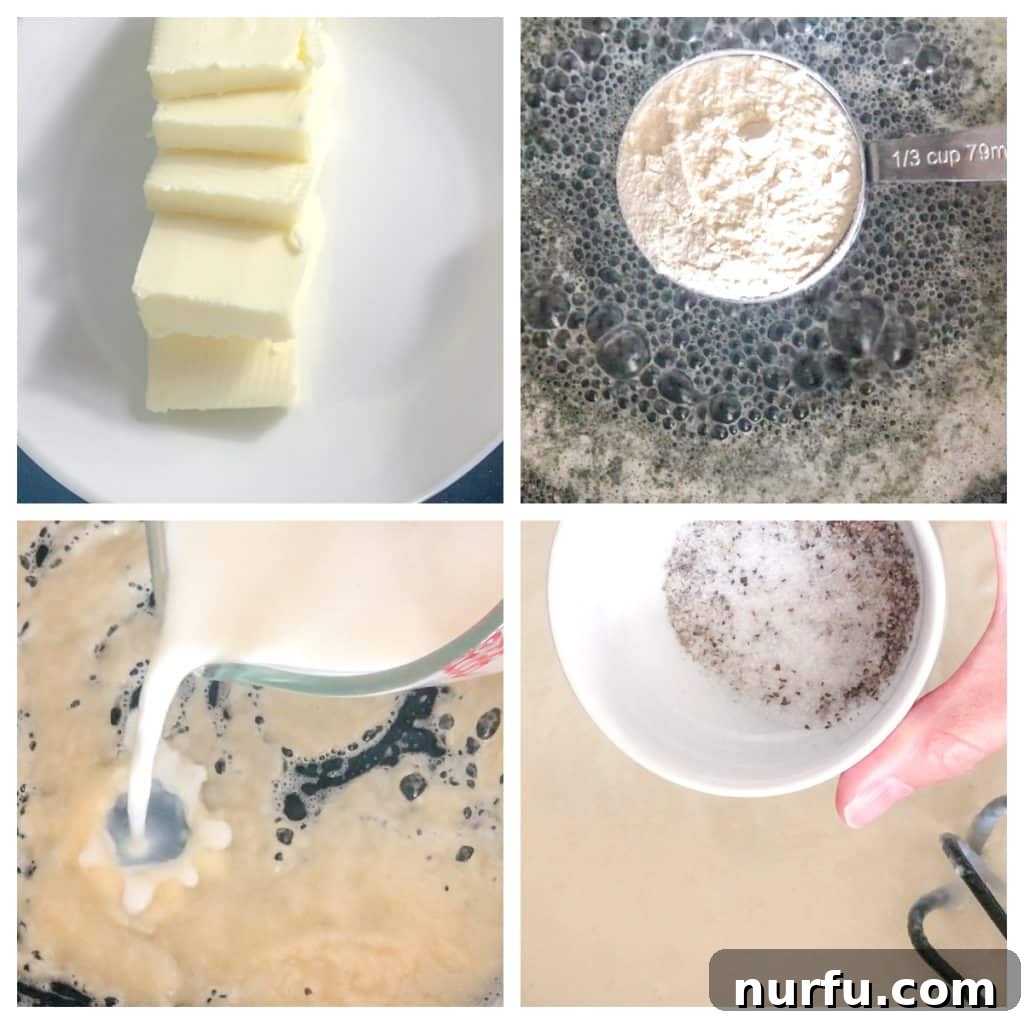
- Prepare Your Roux: Begin by adding 5 tablespoons of butter to a large saucepan or skillet over medium heat. Allow the butter to melt completely. Once melted and slightly foamy, whisk in 1/3 cup of all-purpose flour. Continue to whisk constantly for 1-2 minutes, cooking out the raw flour taste and creating a smooth paste, or roux. It should be a pale, golden color, not brown. This is the thickening agent for your gravy, and ensuring it’s cooked properly is vital for flavor.
- Introduce the Milk Slowly: Once your roux is ready, gradually pour in 2 cups of milk, a little at a time, while continuously whisking. Start with about half a cup, whisking vigorously until it’s fully incorporated into the roux and no lumps remain. Then, slowly add the remaining milk, maintaining a steady whisking motion. This gradual addition and constant whisking are critical for preventing lumps and achieving a smooth, velvety texture.
- Simmer and Thicken: After all the milk has been added and the mixture is smooth, continue to cook over medium heat, whisking frequently, until the gravy begins to thicken to your desired consistency. This usually takes about 3-5 minutes. The gravy will thicken more as it simmers. Once it reaches a gentle boil, reduce the heat to low and continue to simmer for another minute or two, allowing it to fully thicken without scorching.
- Season to Perfection: Remove the saucepan from the heat and stir in 1 teaspoon of salt and 1 teaspoon of ground black pepper. Taste and adjust seasonings as needed. Remember, proper seasoning is key to enhancing the overall flavor. If you like a bolder, peppery gravy, don’t hesitate to add more black pepper.
- Serve Warm: White gravy is best enjoyed immediately while warm and creamy. Serve it generously over your favorite dishes!
Pro Tip for a Perfect Roux:
Ensure your roux is cooked for at least 1-2 minutes to eliminate any raw flour taste. The color should remain light. When adding milk, make sure it’s cold or at room temperature. Adding cold milk to a hot roux helps prevent lumps by allowing the starch granules to separate and absorb the liquid evenly, creating a smoother sauce.
Storing and Reheating Your Homemade Gravy
One of the great things about white gravy is that it can be made ahead and stored, though it’s always best fresh. If you find yourself with leftovers, or if you prefer to prepare it in advance, proper storage and reheating techniques will ensure your gravy remains delicious.
Storage: Allow the gravy to cool completely to room temperature before transferring it to an airtight container. This helps prevent condensation and maintains freshness. Stored properly in the refrigerator, white gravy will keep for 4-5 days. It is not generally recommended to freeze white gravy, as the milk can separate upon thawing, affecting its creamy texture.
Reheating: White gravy tends to thicken considerably as it cools due to the starches in the flour. To reheat, pour the cold gravy back into a saucepan. Add a little extra milk (start with 1/4 cup) to help thin it out. Heat over medium-low heat, whisking constantly, until it warms through and returns to your desired consistency. You may need to add more milk, a tablespoon at a time, until it’s perfectly smooth and pourable again. Avoid high heat, which can cause the milk to scorch or separate. Gentle, consistent whisking is key to restoring its creamy texture.
Versatile Serving Suggestions for White Gravy
The beauty of white gravy lies in its incredible versatility. While it’s famously associated with biscuits, its creamy, savory profile makes it a fantastic accompaniment to a surprisingly wide array of dishes, transforming simple meals into comforting delights. Here are some of our favorite ways to enjoy this homemade goodness:
- Classic Biscuits and Gravy: The quintessential Southern breakfast. Pile your fluffy, warm biscuits high and drench them in creamy white gravy for an unforgettable start to your day. Pair with crispy bacon and scrambled eggs for the ultimate comfort meal.
- Over Mashed Potatoes: Move over, brown gravy! White gravy makes an exceptionally creamy and flavorful topping for mashed potatoes, adding a silky texture that’s perfect for holiday dinners or any night you crave extra indulgence.
- With Fried Chicken or Chicken Tenders: A Southern meal isn’t complete without fried chicken, and white gravy is the perfect dipping sauce or pour-over for crispy chicken, adding a rich, savory counterpoint to the fried goodness.
- On Chicken Fried Steak: This iconic dish demands a generous serving of white gravy. The creamy sauce complements the breaded steak perfectly, creating a truly hearty and satisfying meal.
- Over Toast or Texas Toast: For a simpler, yet equally delicious, option, spoon white gravy over regular toast or thick, buttery Texas toast for a quick and comforting snack or light meal.
- With Pork Chops: Whether pan-fried or baked, pork chops benefit immensely from a luscious coating of white gravy.
- As a Base for Other Dishes: You can also use white gravy as a base for casseroles or other creamy dishes, adding depth and richness.

Customize Your Gravy: Ingredient Substitutions and Variations
While the classic white gravy recipe is perfect as is, there’s always room for personalization. Don’t hesitate to experiment with these simple substitutions to tailor the flavor and texture to your preference or dietary needs:
Fat Options: The fat used in your roux significantly impacts the gravy’s final flavor. While butter is standard, consider these savory alternatives:
- Sausage or Bacon Grease: For an authentic country-style gravy, especially for breakfast, replace the butter with 4-5 tablespoons of leftover sausage or bacon grease. This infuses the gravy with a deep, smoky, and incredibly savory flavor that is truly irresistible over biscuits. Just ensure the grease is strained to remove any burnt bits.
- Vegetable Oil or Shortening: For a more neutral flavor, or if you’re out of butter, vegetable oil or solid shortening can be used in equal amounts.
Liquid Choices: The type of liquid you choose affects creaminess and dietary considerations:
- Dairy Varieties: As mentioned, whole milk provides the richest texture. For a lighter version, use 2% milk. For an ultra-creamy, indulgent gravy, opt for half-and-half or heavy cream.
- Dairy-Free Options: To make a dairy-free white gravy, substitute regular milk with unsweetened plain almond milk, oat milk, or soy milk. The flavor will be slightly different, but the creaminess can still be achieved. Ensure to choose unsweetened varieties to avoid a sweet gravy.
- Broth or Water: While this technically moves closer to a brown gravy, if you need a non-dairy option and want a savory kick, you can substitute the milk with chicken or vegetable broth, or even water. This will yield a lighter, thinner gravy but can still be a delicious alternative. Use equal amounts of broth or water.
Seasoning Enhancements: Beyond salt and pepper, these additions can elevate your gravy:
- Herbs: A pinch of dried sage or thyme can add an aromatic, earthy note, especially when serving with pork or poultry.
- Spices for Heat: For a subtle kick, add a pinch of cayenne pepper. If you like a bolder, spicier gravy, a dash of hot sauce can also be incorporated at the end.
- Seasoned Salt: Replace regular salt with a seasoned salt blend for an extra layer of savory flavor.
- Garlic or Onion Powder: A small amount (1/4 to 1/2 teaspoon) can add depth and umami.
Common Questions About White Gravy (FAQs)
How do you thicken white gravy if it’s too thin?
If your gravy isn’t thick enough after simmering for a few minutes, you can create a slurry. Whisk together 1 tablespoon of cold water (or milk) and 1 tablespoon of all-purpose flour or cornstarch until smooth. Slowly drizzle this mixture into the simmering gravy while continuously whisking. Cook for another 1-2 minutes until it reaches your desired thickness. Be careful not to add too much at once, as gravy continues to thicken as it cools.
What is the secret to good, lump-free gravy?
The key to a smooth, delicious, and lump-free gravy lies in two main steps: first, properly cooking your roux (butter and flour mixture) to a smooth paste, ensuring no dry flour remains. Second, and crucially, slowly whisking in cold milk. The temperature difference helps the flour particles separate and absorb the liquid evenly, preventing lumps from forming. Consistent whisking throughout the process is also vital.
What is the difference between country gravy and white gravy?
Often, “country gravy” and “white gravy” are used interchangeably to refer to the same milk-based, creamy sauce. However, some definitions suggest “country gravy” might specifically use meat drippings or grease (like sausage or bacon fat) as its base instead of or in addition to butter, giving it a more robust, savory flavor profile. White gravy, in its purest form, uses butter and milk. In practice, the terms are widely synonymous, both denoting a creamy, flour-thickened gravy.
What is the difference between brown and white gravy?
The primary difference between brown and white gravy is the liquid base. Brown gravy typically uses meat broth (beef, chicken, or turkey) and often incorporates pan drippings for a rich, savory, and darker sauce. White gravy, on the other hand, uses milk or cream as its base, resulting in a lighter-colored, milder, and creamy sauce.
Why is it called sawmill gravy?
White gravy is sometimes referred to as sawmill gravy due to its historical origins. It was a popular and economical dish served at old-time sawmill camps, especially in the Southern United States. The original versions were often made with cornmeal instead of or in addition to flour, which gave the gravy a slightly gritty consistency, resembling sawdust. This hearty, calorie-dense meal provided sustenance for the hardworking sawmill workers, and the name stuck.
Can I make white gravy ahead of time?
Yes, you can make white gravy ahead of time. Store it in an airtight container in the refrigerator for up to 4-5 days. When reheating, remember it will be very thick. Gently warm it in a saucepan over medium-low heat, gradually whisking in a few tablespoons of milk until it returns to a smooth, pourable consistency.
Can I make gluten-free white gravy?
Absolutely! To make gluten-free white gravy, simply substitute all-purpose flour with a 1:1 gluten-free flour blend. Ensure your chosen blend contains xanthan gum for optimal thickening. The process remains the same, but you might need to whisk a little longer to achieve the desired consistency. You can also use cornstarch as a thickener, as described in the “too thin” troubleshooting section, for a naturally gluten-free option.
More Easy Breakfast Recipes to Complement Your Gravy
Looking for other delicious ways to start your day? Pair your homemade white gravy with these easy breakfast favorites:
- Yogurt Parfait – Layers of creamy yogurt, fresh fruit, and crunchy granola for a lighter option.
- Cinnamon Toast – Learn how to make this childhood favorite three different ways.
- Cake Mix Waffles – An incredibly easy waffle recipe using a simple cake mix.
- Cinnamon Butter – A delightful whipped cinnamon butter perfect for toast, pancakes, or waffles.
- Air Fryer Hash Browns – Achieve perfectly crispy hash browns with minimal effort using your air fryer.
We encourage you to try this incredibly easy and satisfying white gravy recipe. It’s a true taste of Southern comfort that’s perfect for any meal, any time of day. If you give it a try, let us know how it turned out in the comments below! For those with dietary restrictions, remember there are fantastic options for gluten-free gravy too.
You might notice in some pictures and videos that the gravy appears a bit thick. This is how my family prefers it. If you desire a thinner gravy, simply add more milk, a tablespoon at a time, until you reach your ideal consistency, up to 1 cup more.

Homemade Creamy White Gravy
Rate Recipe
Print Recipe
Ingredients
- 1/3 cup all-purpose flour
- 5 tablespoons butter
- 2 cups milk
- 1 teaspoon salt
- 1 teaspoon ground black pepper
Instructions
-
Heat butter in a large skillet over medium heat. Once melted, whisk in the flour. Whisk continuously for 1-2 minutes until combined and smooth, cooking out the raw flour taste.
-
Slowly pour in the milk (cold or room temperature) while continuously whisking to prevent lumps. Keep whisking until the gravy thickens to your desired consistency, simmering for about 3-5 minutes.
-
Stir in salt and pepper. Taste and adjust seasonings as needed. Serve warm.
Video
Notes
Gravy is too thin: Let it continue to simmer and boil gently until it thickens. If that still doesn’t work, create a slurry by stirring 1 tablespoon of flour with 1 tablespoon of cold water until smooth, then slowly whisk it into the gravy to help thicken.
Nutrition
Carbohydrates: 9g |
Protein: 3g |
Fat: 12g |
Saturated Fat: 8g |
Cholesterol: 33mg |
Sodium: 506mg |
Potassium: 115mg |
Fiber: 1g |
Sugar: 4g |
Vitamin A: 423IU |
Calcium: 95mg |
Iron: 1mg
Nutrition information is automatically calculated, so should only be used as an approximation.
Additional Info
Brown gravy typically uses broth instead of milk as its base, resulting in a savory, often meat-flavored sauce, while white gravy uses milk for a creamy texture.
White gravy is sometimes referred to as sawmill gravy because it was a popular and economical dish at old sawmill camps. It was originally made using cornmeal, which gave it a slightly gritty consistency similar to sawdust.
If your gravy isn’t thick enough, whisk together 1 tablespoon of cold water and 1 tablespoon of cornstarch (or flour) to create a slurry. Slowly drizzle this mixture into the simmering gravy while stirring until it thickens to your desired consistency.
The secret to a smooth, delicious gravy is to ensure you cook the butter and flour together thoroughly for a smooth roux, then slowly whisk in cold milk, continuously stirring to prevent any lumps from forming.