
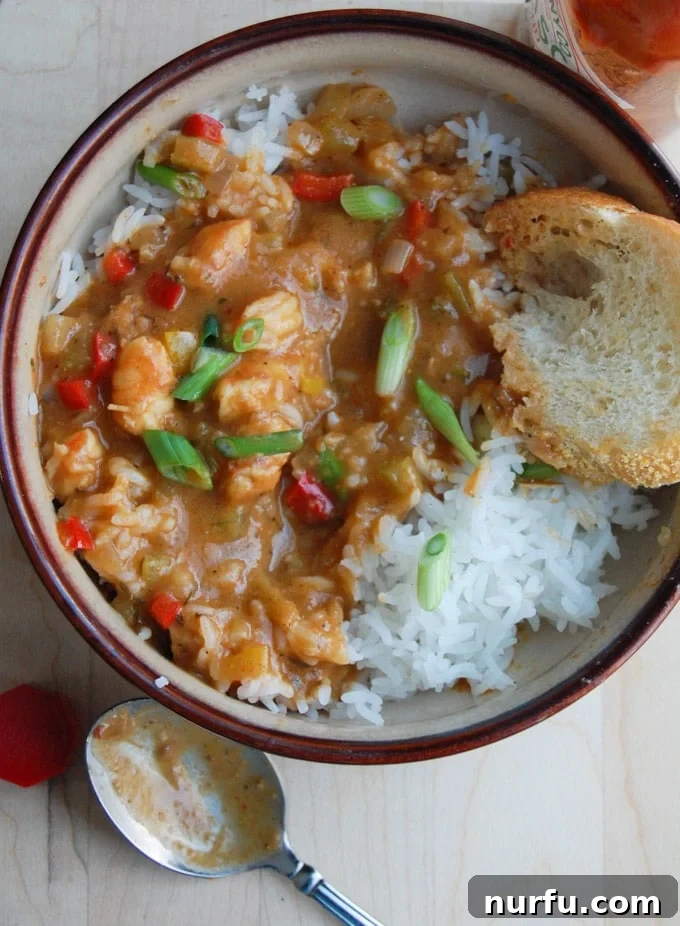
Embark on a culinary journey to the heart of Louisiana with our irresistible Shrimp Etouffee recipe. Crafted with a rich, perfectly browned roux, an exquisite blend of authentic Cajun spices, and served generously over fluffy rice, each bite will transport you straight to the vibrant streets of New Orleans! Get ready to savor the true taste of Creole and Cajun tradition in your own kitchen.
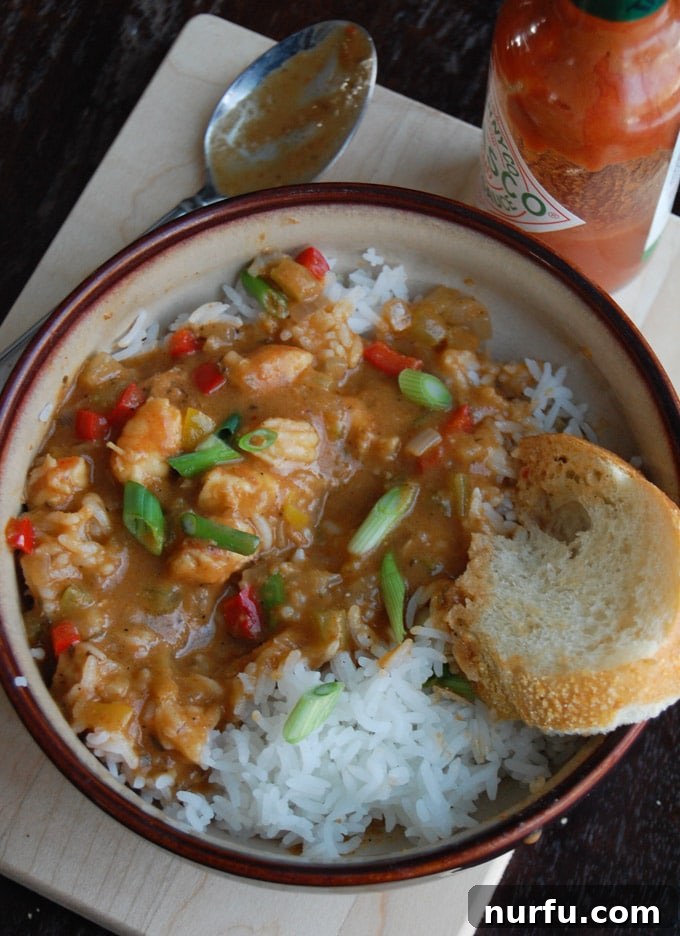
Welcome, food lovers! As the festive spirit of New Orleans often calls, with dreams of sipping a refreshing Hurricane cocktail and enjoying a slice of decadent King Cake, it’s undeniable that this vibrant city boasts some of the world’s most incredible food. My personal favorite among the many culinary gems in this food-loving metropolis is the legendary Gumbo Shop. If you ever find yourself with the opportunity to visit, dining there is an absolute must. And when you do, you simply cannot go wrong with their shrimp etouffee – it is an experience in itself!
The Soul of Louisiana Cooking: Understanding Etouffee
Shrimp Etouffee, pronounced “eh-too-FAY,” is a quintessential dish from Louisiana, deeply rooted in both Cajun and Creole culinary traditions. The word “étouffée” comes from the French verb “étouffer,” meaning “to smother.” This perfectly describes the cooking method, where seafood (typically shrimp or crawfish) is simmered in a rich, flavorful sauce, or “gravy,” until tender and infused with deep, complex flavors. Unlike gumbo, which typically has a thinner broth and often contains okra or filé powder, etouffee boasts a thicker, more luscious consistency, achieved primarily through a foundational roux.
A Journey Through Flavor: The Origins of Etouffee
While the exact origins are debated, etouffee emerged from the bayous and kitchens of Louisiana, a melting pot of French, Spanish, African, and Native American influences. It’s a dish that tells a story of resourcefulness, using readily available local ingredients, particularly the abundant seafood from the Gulf Coast. Over generations, it has evolved into the beloved comfort food it is today, a staple at family gatherings, festive celebrations, and acclaimed restaurants across the state.
Mastering the Roux: The Heartbeat of Your Etouffee
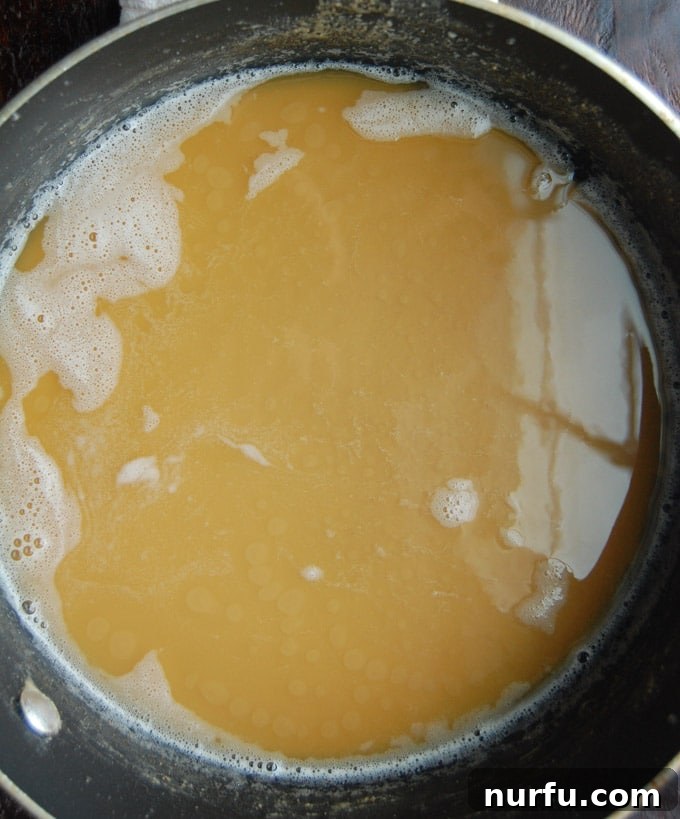
The secret to an outstanding etouffee lies in mastering the roux. This simple mixture of flour and fat (usually butter or oil) is crucial for both thickening the sauce and, more importantly, developing its deep, nutty flavor and rich color. For etouffee, you’ll want to cook your roux to a beautiful, dark peanut butter-like shade. This process requires patience and constant stirring, but the reward is a foundational flavor that elevates the entire dish.
Why the Roux Color Matters
A light roux (cooked for a shorter time) provides thickening but little flavor. As the roux cooks longer, it darkens, taking on a more complex, toasty, and nutty flavor profile. A dark roux also loses some of its thickening power, meaning you’ll need a good balance. For etouffee, a medium to dark brown roux is ideal – not as dark as for a traditional gumbo, but dark enough to contribute significant depth without becoming bitter or losing all its thickening capabilities. This golden-brown hue is what gives etouffee its signature color and a robust, earthy undertone that complements the sweetness of the shrimp and the piquancy of the seasonings.
The Holy Trinity: Building Flavor
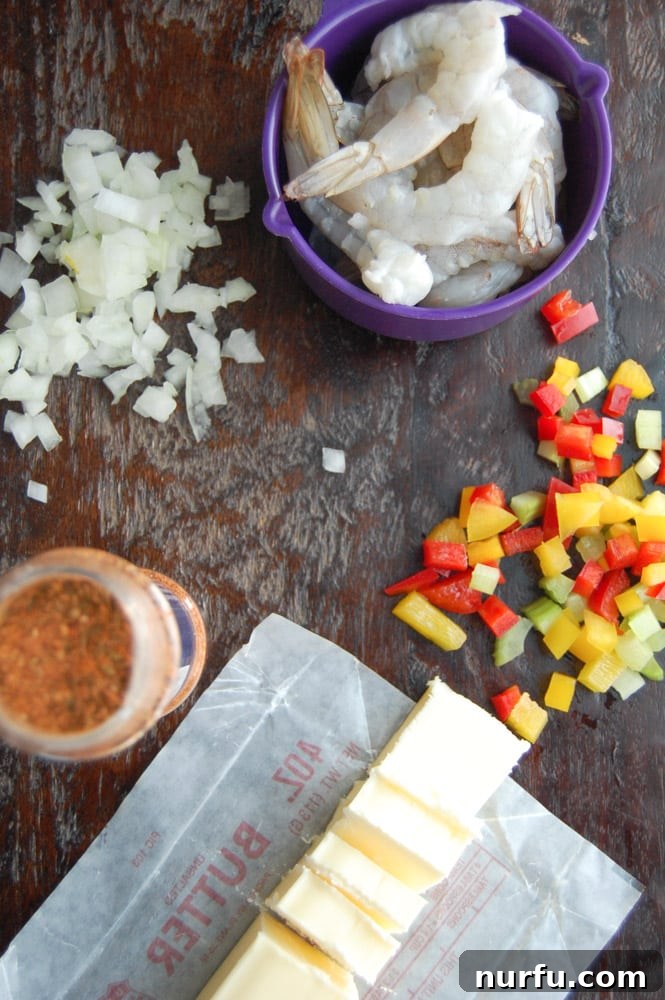
Beyond the roux, the “holy trinity” of Cajun and Creole cooking – onions, celery, and bell peppers – forms the aromatic backbone of Shrimp Etouffee. These vegetables are sautéed until tender, releasing their sweet and savory essences into the roux, laying the groundwork for the rich sauce that will lovingly “smother” the shrimp. This combination is not just about flavor; it’s about texture and aroma, creating a complex foundation that is unmistakably Louisianan.
Serving Suggestions: The Perfect Accompaniments
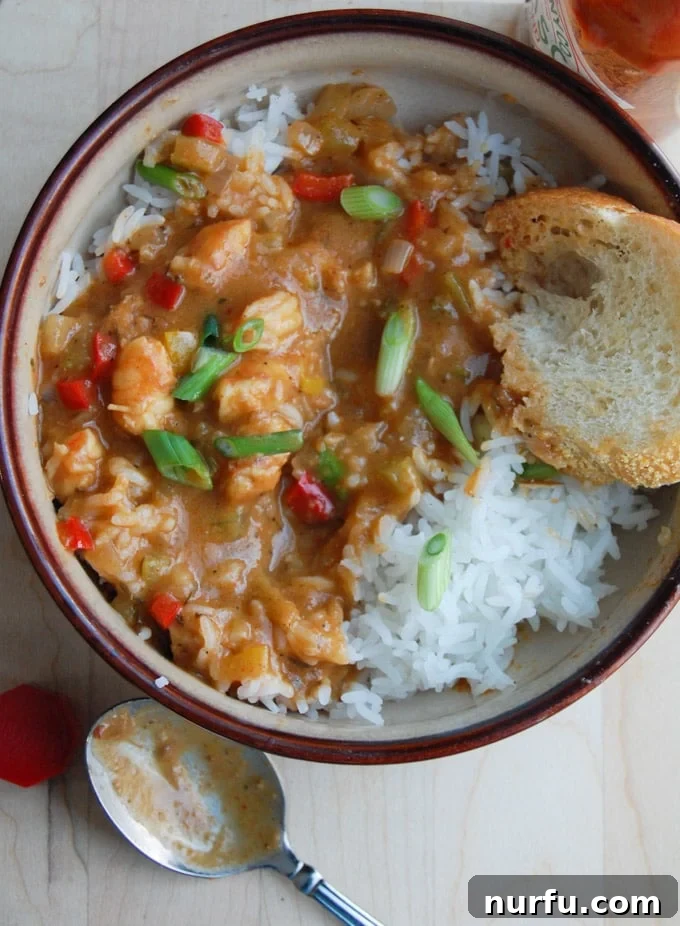
While Shrimp Etouffee is undeniably delicious on its own, it truly shines when served correctly. The classic presentation involves a generous ladleful poured over a bed of fluffy white or brown rice. The rice absorbs the flavorful sauce, providing a comforting and satisfying base. But my absolute favorite way to enjoy this delectable dish is with some crusty bread. There’s nothing quite like tearing off a piece of bread and using it to scoop up a little of that saucy etouffee and rice. The bread acts as a perfect vehicle for soaking up every last drop of the incredible sauce, making for an unforgettable meal.
Enhancing Your Etouffee Experience
To further enhance your meal, consider serving a simple green salad on the side to cut through the richness of the etouffee. A glass of crisp white wine or a local Louisiana beer would also pair wonderfully. For an extra touch of New Orleans flair, sprinkle some fresh chopped parsley or green onions over the top just before serving. This not only adds a burst of fresh flavor but also a vibrant pop of color.
More Seafood Recipes to Explore
- Creamy Shrimp Dip for Any Occasion
- New Orleans Style BBQ Shrimp
- Delicate Shrimp and Arugula Pasta
Classic Shrimp Etouffee
Pin Recipe
Rate Recipe
Print Recipe
Ingredients
- 3/4 cup unsalted butter
- 6 tablespoons all-purpose flour
- 1 cup chopped yellow onion
- 6 chopped green onions (scallions), divided for garnish
- 1/2 cup diced red bell pepper
- 1/2 cup diced yellow bell pepper
- 1 cup chopped celery
- 3 cups water or seafood stock
- 2 lbs large shrimp peeled, deveined, and roughly chopped (if desired)
- 3 tablespoons Cajun seasoning blend
- 1/2 teaspoon salt, or to taste
- 1/2 teaspoon black pepper, or to taste
- Hot sauce to taste (such as Tabasco or Louisiana hot sauce)
- Cooked white or brown rice, for serving
- Crusty bread, for serving
Instructions
-
In a large, heavy-bottomed skillet or Dutch oven, melt the butter over medium heat.
-
Gradually whisk in the flour, creating a smooth paste. Continue to stir constantly over medium heat. This is your roux. Cook the roux until it reaches a rich, dark brown color, similar to peanut butter. This process can take 8-15 minutes and requires patience; do not rush it, as burning the roux will ruin the flavor.
-
Once the roux is the desired color, add the chopped yellow onion, red pepper, yellow pepper, and celery (the ‘holy trinity’). Cook, stirring occasionally, until the vegetables are softened and translucent, about 5-7 minutes.
-
Slowly stir in the water or seafood stock, mixing thoroughly to ensure no lumps remain. Add the Cajun seasoning, salt, and black pepper. Bring the mixture to a gentle simmer.
-
Reduce the heat to low, cover partially, and let the etouffee simmer for 20 minutes, or until the sauce begins to thicken and the flavors have melded beautifully. Stir occasionally to prevent sticking.
-
Add the peeled, deveined shrimp to the simmering sauce. Continue to cook for another 3-5 minutes, or until the shrimp turn pink and are just cooked through. Be careful not to overcook the shrimp, as they can become tough.
-
Stir in a portion of the chopped green onions (reserve some for garnish). Taste and adjust seasonings as needed, adding hot sauce if you prefer more heat.
-
Serve the hot Shrimp Etouffee generously over mounds of white or brown rice, garnished with the remaining chopped green onions and a side of crusty bread. Enjoy your authentic taste of Louisiana!
Notes
Tips for the Perfect Shrimp Etouffee
- Patience with the Roux: This is non-negotiable. A rushed roux will taste raw and lack depth. Take your time, stir continuously, and achieve that beautiful, rich brown color.
- Quality Shrimp: Use fresh, good-quality shrimp. If using frozen, thaw them completely and pat dry before adding to the etouffee.
- Don’t Overcook the Shrimp: Shrimp cook very quickly. Add them at the very end and cook just until they turn pink, usually 3-5 minutes. Overcooked shrimp become rubbery.
- Seasoning to Taste: Cajun seasoning blends can vary in saltiness and spice level. Start with the recommended amount and adjust to your preference. Hot sauce is essential for that signature Louisiana kick!
- Seafood Stock for Extra Flavor: While water works, using a good quality seafood stock (or even chicken stock) will add an extra layer of depth to your etouffee.
Variations to Try
While Shrimp Etouffee is a classic, don’t hesitate to experiment with variations:
- Crawfish Etouffee: The most traditional alternative. Simply substitute fresh or frozen (thawed) crawfish tails for the shrimp. Add them at the same stage as the shrimp.
- Chicken Etouffee: For a heartier meal, use diced chicken breast or thigh, browning it before adding to the sauce, or cook it in the sauce until tender.
- Vegetable Etouffee: A delicious vegetarian option can be made by increasing the amount of the “holy trinity” and adding other vegetables like corn, okra, or mushrooms, using vegetable stock.
Storage and Reheating
Leftover Shrimp Etouffee can be stored in an airtight container in the refrigerator for up to 3-4 days. To reheat, gently warm on the stovetop over medium-low heat, stirring occasionally, until heated through. You may need to add a splash of water or stock to loosen the sauce if it has thickened too much. While etouffee can be frozen, the texture of the shrimp may change slightly upon thawing. If freezing, cool completely, then store in freezer-safe containers for up to 3 months. Thaw overnight in the refrigerator before reheating.
Nutrition
Nutrition information is automatically calculated, so should only be used as an approximation. It is provided for informational purposes only and is not a substitute for professional nutritional advice.
Additional Info
Frequently Asked Questions About Shrimp Etouffee
- What is the difference between Etouffee and Gumbo?
- While both are iconic Louisiana stews, etouffee typically features a thicker, richer sauce made from a light to medium roux, and focuses primarily on one type of seafood (like shrimp or crawfish). Gumbo usually has a thinner, broth-like consistency, a darker roux, and often incorporates a wider variety of meats, seafood, and vegetables, sometimes with okra or filé powder for thickening.
- Can I make Etouffee without shrimp?
- Absolutely! Crawfish etouffee is perhaps even more traditional. You can also make it with chicken, sausage, or a combination. For a vegetarian option, focus on a robust vegetable stock and a mix of hearty vegetables.
- Is Etouffee very spicy?
- The spice level is adjustable! Our recipe calls for Cajun seasoning and hot sauce to taste, so you can control the heat. Traditional etouffee has a pleasant warmth rather than being overwhelmingly spicy, allowing the rich flavors to shine.
- What is a roux and why is it important?
- A roux is a mixture of flour and fat (usually butter or oil) cooked together. It serves two main purposes in etouffee: it thickens the sauce to its signature consistency, and, crucially, when cooked to a golden-brown, it imparts a deep, nutty, complex flavor that is essential to the dish’s character.
- Can I prepare Etouffee ahead of time?
- Yes, you can! The sauce (without the shrimp) can be made a day or two in advance and stored in the refrigerator. Reheat gently and add the shrimp just before serving to prevent them from becoming overcooked and rubbery. This makes it a great option for entertaining.
Bringing the Taste of New Orleans Home
There’s something truly special about a homemade Shrimp Etouffee. It’s more than just a meal; it’s an invitation to experience the vibrant culture and rich culinary history of Louisiana right in your own home. The effort put into that perfectly browned roux, the careful selection of fresh ingredients, and the aromatic blend of seasonings all culminate in a dish that is deeply comforting and bursting with flavor.
Whether you’re celebrating a special occasion, looking for a delicious weeknight meal, or simply craving the distinctive tastes of the South, this Shrimp Etouffee recipe is sure to become a cherished favorite. So gather your ingredients, take your time with that roux, and prepare to delight your senses with this incredible dish. Don’t forget the crusty bread – it’s practically a requirement!