
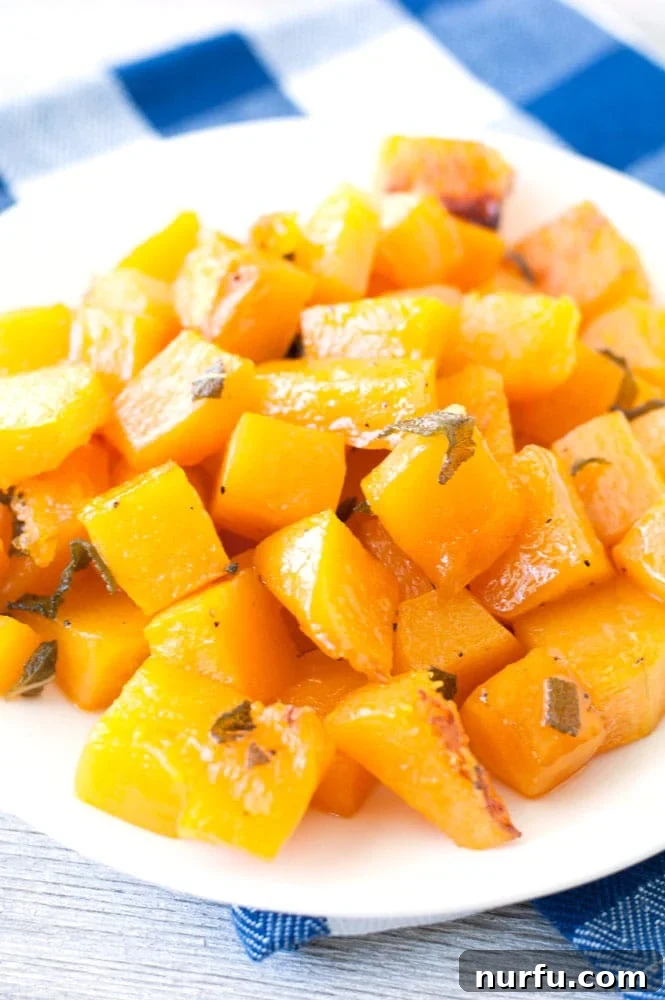
Elevate your autumn and winter dining experience with the irresistible flavors of Maple Sage Roasted Butternut Squash. This exquisite side dish, lovingly coated in pure maple syrup, premium extra virgin olive oil, and fragrant fresh sage, promises to be a culinary highlight at any meal, whether it’s a cozy weeknight dinner or a festive holiday spread.
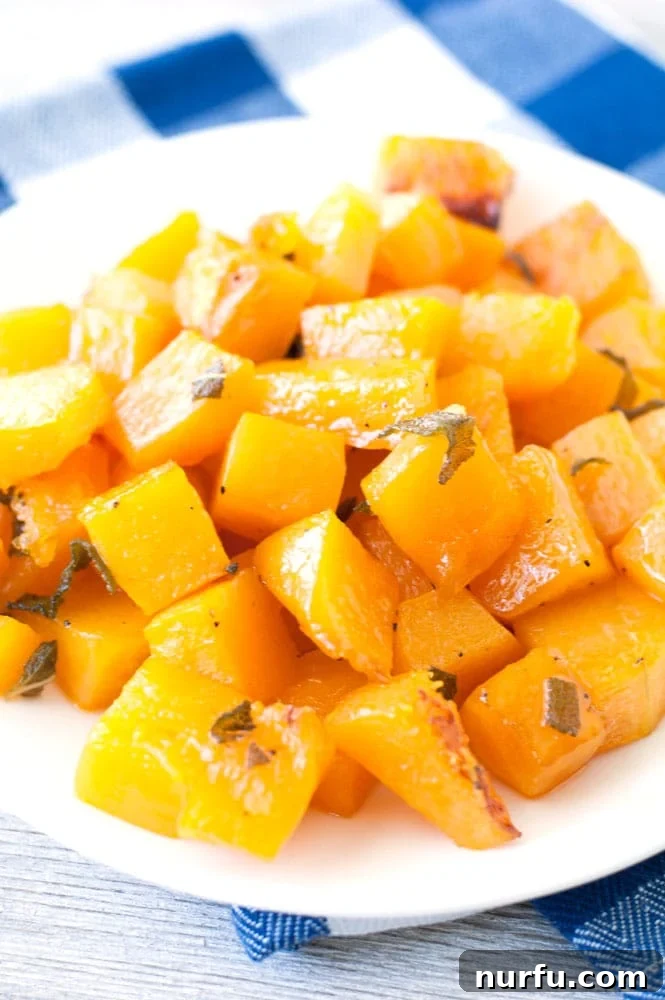
Maple Sage Roasted Butternut Squash: A Quintessential Fall Delight
As the days grow shorter and a crisp chill fills the air, our palates instinctively crave warm, comforting dishes that capture the essence of the season. Among the stars of autumn’s bounty, butternut squash stands out as a true culinary gem. Its vibrant orange hue, naturally sweet flavor, and incredibly versatile nature make it a beloved ingredient in countless kitchens. This Maple Sage Roasted Butternut Squash recipe celebrates everything wonderful about this seasonal favorite, transforming humble squash into an unforgettable side dish that’s both simple to prepare and bursting with sophisticated flavor.
Why Butternut Squash Deserves a Permanent Spot on Your Menu
Butternut squash isn’t just delicious; it’s a nutritional powerhouse. Packed with essential vitamins, minerals, and dietary fiber, it’s a smart choice for anyone looking to incorporate more wholesome vegetables into their diet. Rich in Vitamin A, which is crucial for vision and immune function, and a good source of Vitamin C, vital for skin health and immunity, butternut squash offers a healthful boost with every bite. It also provides potassium, an important electrolyte, and fiber, which aids digestion and promotes a feeling of fullness.
Beyond its health benefits, butternut squash truly shines in its versatility. While many enjoy it in creamy soups, hearty pasta dishes, or even unique recipes like enchiladas, sometimes the simplest preparations yield the most profound flavors. Roasting, in particular, is my absolute favorite way to prepare butternut squash. The high heat of the oven works magic, caramelizing its natural sugars and intensifying its inherent sweetness to an astonishing degree. This method creates a tender interior with slightly crispy, golden-brown edges – a texture combination that is simply divine.
The Unmatched Flavor of Fresh Butternut Squash: A Crucial Tip
While convenience often tempts us in the kitchen, there’s one shortcut I strongly advise against when it comes to butternut squash: pre-diced packages. While they might save a few minutes of prep time, the difference in flavor and texture is significant. Freshly cut butternut squash boasts a brighter, sweeter, and more robust flavor profile that simply can’t be replicated by its pre-cut counterparts. The moment you taste the difference, you’ll understand why taking the extra few minutes to prepare a whole squash is an investment well worth making for this recipe.
Mastering Butternut Squash Preparation for Effortless Roasting
For many home cooks, the most daunting aspect of preparing butternut squash is the cutting process. Its tough skin and firm flesh can seem intimidating, but with a few simple tricks, you can tackle it with confidence and ease. Forget struggling with a slippery squash; these methods will make prepping your butternut squash a breeze, allowing you to focus on the exciting flavors to come.
Essential Tools and Selecting Your Squash
Before you begin, gather your tools: a sharp chef’s knife, a sturdy vegetable peeler, and a microwave-safe plate. When selecting your butternut squash, look for one that feels heavy for its size, has a smooth, unblemished skin, and a firm texture. Avoid any squash with soft spots, mold, or cuts. A healthy, ripe squash is key to the best flavor.
Microwaving for Ease and Safety
My secret weapon for simplifying butternut squash preparation is a quick trip to the microwave. Placing the whole squash in the microwave for approximately one minute works wonders. This brief warming period slightly softens the skin and flesh, making it significantly easier (and safer!) to cut through the tough ends and then peel the exterior. This small step saves a lot of effort and reduces the risk of slips while handling your knife or peeler.
Step-by-Step Cutting Guide
- Once softened from the microwave, place the squash on a stable cutting board. Carefully use a large, sharp chef’s knife to slice off both the top and bottom ends of the squash. This creates a flat, stable surface for the next steps.
- With the ends removed, stand the squash upright on one of its flat ends. Using a sharp vegetable peeler, systematically remove the outer skin, working your way down in strips. The microwave trick should make this much smoother.
- Once peeled, lay the squash on its side and cut it in half horizontally, typically where the slender neck meets the bulbous base.
- Scoop out the seeds and fibrous strands from the bulbous section using a spoon. You can discard these or save the seeds for roasting as a snack!
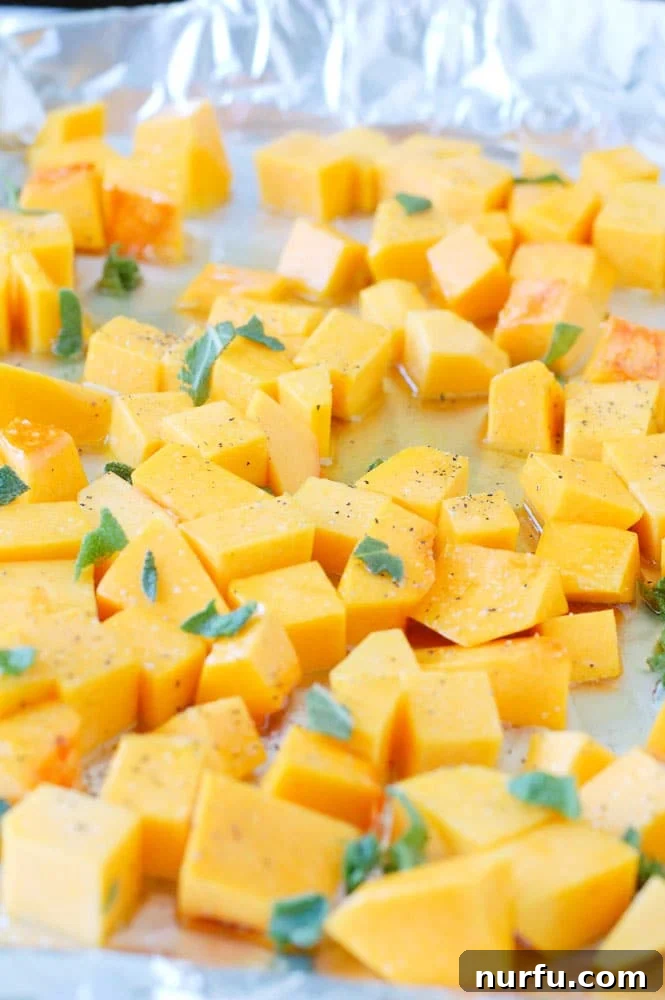
- Finally, dice the squash into uniform 1-inch cubes. Uniformity is important for even roasting, ensuring every piece cooks through at the same rate and achieves that perfect tender-crisp texture.
The Perfect Flavor Symphony: Maple and Sage
What truly elevates this roasted butternut squash from good to extraordinary is the thoughtful combination of maple syrup and fresh sage. These two ingredients are natural partners, each bringing unique qualities that enhance the squash without overpowering its inherent sweetness. It’s a classic autumn pairing that creates a flavor profile that is both comforting and sophisticated.
The Sweetness of Maple
Pure maple syrup is more than just a sweetener; it’s a flavor enhancer that brings a deep, complex warmth. Its rich, caramel notes complement the natural sweetness of the butternut squash, and as it roasts, the syrup lightly caramelizes, forming a beautiful glaze that adds another layer of texture and taste. Be sure to use pure maple syrup, not pancake syrup, for the best and most authentic flavor.
The Earthy Aroma of Sage
Sage is an herb that truly embodies the essence of fall. Its distinct, slightly peppery, and earthy aroma adds a fragrant depth that beautifully balances the sweetness of the maple and squash. When fresh sage is finely chopped and roasted, its essential oils release, permeating the dish with an inviting, savory complexity that makes every bite incredibly satisfying. It’s this combination of sweet and savory that truly makes the dish sing.
The Role of Olive Oil and Seasonings
Extra virgin olive oil serves as the perfect binding agent, ensuring the maple syrup and sage adhere beautifully to every cube of squash. It also helps in achieving that coveted golden-brown crispness during roasting. A simple seasoning of coarse salt and freshly ground black pepper is all that’s needed to round out the flavors, highlighting the star ingredients without distraction. The magic lies in the simplicity, allowing the high-quality ingredients to truly shine.
Roasting for Perfection: Tips and Tricks
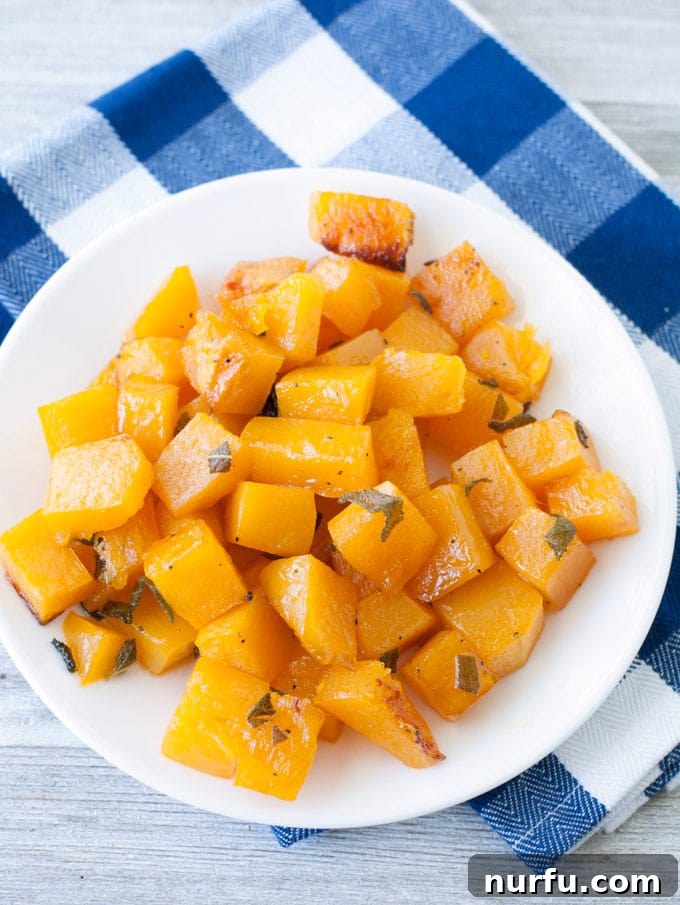
Achieving perfectly roasted butternut squash is easy with a few key considerations. First, ensure your squash cubes are as uniform as possible, as this guarantees even cooking. Second, and crucially, avoid overcrowding your baking sheet. Squash pieces need space to breathe and caramelize. If they’re too close together, they’ll steam instead of roast, resulting in a soggy texture. Use two baking sheets if necessary, spreading the squash in a single layer. Halfway through the cooking time, give the squash a good flip with a spatula. This ensures all sides get beautifully browned and tender. The squash is done when it’s fork-tender and exhibits a lovely golden-brown char on the edges, indicating that delightful caramelization.
Serving Suggestions and Culinary Pairings
This Maple Sage Roasted Butternut Squash is incredibly versatile, making it an ideal companion for a wide array of main courses. For a quick and nutritious weeknight meal, it pairs beautifully with roasted chicken breast or tender pork tenderloin. The sweet and savory notes of the squash complement poultry and pork wonderfully, creating a balanced and satisfying plate.
Looking ahead to the holidays? This dish makes an excellent, flavorful, and lower-calorie alternative to heavier, cream-based side dishes typically found on Thanksgiving or Christmas tables. Its vibrant color and festive flavors will brighten any holiday spread. It also pairs wonderfully with roasted turkey, glazed ham, or a savory vegetarian loaf. For a purely plant-based meal, serve it alongside quinoa or wild rice, perhaps with some toasted pecans or walnuts for added crunch and healthy fats.
Creative Variations to Explore
While this recipe is perfect as is, feel free to experiment with slight variations to suit your taste. A pinch of cinnamon or a tiny grating of fresh nutmeg can add another layer of autumnal warmth. For an extra herbaceous kick, consider adding a sprig of fresh thyme to the roasting pan. A handful of dried cranberries or toasted pecans tossed in during the last few minutes of roasting can introduce delightful textural contrast and pops of tartness or nuttiness. The possibilities are endless, making this recipe a fantastic canvas for your culinary creativity.
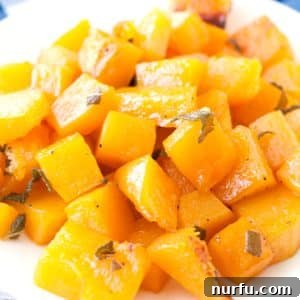
Maple Sage Roasted Butternut Squash
Heather Seeley
10
40
50
4
Print Recipe
Ingredients
-
1
large butternut squash
peeled, seeded, and cubed into 1-inch pieces -
1/4
cup
pure maple syrup -
2
tablespoons
extra virgin olive oil -
1/4
teaspoon
coarse salt -
1/4
teaspoon
ground black pepper -
5
fresh sage leaves
finely chopped
Instructions
-
Preheat your oven to 400 degrees F (200 degrees C).
-
Line a large baking sheet with aluminum foil for easy cleanup.
-
Place the whole butternut squash in the microwave for 1 minute to soften its skin. This makes it significantly easier and safer to cut.
-
Using a large, sharp knife, carefully cut off the top and bottom ends of the squash to create flat surfaces.
-
Use a sturdy vegetable peeler to remove the tough outer skin from the squash.
-
Cut the squash into two pieces (the neck and the bulbous base) and scoop out all seeds and fibrous material from the center.
-
Dice the squash into uniform 1-inch cubes. This ensures even roasting.
-
In a large bowl, whisk together the pure maple syrup, extra virgin olive oil, coarse salt, ground black pepper, and finely chopped fresh sage leaves.
-
Add the cubed butternut squash to the bowl and toss thoroughly until all the squash pieces are evenly coated with the maple-sage mixture.
-
Spread the seasoned squash in a single layer on the prepared baking sheet. Avoid overcrowding the pan; use two sheets if necessary to ensure proper caramelization.
-
Roast in the preheated oven for 30-40 minutes, flipping the squash cubes halfway through (after about 15-20 minutes). Continue roasting until the squash is tender when pierced with a fork and beautifully golden-brown with caramelized edges.
Nutrition Information (per serving)
Carbohydrates: 35g |
Protein: 1g |
Fat: 7g |
Saturated Fat: 1g |
Sodium: 154mg |
Potassium: 705mg |
Fiber: 3g |
Sugar: 16g |
Vitamin A: 19930 IU |
Vitamin C: 39.4mg |
Calcium: 112mg |
Iron: 1.3mg
Nutrition information is automatically calculated and should be used as an approximation.
Additional Info
Side Dish
American
Storage and Reheating Tips
Should you be lucky enough to have leftovers (it’s rare with this delicious dish!), Maple Sage Roasted Butternut Squash stores beautifully. Allow the squash to cool completely, then transfer it to an airtight container. It can be refrigerated for up to 3-4 days. To reheat, spread the squash on a baking sheet and warm it in a preheated oven at 350°F (175°C) for about 10-15 minutes, or until heated through and slightly re-crisped. Avoid microwaving for reheating if possible, as it can make the squash too soft.
Embrace the Flavors of Fall
This Maple Sage Roasted Butternut Squash recipe is more than just a side dish; it’s an ode to the comforting and rich flavors of the autumn and winter seasons. It brings together the natural sweetness of butternut squash with the earthy depth of sage and the warmth of maple syrup, creating a harmonious and utterly delicious experience. Simple yet sophisticated, healthy yet indulgent, it’s a dish that truly embodies the spirit of home cooking. So, gather your ingredients, follow these easy steps, and prepare to delight your taste buds with a side that will quickly become a cherished favorite.
We hope you enjoy making and sharing this wonderful recipe. Don’t forget to share your experience in the comments below!