
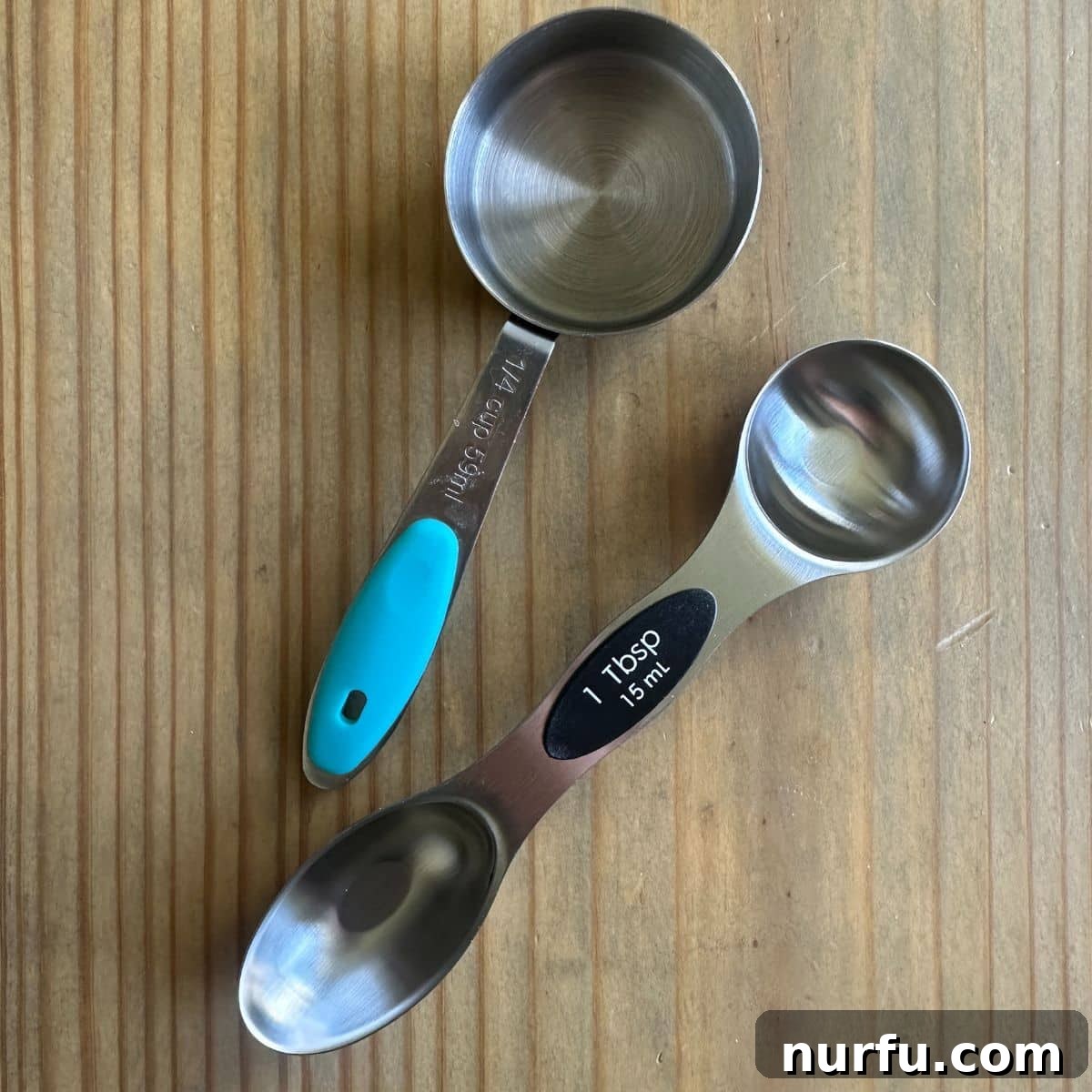
Understanding fundamental kitchen conversions is a cornerstone of successful cooking and baking. Whether you’re a seasoned chef or a beginner in the kitchen, knowing how to accurately measure ingredients is crucial for consistent results. One of the most common questions that arises is about converting between cups and tablespoons, especially when a recipe calls for a specific fraction of a cup. This comprehensive guide will demystify the conversion of **1/4 cup into tablespoons**, alongside other essential kitchen measurement tips and conversions, ensuring your culinary adventures are always a triumph.
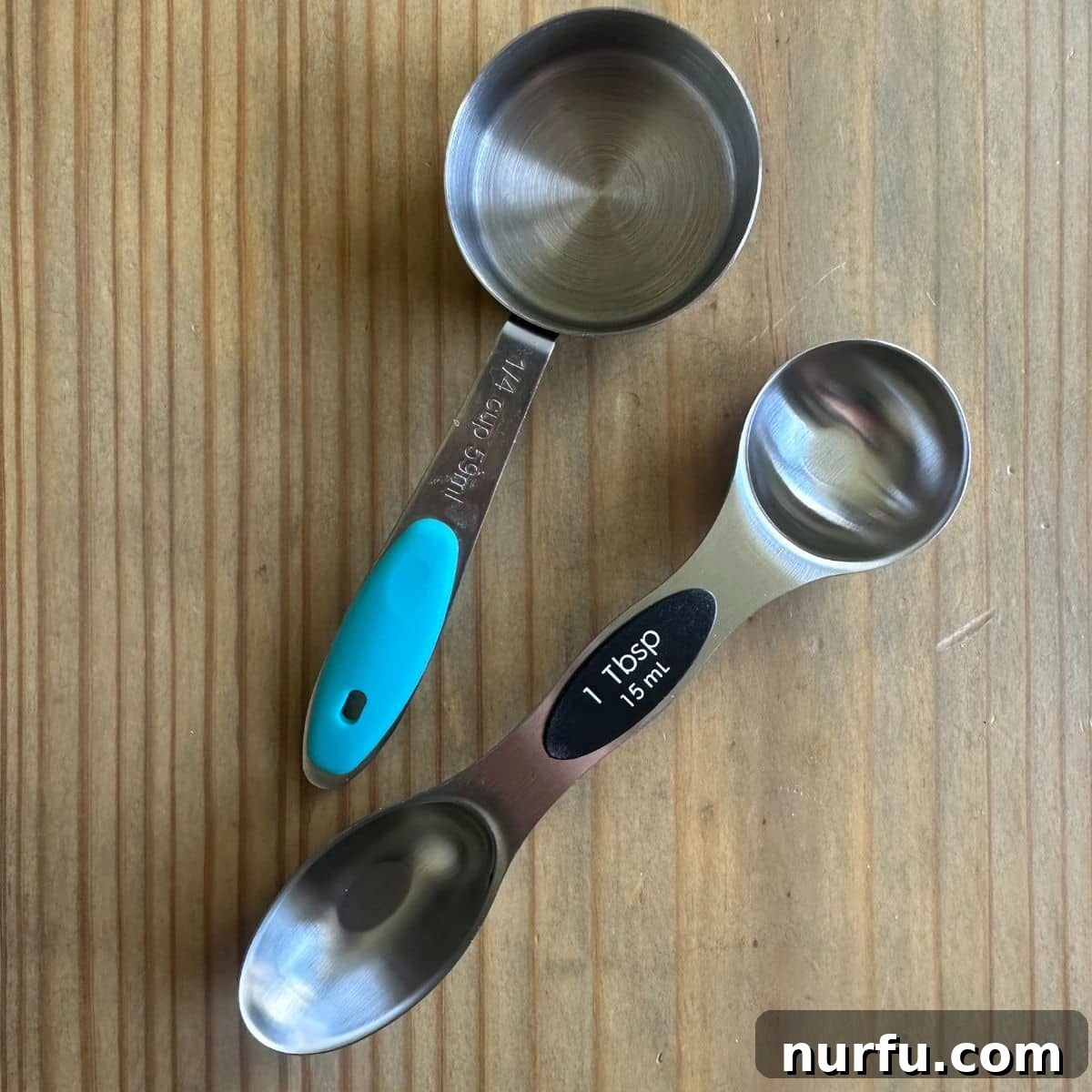
Table of Contents
- How Many Tablespoons In 1/4 Cup? Mastering the Basics
- Understanding Common Kitchen Measurement Systems
- The Importance of Accurate Measurement in Cooking and Baking
- How Many Fluid Ounces In 1/4 Cup?
- How Many Tablespoons In 1/3 Cup? And Other Fractions
- Essential Tablespoons To Cups and Fluid Ounces Conversion Chart
- Measuring Specific Ingredients: Butter and Beyond
- Pro Tips For Using Measuring Spoons And Cups Effectively
- Imperial VS Metric: Understanding Global Measurements
- Delving into The US Customary System
- Expanding Your Kitchen Measurement Knowledge
How Many Tablespoons In 1/4 Cup? Mastering the Basics
Let’s get straight to the most frequently asked question in many home kitchens: how many tablespoons are in 1/4 cup? The answer is simple and definitive: 4 tablespoons make 1/4 cup.
This conversion is a fundamental building block for countless recipes, especially in baking where precision is paramount. Knowing this simple fact can be a real lifesaver when you find yourself without a full set of measuring cups, or if a recipe requires a small, precise amount that’s easier to measure with spoons. Imagine you’re in the middle of preparing a delicate dessert, and your 1/4 cup measure is nowhere to be found. Instead of panicking or guessing, you can confidently reach for your measuring spoons and use four tablespoons to achieve the exact quantity needed. This flexibility is what makes understanding kitchen conversions so incredibly valuable.
To further understand this, let’s look at the standard US customary system. A full cup is equivalent to 16 tablespoons. Therefore, to find out how many tablespoons are in 1/4 cup, you can perform a simple calculation:
1 cup = 16 tablespoons
1/4 cup = 16 tablespoons * (1/4) = 4 tablespoons
This straightforward calculation proves the conversion and makes it easy to remember. Whether you’re making savory dishes or sweet treats, this foundational knowledge will serve you well, allowing you to adapt to different recipe formats and available kitchen tools with ease.
Understanding Common Kitchen Measurement Systems
Before diving deeper into specific conversions, it’s helpful to understand the measurement systems prevalent in cooking. The two primary systems are the Imperial (or US Customary) system and the Metric system. Most recipes originating from the United States will use the US Customary system, which employs units like cups, tablespoons, teaspoons, ounces, and pounds. Recipes from many other parts of the world, particularly Europe and Canada, typically use the metric system, with units such as milliliters, grams, and liters.
The conversions discussed in this article primarily refer to the US Customary system, which defines a cup and a tablespoon with specific volumetric values. While the exact volume of a “cup” or “tablespoon” can vary slightly between historical imperial definitions and modern customary ones, for practical home cooking in the US, the standard relationships (e.g., 16 tablespoons in a cup) are universally accepted.
The Importance of Accurate Measurement in Cooking and Baking
Why is accurate measurement so critical? In cooking, especially baking, ingredients often interact chemically. Too much or too little of a key ingredient can significantly alter the texture, flavor, and overall success of a dish. For instance, using too much flour can result in dry, crumbly baked goods, while an insufficient amount can lead to a runny batter that won’t set properly. Similarly, precise measurements for spices and flavorings ensure a balanced taste profile without any single element overpowering the dish.
Consistent measurements are also vital for recreating favorite recipes. If you want your famous chocolate chip cookies to taste exactly the same every time, using consistent measuring techniques is non-negotiable. This not only applies to dry ingredients but also to liquids, where subtle differences in volume can impact hydration and consistency. Investing a little time in understanding and practicing accurate measuring techniques will pay dividends in your kitchen, leading to more delicious and reliable results.
How Many Fluid Ounces In 1/4 Cup?
Beyond tablespoons, fluid ounces are another common unit of measurement, particularly for liquids. It’s useful to know how these relate to cups and tablespoons. In the US Customary system, 1 fluid ounce (fl. oz.) is equivalent to 2 tablespoons. Using our previous conversion, we can easily determine the fluid ounce equivalent for 1/4 cup:
Since 1/4 cup equals 4 tablespoons, and 1 fluid ounce equals 2 tablespoons:
1/4 cup = 4 tablespoons = 2 fluid ounces
This conversion is particularly handy when a recipe lists liquid ingredients in fluid ounces, but you prefer to measure in cups or tablespoons, or vice versa. For example, if a recipe calls for 2 fluid ounces of milk, you now know that you need exactly 1/4 cup or 4 tablespoons. This interchangeability offers greater flexibility and reduces potential confusion during meal preparation.
How Many Tablespoons In 1/3 Cup? And Other Fractions
While 1/4 cup is a common measurement, other fractions of a cup also appear frequently in recipes. Knowing these conversions can significantly speed up your cooking process and minimize the need for mental math or constant reference to conversion charts. For instance, let’s tackle 1/3 cup:
Similar to our 1/4 cup calculation, if 1 cup equals 16 tablespoons, then 1/3 cup is:
1/3 cup = 16 tablespoons * (1/3) = 5.333… tablespoons
Since you can’t practically measure a third of a tablespoon, this is usually rounded to the closest practical measurement, which is: 5 tablespoons and 1 teaspoon. (Remember, 1 tablespoon = 3 teaspoons, so 1 teaspoon = 1/3 tablespoon).
Other common conversions include:
- 1/2 cup = 8 tablespoons (half of 16 tablespoons)
- 3/4 cup = 12 tablespoons (three times 1/4 cup, or 3 * 4 tablespoons)
Having these key conversions memorized or readily available can dramatically streamline your cooking and baking, allowing you to work more efficiently and accurately, especially when modifying recipes or scaling them up or down.
Essential Tablespoons To Cups and Fluid Ounces Conversion Chart
For quick reference and to cover a wider range of common kitchen measurements, here is a comprehensive conversion chart detailing tablespoons, cups, and fluid ounces. This chart is an invaluable tool to keep handy in your kitchen, either printed out or bookmarked on your device, ensuring you always have accurate measurements at your fingertips for any recipe.
| Tablespoons (tbsp) | Cups | Fluid Ounces (fl. oz.) |
| 1 tablespoon | 1/16 cup | 0.5 fl. ounces |
| 2 tablespoons | 1/8 cup | 1 fl. ounce |
| 4 tablespoons | 1/4 cup | 2 fl. ounces |
| 5 tablespoons + 1 teaspoon | 1/3 cup | 2.67 fl. ounces (approx) |
| 8 tablespoons | 1/2 cup | 4 fl. ounces |
| 10 tablespoons + 2 teaspoons | 2/3 cup | 5.33 fl. ounces (approx) |
| 12 tablespoons | 3/4 cup | 6 fl. ounces |
| 16 tablespoons | 1 cup | 8 fl. ounces |
This chart covers the most common fractions and whole cup measurements, providing a quick visual reference for cooks of all levels. It highlights the direct relationship between these volume units, making it easier to adjust recipes or use alternative measuring tools.
Measuring Specific Ingredients: Butter and Beyond
While the conversions for liquid and dry ingredients often align, certain ingredients, like butter, come with their own unique measuring considerations. Fortunately, for volumetric conversions, the rule of thumb remains consistent.
When a recipe calls for 1/4 cup of butter, the conversion to tablespoons is exactly the same as for any other ingredient: 4 tablespoons of butter are needed. Most sticks of butter in the US are conveniently marked with tablespoon measurements, making it very easy to cut off the precise amount. A standard full stick of butter is usually 1/2 cup or 8 tablespoons, so 1/4 cup would be half a stick.
However, it’s worth noting that for highly precise baking, many professional bakers advocate for measuring butter (and other solid fats) by weight using a kitchen scale, as volume measurements can be prone to slight inaccuracies depending on how tightly packed or softened the butter is. While this level of precision isn’t always necessary for home cooking, it’s a good practice to consider for advanced baking projects.
Pro Tips For Using Measuring Spoons And Cups Effectively
Accurate measurement goes beyond just knowing the conversions; it also involves proper technique. The type of ingredient dictates the best approach for using your measuring tools. Here are some essential tips:
- Dry Ingredients: When measuring dry ingredients like flour, sugar, or cocoa powder, always use dry measuring cups and spoons.
- Spoon and Level Method: For most flours, spoon the ingredient into the measuring cup until it overflows, then use a straight edge (like the back of a knife or a specialized leveler) to scrape off the excess, ensuring a level measure. Avoid scooping directly with the measuring cup, as this can compact the flour and result in using too much.
- Sifting: It’s often recommended to sift dry ingredients like flour, powdered sugar, or cocoa powder before measuring. Sifting removes clumps and aerates the ingredient, making it lighter and ensuring a more accurate volume measurement.
- Brown Sugar: For brown sugar, recipes usually specify “packed brown sugar.” This means you should press the sugar firmly into the measuring cup until it retains the shape of the cup when inverted.
- Liquid Ingredients: For wet ingredients like water, milk, oil, or extracts, use liquid measuring cups and spoons.
- Eye Level: Place the liquid measuring cup on a flat, level surface (like your countertop) and bend down to eye level to check the measurement. Reading the measurement from above can lead to parallax error, resulting in an inaccurate reading.
- Fill to Mark: Carefully pour the liquid until the bottom of the meniscus (the curved surface of the liquid) aligns with the desired measurement mark.
- Consider a Kitchen Scale: For ultimate precision, especially in baking, a digital kitchen scale is an invaluable tool. Measuring by weight (grams or ounces) is more accurate than by volume because it eliminates inconsistencies due to packing, density, or whether an ingredient is sifted. Many modern recipes, particularly those from professional sources, include weight measurements for this reason.
By following these techniques, you’ll ensure that your measurements are as accurate as possible, leading to consistently excellent results in your cooking and baking endeavors.
Imperial VS Metric: Understanding Global Measurements
As mentioned earlier, the world is largely divided into two main measurement systems: the Imperial (or US Customary) system and the Metric system. The United States is one of the few countries that primarily still uses the Imperial system for everyday cooking, while most of the rest of the world, including Canada, the UK, and Europe, adheres to the Metric system.
This difference can sometimes lead to confusion and challenges when using international recipes. A “cup” in a US recipe is not the same as a “cup” in a metric recipe (which might refer to a 250ml cup), and even a “tablespoon” can vary slightly in volume across different countries (e.g., a British tablespoon is larger than a US tablespoon). These discrepancies, though seemingly small, can significantly affect the outcome of your recipe, particularly in sensitive preparations like baking where ingredient ratios are crucial.
When using a recipe from a different region, it’s always best to:
- Identify the Origin: Check if the recipe specifies the measurement system it uses.
- Use the Appropriate Tools: If a recipe is metric, using metric measuring cups and a kitchen scale set to grams will yield the best results. If it’s US customary, use your standard US measuring cups and spoons.
- Convert Carefully: If you must convert, use reliable conversion charts and be aware that slight rounding may occur. For dry ingredients, weight-based conversions are usually more accurate than volume-based ones when switching between systems.
Being mindful of these differences will help you navigate global culinary traditions and ensure your dishes turn out as intended, no matter their origin.
Delving into The US Customary System
The US Customary System (USCS) is the primary system of measurement used in the United States for various purposes, including cooking. It’s often referred to interchangeably with the “Imperial system” but has some distinct differences from the British Imperial system. For culinary purposes, the key units are:
- Volume: Teaspoons, Tablespoons, Fluid Ounces, Cups, Pints, Quarts, Gallons.
- Weight: Ounces, Pounds.
While this article focuses on the smaller volume conversions, it’s important to understand the broader context. The consistency within the USCS (e.g., 16 tablespoons in 1 cup, 8 fluid ounces in 1 cup) simplifies domestic recipes. However, minor variations can exist, such as the “US Legal Cup” defined by the FDA for nutritional labeling (approximately 240 mL) versus the “US Customary Cup” used in home cooking (approximately 236.59 mL). For practical home cooking, the difference is negligible and rarely impacts a recipe’s success. Therefore, the conversions provided throughout this article (e.g., 1/4 cup = 4 tablespoons) hold true for everyday kitchen use.
For those interested in the minute differences, especially when comparing to metric values, here’s a brief look:
| Milliliters (mL) | US Tablespoons | Metric Tablespoons (15mL) | |
| 1/4 US Customary Cup | 59.15 mL | 4 tablespoons | 3.94 metric tablespoons (approx.) |
As you can see, the US Customary 1/4 cup is exactly 4 US tablespoons. The slight difference in milliliters and the resulting fractional metric tablespoon value underscore why it’s best to stick to one system within a recipe to avoid accumulating errors from multiple conversions.
Expanding Your Kitchen Measurement Knowledge
Mastering kitchen conversions is an ongoing process that significantly enhances your cooking confidence and adaptability. Beyond the cup-to-tablespoon conversions, understanding other common measurements will further empower you in the kitchen. Here are some additional conversions and topics that many home cooks find invaluable:
- How many ounces in a pound? (Crucial for weight measurements)
- How many grams in a pound? (For converting between weight systems)
- How many ML in a shot? (Useful for beverages and liquid additions)
- How many ounces in a cup? (Direct fluid volume conversion)
- How many cups in a quart? (For larger liquid quantities)
- Teaspoons to Tablespoons: Remember, 3 teaspoons equal 1 tablespoon.
- Pinch, Dash, Smidgen: While not precise, understanding the approximate meaning of these terms can be helpful for seasoning. A “pinch” is roughly 1/8 teaspoon, a “dash” slightly less, and a “smidgen” even smaller.
Having a solid grasp of these various measurements will make you a more versatile and confident cook, capable of tackling any recipe, regardless of its origin or specified units.
Tablespoons In 1/4 Cup: A Quick Guide
Heather Seeley
2
2
4
tablespoons
Rate Recipe
Print Recipe
Ingredients
-
1/4
cup
liquid or dry ingredients (e.g., flour, sugar, water, milk)
Instructions
-
To measure 1/4 cup, simply use your measuring spoons to scoop out 4 individual tablespoons of your liquid or dry ingredient. Ensure to level dry ingredients for accuracy.
Nutrition Information (Approximate for general ingredients)
Calories:
28
kcal
|
Carbohydrates:
6
g
|
Protein:
1
g
|
Fat:
0.1
g
|
Saturated Fat:
0.02
g
|
Polyunsaturated Fat:
0.1
g
|
Monounsaturated Fat:
0.01
g
|
Sodium:
0.2
mg
|
Potassium:
8
mg
|
Fiber:
0.2
g
|
Sugar:
0.03
g
|
Vitamin A:
0.2
IU
|
Calcium:
1
mg
|
Iron:
0.1
mg
Nutrition information is automatically calculated, so should only be used as an approximation.
Additional Information
Main Course
American
If you have any further questions regarding kitchen measurements or need help with other conversions, please feel free to leave a comment below. Happy cooking!