
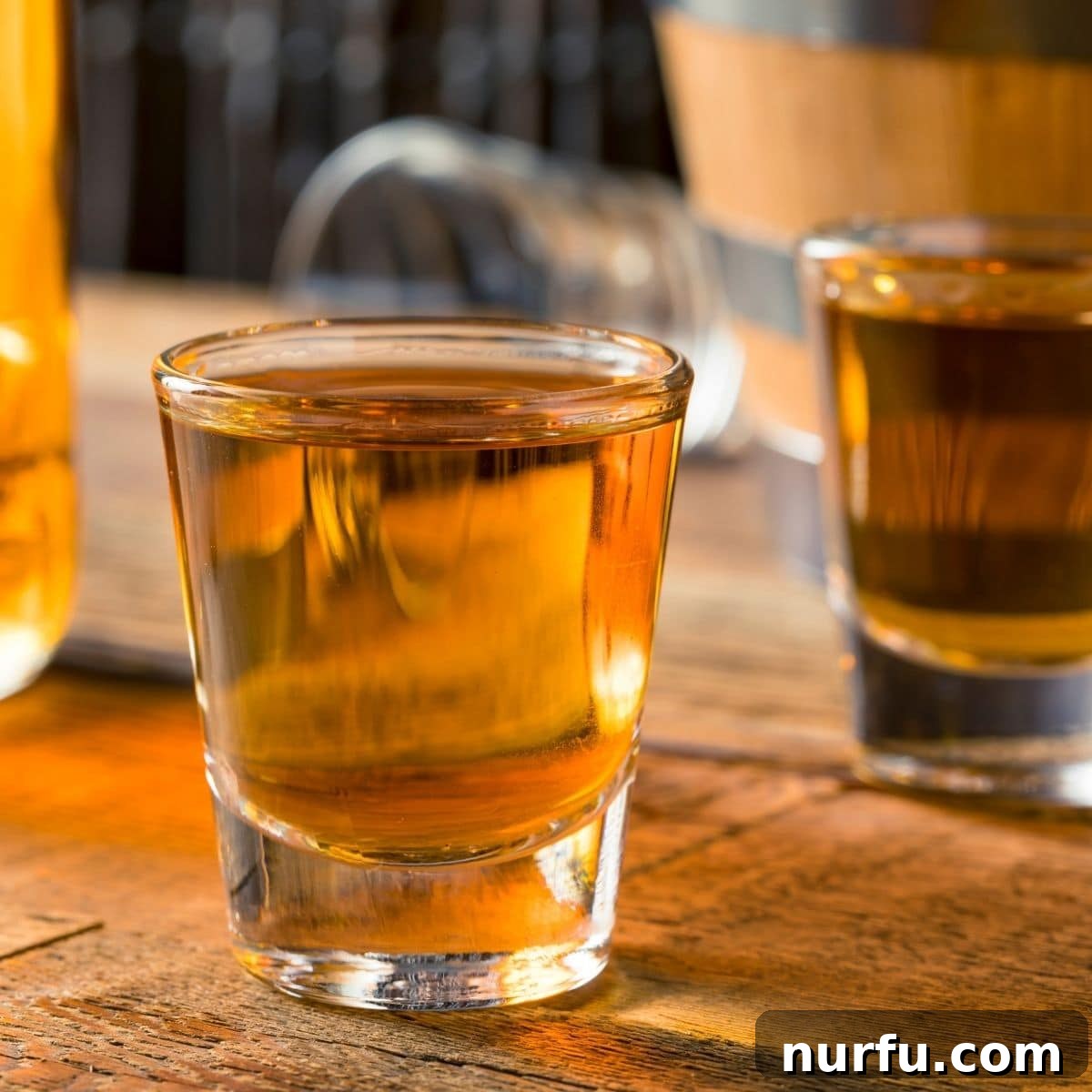
How many ml in a shot? How many ounces are in a shot? These are fundamental questions for anyone dabbling in mixology, whether you’re a seasoned bartender or a home enthusiast crafting cocktail recipes for friends. Understanding precise measurements is key to creating balanced drinks and ensures you’re serving responsibly. This comprehensive guide will answer these common inquiries and delve much deeper into the fascinating world of shot glass measurements, their history, types, and practical conversions.
Table of Contents
- How Many Milliliters (ml) in a Shot?
- Understanding the Shot Glass: More Than Just a Vessel
- Why is it Called a “Shot” Glass? Exploring the Origins
- The Diverse World of Shot Glass Sizes and Styles
- The Versatile Jigger: A Bartender’s Best Friend
- Fluted Shot Glasses: Style Meets Function
- Cheater Shots: An Optical Illusion
- Pony Shots: The Smaller Pour
- Rounded Shot Glasses: Classic Aesthetics
- Tall Shot Glasses: Perfect for Layering
- Standard or Straight Shot Glasses: The Everyday Choice
- Novelty Shot Glasses: Beyond Functionality
- How Many Ounces (fl oz) in a Standard Shot?
- The Double Shot: What It Means for Your Drink
- Mastering the Free Pour: Bartending Techniques at Home
- Common Bottle Conversions
- How Many Shots in a Fifth of Alcohol?
- How Many Shots in a 750ml Bottle?
- How Many Shots in a Pint?
- Why Accurate Measurements Matter in Mixology
- Tips for Your Home Bar
- More Essential Kitchen & Bar Conversions
How Many Milliliters (ml) in a Shot?
The simple question, “How many ml in a shot?” often leads to a surprisingly complex answer, primarily because shot sizes can vary significantly based on regional standards and local laws. However, when discussing the United States, the most widely accepted standard for a single shot is:
1.5 US fluid ounces = approximately 44 milliliters (ml) = 1 standard shot
It’s important to note that while 44 ml (or 1.5 fl oz) is the most common measurement in the U.S., some states or even specific establishments might have slight variations. For instance, Utah’s state liquor laws specifically define a shot as 1.5 US fluid ounces (44 ml). These regulations are often in place to ensure consistent serving sizes and promote responsible consumption.
Globally, the diversity in shot measurements is even greater. What constitutes a “shot” in Australia might be quite different from a “shot” in Russia or the UK. This international variation is a crucial factor to consider, especially if you’re exploring global cocktail recipes or traveling. Below is a detailed table illustrating some of these fascinating differences:
| Country / Region | Standard Fluid Ounces (approx.) | Standard Milliliters (approx.) | Notes |
| Australia | 1.0 fl oz | 30 ml | Common for ‘nip’ or standard shot. |
| Bulgaria | 1.7 fl oz | 50 ml | A more generous pour. |
| Canada | 1.4 fl oz | 41 ml | Slightly less than the US standard. |
| Denmark | 0.7 fl oz | 20 ml | One of the smaller European standards. |
| Finland | 1.35 fl oz | 40 ml | Standard ‘snapsi’. |
| Germany | 0.7 fl oz | 20 ml | Often called ‘Schnapsglas’. |
| Greece | 1.5 fl oz | 44 ml | Similar to the US standard. |
| Hungary | 1.35 fl oz | 40 ml | Common ‘feles’ measurement. |
| India | 1.0 fl oz | 30 ml | Standard bar measure. |
| Ireland | 1.2 fl oz | 35.5 ml | Often rounded to 35ml. |
| Israel | 2.0 fl oz | 59 ml | Larger standard shot. |
| Italy | 2.0 fl oz | 59 ml | Generous serving, often for liqueurs. |
| Japan | 1.0 fl oz | 30 ml | Often a ‘sho’ is 180ml, but a small drink is typically 30ml. |
| Poland | 1.35 fl oz | 40 ml | Common ‘kieliszek’ measurement. |
| Romania | 1.7 fl oz | 50 ml | Larger standard. |
| Russia | 1.7 fl oz | 50 ml | A typical ‘ryumka’. |
| Sweden | 1.35 fl oz | 40 ml | Standard ‘nubbe’. |
| South America (e.g., Brazil) | 0.8 fl oz | 25 ml | Smaller measures common in many countries. |
| United Kingdom | 0.8 fl oz | 25 ml | A single measure. Double is 50ml. |
| United States | 1.5 fl oz | 44 ml | The most widely accepted standard. |
This table highlights why relying solely on the term “shot” without knowing the specific regional context can lead to inconsistent results in your cocktail creations or an unexpected night out!
Understanding the Shot Glass: More Than Just a Vessel
A shot glass is a small, stout glass specifically designed to hold a single serving of liquor, often referred to as a “shot” or “nip.” While primarily used for serving straight spirits like tequila, vodka, or whiskey, they are equally essential for crafting potent and flavorful lemon drop shots, vibrant green tea shots, or delightful pineapple upside down cake shots. Their robust design, particularly the thick base, isn’t just for aesthetics; it provides stability and durability, allowing them to withstand the occasional “slamming” on a bar or table – a common ritual after a shot is consumed.
Beyond their functional use, shot glasses have also become popular collector’s items, often featuring unique designs, city landmarks, or brand logos. They serve as miniature souvenirs, each telling a story of a place visited or an experience shared.
Explore more delightful shot recipes to try at home:
- Tootsie Roll Shot
- Washington Apple Shot
- Apple Pie Shot
- Cinnamon Toast Crunch Shot
Why is it Called a “Shot” Glass? Exploring the Origins
The precise origin of the term “shot glass” is shrouded in a bit of historical mystery, with several popular theories circulating. While the name has been widely used since at least the 1940s, its roots likely extend much further back.
One of the most colorful theories traces the term back to the American Old West. Legend has it that cowboys and frontiersmen would sometimes trade a “shot” (a bullet or a small amount of gunpowder) for a small glass of whiskey at saloons. This exchange, where a single serving of liquor was equated to a unit of ammunition, supposedly gave rise to the term “shot glass.” While an engaging story, historical evidence to firmly support this theory is scarce.
Another intriguing hypothesis suggests the name might be a tribute to Friedrich Otto Schott, a renowned German glass chemist and co-founder of the Jenaer Glaswerk Schott & Genossen company. Schott was a pioneer in glass manufacturing during the late 19th century, developing heat-resistant borosilicate glass and contributing significantly to the science of optics and glass production. While Schott certainly revolutionized glassmaking, direct evidence linking his name to the small drinking vessel remains elusive, making this more of an interesting linguistic coincidence than a proven origin.
A simpler, more pragmatic theory suggests that “shot” refers to the act of quickly consuming the drink – a “shot” of liquor is typically downed in one swift gulp. This interpretation aligns with the small size of the glass and the potent nature of its contents. Regardless of its true genesis, the term “shot glass” has become universally recognized, embodying a distinct part of drinking culture worldwide.
The Diverse World of Shot Glass Sizes and Styles
Beyond the standard measurements, shot glasses come in an array of shapes, sizes, and designs, each serving a slightly different purpose or offering a unique aesthetic. Knowing the various types can enhance your home bar experience and help you choose the right vessel for your specific drink or occasion.
The Versatile Jigger: A Bartender’s Best Friend
While often confused with a shot glass, a jigger is primarily a professional measuring tool, not a drinking vessel. It’s an indispensable item for any serious mixologist. Typically made from stainless steel, a jigger features a distinctive hourglass shape with two conical ends of different capacities. The larger end usually measures a standard shot (1.5 fl oz or 44 ml), while the smaller end often measures a pony shot (1 fl oz or 30 ml) or half a shot (0.75 fl oz or 22 ml). Jiggers ensure precise and consistent pours, which is crucial for balancing the flavors in a complex cocktail.
Fluted Shot Glasses: Style Meets Function
Fluted shot glasses are characterized by decorative vertical grooves or ridges, usually around the base or lower portion of the glass. This distinctive fluted design isn’t just for aesthetics; it can also provide a better grip. These glasses are a common sight in bars and restaurants, offering a touch of classic elegance to the shot experience.
Cheater Shots: An Optical Illusion
The “cheater” shot glass is ingeniously designed with an exceptionally thick base. This clever construction creates an optical illusion, making the glass appear to hold a larger volume of liquid than it actually does. While the overall glass may look substantial, the internal capacity for liquor is often standard or even slightly less, effectively “cheating” the perception of the pour. They’re often used in establishments looking to serve standard shots while presenting a more generous visual.
Pony Shots: The Smaller Pour
A pony shot glass is noticeably smaller than a standard shot glass, typically holding only 1 fluid ounce (approximately 30 ml) of liquid. These are perfect for serving smaller tasting portions of spirits, cordials, or for recipes that call for a precise, smaller measure of a potent ingredient. They are also popular for mixed shots where a full standard shot might be too overwhelming.
Rounded Shot Glasses: Classic Aesthetics
As the name suggests, rounded shot glasses feature gently curved or bulbous sides, often tapering slightly towards the rim. This classic, ergonomic design makes them comfortable to hold and adds a soft, traditional look to your drinkware collection. They are a staple in many home bars and commercial settings.
Tall Shot Glasses: Perfect for Layering
Tall shot glasses are characterized by their narrow, elongated shape. Their height makes them ideal for creating visually stunning layered shots, where different colored and density liquids are carefully poured to stack atop one another without mixing. This type of glass truly allows the different hues and textures of your ingredients to shine, turning a simple shot into a miniature work of art.
Standard or Straight Shot Glasses: The Everyday Choice
These are the most common type of shot glass, featuring straight, cylindrical sides and a thick base. They are straightforward, durable, and reliable for everyday use. Their simple design makes them versatile for any spirit or shot recipe, and they are typically the go-to for bars and restaurants due to their practicality and ease of cleaning.
Novelty Shot Glasses: Beyond Functionality
Novelty shot glasses deviate from traditional designs, often incorporating humorous, themed, or artistic elements. These can range from glasses shaped like skulls, boots, or even miniature scientific beakers. While perhaps not always ideal for precise measurement, they add a fun and personal touch to gatherings and are popular as collectible souvenirs. Their primary purpose is often aesthetic enjoyment rather than strict utility.
How Many Ounces (fl oz) in a Standard Shot?
Reiterating the most common standard in the United States, a single shot typically contains:
1 standard shot = 1.5 US fluid ounces (fl oz)
Understanding “fluid ounces” is important here, as it’s a measure of volume, not weight. This 1.5 fl oz standard is widely adopted across bars, restaurants, and cocktail recipes throughout the country, making it the most reliable measurement to remember for home bartending.
The Double Shot: What It Means for Your Drink
When a recipe calls for a “double shot,” or if you order one at a bar, you’re generally receiving twice the volume of a standard single shot. Based on the widely accepted U.S. standard:
1 double shot = 3 US fluid ounces (fl oz)
In most contexts, any pour exceeding 2 fluid ounces (approximately 60 ml) would be considered a double shot. Double shots are common for espresso-based drinks, stronger cocktails, or when patrons simply prefer a more potent serving of their chosen spirit. Always be mindful of the increased alcohol content when consuming or serving double shots.
Mastering the Free Pour: Bartending Techniques at Home
While using a jigger or measuring spoons offers the utmost precision, mastering the “free pour” is an impressive skill for any aspiring bartender. Free pouring involves dispensing liquid directly from the bottle without the aid of a measuring tool, relying instead on timing and technique. The most popular method for accurately free-pouring a single shot is the “four-count” method.
Here’s how the four-count method works:
- Hold the bottle inverted over the glass with a pour spout inserted.
- Begin pouring while simultaneously counting “one-one thousand, two-one thousand, three-one thousand, four-one thousand.”
- Stop pouring precisely at the end of your “four-one thousand” count.
With consistent practice, this method can yield remarkably accurate 1.5-ounce pours. The key is maintaining a steady hand, a consistent flow rate, and a uniform counting cadence. Professional bartenders spend countless hours perfecting their free pour to ensure efficiency without sacrificing accuracy.
If free-pouring isn’t your style, or if you simply need an alternative measurement tool, common kitchen utensils can come to the rescue:
1 standard shot (1.5 fl oz) = 3 tablespoons (tbsp)
This conversion can be incredibly useful when you’re without a jigger or shot glass, allowing you to accurately measure spirits for your recipes using standard kitchenware.
Common Bottle Conversions
Understanding how many shots are contained within various standard alcohol bottle sizes is incredibly practical, whether you’re stocking your bar, planning a party, or simply managing your consumption. Here’s a breakdown based on the standard 1.5 fl oz (44 ml) U.S. shot size:
How Many Shots in a Fifth of Alcohol?
The term “fifth” refers to a bottle containing one-fifth of a U.S. gallon, a measurement that was historically common in the United States before the widespread adoption of metric bottle sizes. A fifth of alcohol is equivalent to approximately 750 ml or 25.36 fluid ounces. Therefore, assuming a standard 1.5 fl oz shot:
1 fifth of alcohol (approx. 750 ml / 25.36 fl oz) = 17 standard shots
Mathematically: 25.36 fl oz / 1.5 fl oz per shot ≈ 16.9 shots, which is typically rounded down to 17 full shots for practical purposes.
How Many Shots in a 750ml Bottle?
In most countries and certainly as the standard modern bottle size in the U.S., spirits are commonly sold in 750ml bottles. This is essentially the metric equivalent of a “fifth.” Using the same standard shot measurement:
1 x 750ml bottle = 17 standard shots (for a 1.5 fl oz / 44 ml shot glass)
Calculation: 750 ml / 44 ml per shot ≈ 17.04 shots. Again, this rounds to 17 full shots per bottle.
How Many Shots in a Pint?
A pint is another common unit of volume, though its size can vary significantly between the U.S. and the UK. For spirits, when referring to a “pint” of liquor, it usually implies a U.S. liquid pint.
- U.S. Liquid Pint: A U.S. liquid pint is equal to 16 fluid ounces (approx. 473 ml).
- U.K. Imperial Pint: A U.K. imperial pint is larger, at 20 fluid ounces (approx. 568 ml).
Using the U.S. liquid pint standard for spirits:
1 U.S. liquid pint (16 fl oz) = Approximately 10.6 standard shots (for a 1.5 fl oz / 44 ml shot)
Calculation: 16 fl oz / 1.5 fl oz per shot ≈ 10.67 shots. So, you’d get about 10 full shots, with a little left over.
Why Accurate Measurements Matter in Mixology
Precision is paramount in the art and science of cocktail creation. While casual pours might suffice for simple highballs, crafting truly exceptional cocktails demands careful attention to proportions. Accurate measurements:
- Ensure Consistency: A perfectly balanced drink today should taste identical tomorrow. Exact measurements allow you to replicate successful recipes every time.
- Achieve Flavor Balance: Cocktails are a delicate interplay of sweet, sour, bitter, and strong. Even slight deviations in ingredient amounts can throw off this balance, making a drink too sweet, too tart, or overly alcoholic.
- Optimize Ingredient Usage: Precise pouring prevents waste, which is especially important when using premium spirits or expensive liqueurs.
- Promote Responsible Drinking: Knowing exactly how much alcohol is in each drink helps both the server and the consumer track intake more effectively, leading to safer and more enjoyable experiences.
- Elevate Your Craft: Just like baking, mixology is a form of culinary art. Respecting recipes and measurements demonstrates a commitment to quality and enhances your skill as a home bartender.
Tips for Your Home Bar
Setting up a functional and efficient home bar requires more than just a selection of spirits. Investing in the right tools and understanding proper techniques will significantly elevate your cocktail game:
- Invest in a Quality Jigger: As discussed, a jigger is indispensable. Look for one made of durable stainless steel with clear markings for various measurements (e.g., 0.5 oz, 0.75 oz, 1 oz, 1.5 oz, 2 oz).
- Stock Various Shot Glasses: While a standard shot glass is fine, having a few different styles (like tall ones for layered shots or pony shots for tastings) can add versatility and flair.
- Practice Makes Perfect (for Free Pouring): If you want to master the free pour, practice with water and an empty bottle fitted with a pour spout. Use a jigger to check your accuracy after each pour until your “count” consistently yields the desired volume.
- Understand Your Local Standards: While the U.S. standard is 1.5 fl oz, if you frequently entertain international guests or follow recipes from different regions, it’s helpful to be aware of those variations.
- Always Measure First: For complex cocktails, it’s good practice to measure all your ingredients before you start mixing. This “mise en place” approach ensures a smooth and error-free process.
More Essential Kitchen & Bar Conversions
Mastering shot glass measurements is just one step in becoming a savvy home chef and bartender. Here are a few more crucial conversions that will prove invaluable in your culinary and mixology adventures:
- How many grams in a pound?
- How many teaspoons in a tablespoon?
- How many cups in a quart?
Understanding these fundamental conversions empowers you to confidently tackle any recipe, adapting measurements as needed and ensuring perfect results every time.
Conclusion: Your Guide to Perfect Pours
Navigating the world of shot glass measurements doesn’t have to be confusing. By understanding the standard 1.5 fl oz (44 ml) for a single shot in the U.S., recognizing international variations, and familiarizing yourself with different types of shot glasses and measuring tools like jiggers, you’re well on your way to becoming a confident and precise mixologist. Whether you’re shaking up a classic cocktail, lining up a round of celebratory shots, or simply seeking to understand the volumes behind your favorite spirits, accurate measurements are your secret ingredient for success. Cheers to perfectly poured drinks!