
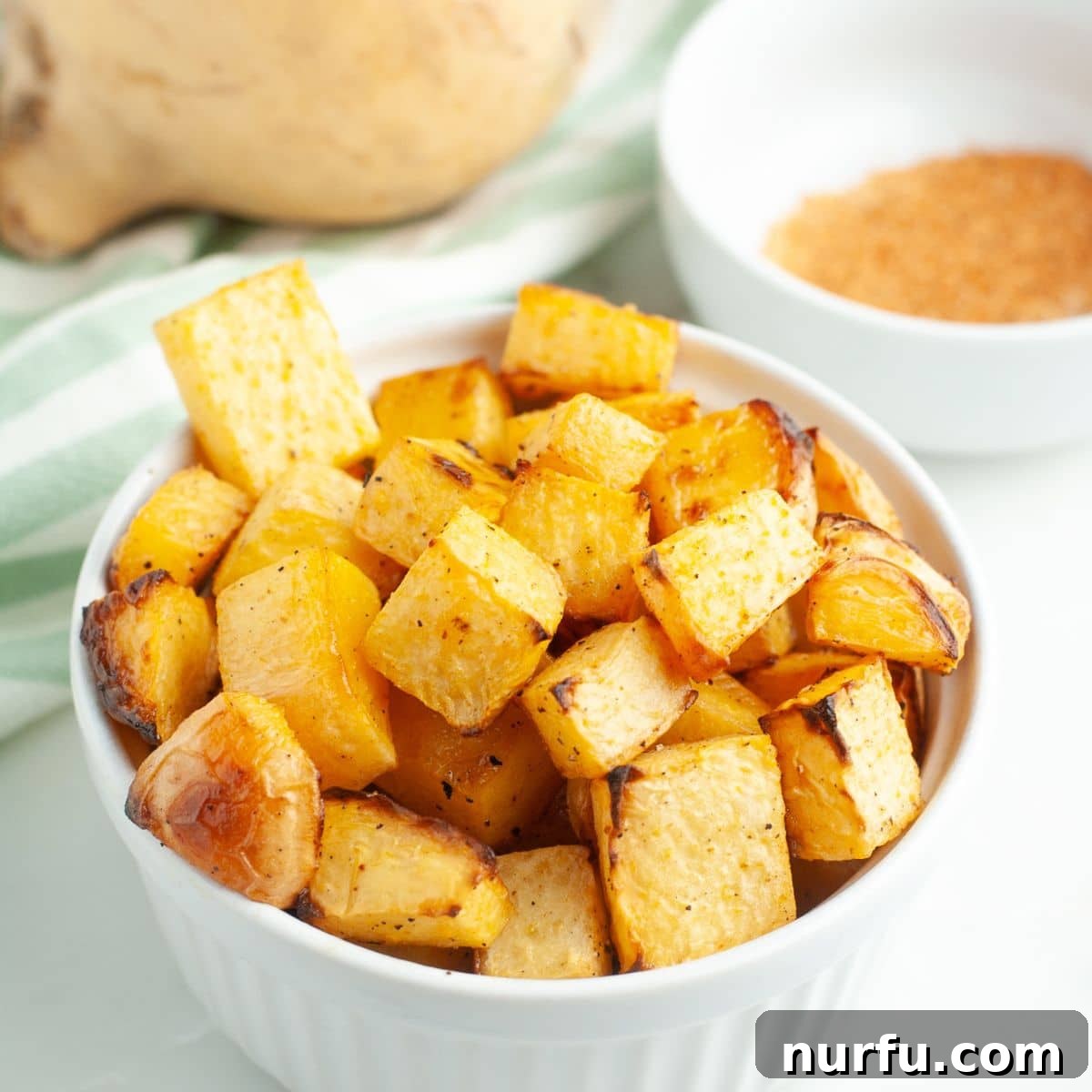
Roasted rutabaga is a simple side dish that tastes just like potatoes but is significantly lower in carbs. This remarkably easy recipe uses just a few common ingredients and can be prepared and cooked in under 40 minutes, making it a perfect addition to any weeknight meal or a healthy alternative for holiday feasts.
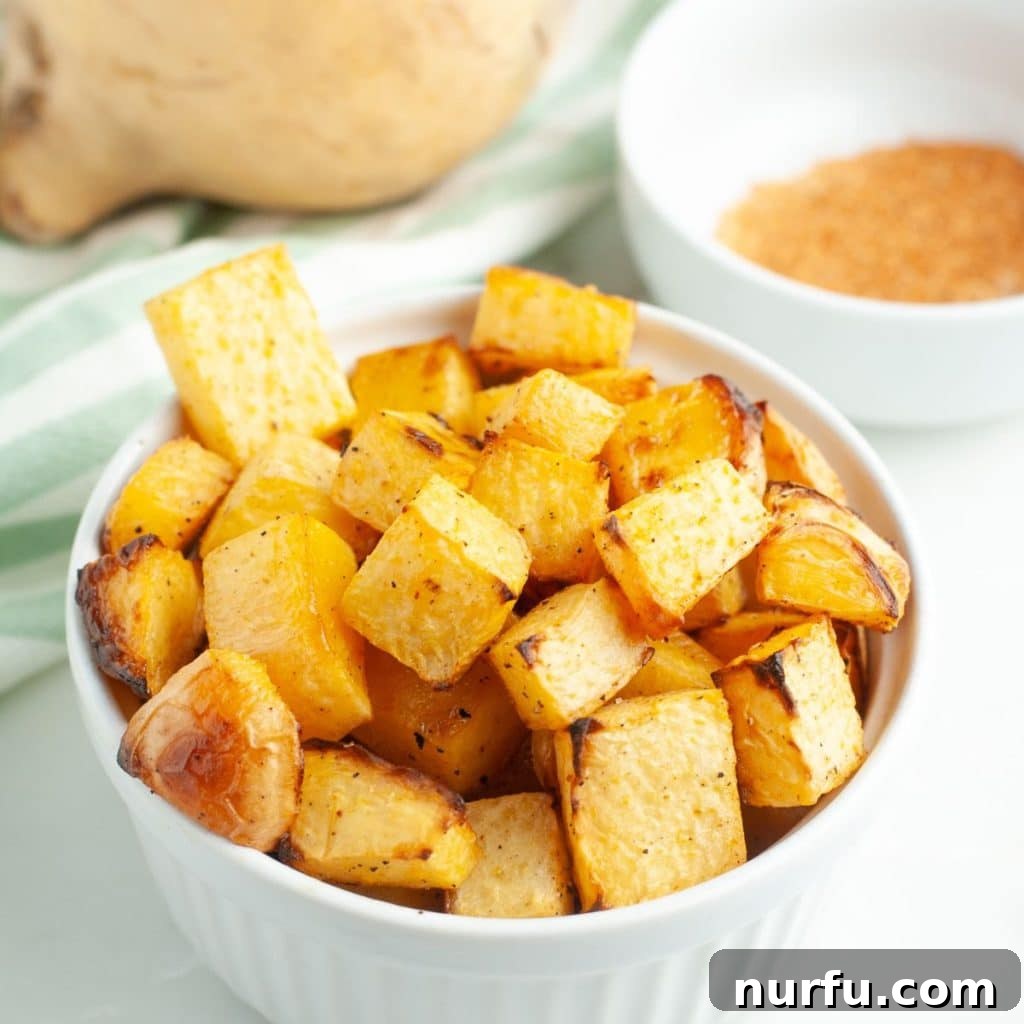
Discover the Delight of Roasted Rutabaga: Your New Favorite Low-Carb Side
Are you searching for a delicious, versatile, and healthy alternative to traditional potatoes? Look no further than roasted rutabaga! This often-overlooked root vegetable transforms into a culinary gem when roasted, offering a delightful texture and a subtly sweet, earthy flavor that beautifully complements a wide array of main courses. Our easy recipe brings out the best in rutabaga, proving that healthy eating can be incredibly flavorful and satisfying. In less than 40 minutes, you can have a comforting, nutrient-dense side dish on your table that your whole family will love, even those who claim not to like “new” vegetables!
What is Rutabaga, and Why is it a Superstar Root Vegetable?
Sometimes affectionately referred to as a “Swedish turnip” or “swede,” rutabaga is a cruciferous root vegetable known for its robust flavor and impressive nutritional profile. It’s a natural hybrid of a cabbage and a turnip, boasting a distinct taste that’s slightly sweeter and milder than a turnip, with a delightful earthiness. Its dense, starchy texture makes it an excellent stand-in for potatoes, especially for those mindful of carbohydrate intake or following specific dietary plans like keto or low-carb.
Beyond its appealing taste and satisfying texture, rutabagas are packed with essential vitamins and minerals. They are an excellent source of Vitamin C, which is crucial for immune health, and a good source of dietary fiber, supporting digestive wellness and promoting feelings of fullness. Additionally, rutabagas provide potassium for heart health, as well as various antioxidants that help combat oxidative stress. Opting for rutabaga over white potatoes can significantly reduce your carb and calorie consumption, making it an ideal choice for a healthier lifestyle without sacrificing flavor or the comforting feel of a roasted vegetable side.
Why You Will Absolutely Love This Roasted Rutabaga Recipe
This roasted rutabaga recipe isn’t just another side dish; it’s a versatile and healthful addition to your culinary repertoire. Here’s why it’s destined to become a staple in your kitchen:
- Effortlessly Easy: With minimal prep and straightforward steps, this recipe is perfect for busy weeknights or when you need a quick, healthy side that doesn’t demand hours in the kitchen. You’ll be amazed at how simple it is to achieve such fantastic flavor with so little effort.
- Flavor Explosion (Customizable): While our base recipe champions a zesty Cajun or Creole seasoning blend for a warming kick, the true beauty of rutabaga lies in its mild, versatile canvas. This allows you to tailor the flavors to your exact preferences. Whether you crave sweet, savory, spicy, or herbaceous, this recipe adapts effortlessly to your taste, making it a truly personalized dish.
- Incredibly Versatile: As a superior low-carb and lower-calorie alternative to potatoes, roasted rutabaga pairs harmoniously with nearly any main course. Imagine it alongside a perfectly seared steak, tender chicken breast, flaky baked fish, or even as part of a hearty vegetable bowl. It’s also excellent in wholesome stews or as a standalone healthy snack.
- Nutrient-Dense & Low-Carb: Enjoy a side dish that not only tastes incredible but also contributes significantly to your daily nutrient intake, supporting overall health and well-being without the carb load of traditional root vegetables. It’s a smart choice for maintaining energy levels and supporting a balanced diet.
Essential Ingredients for Perfectly Roasted Rutabaga
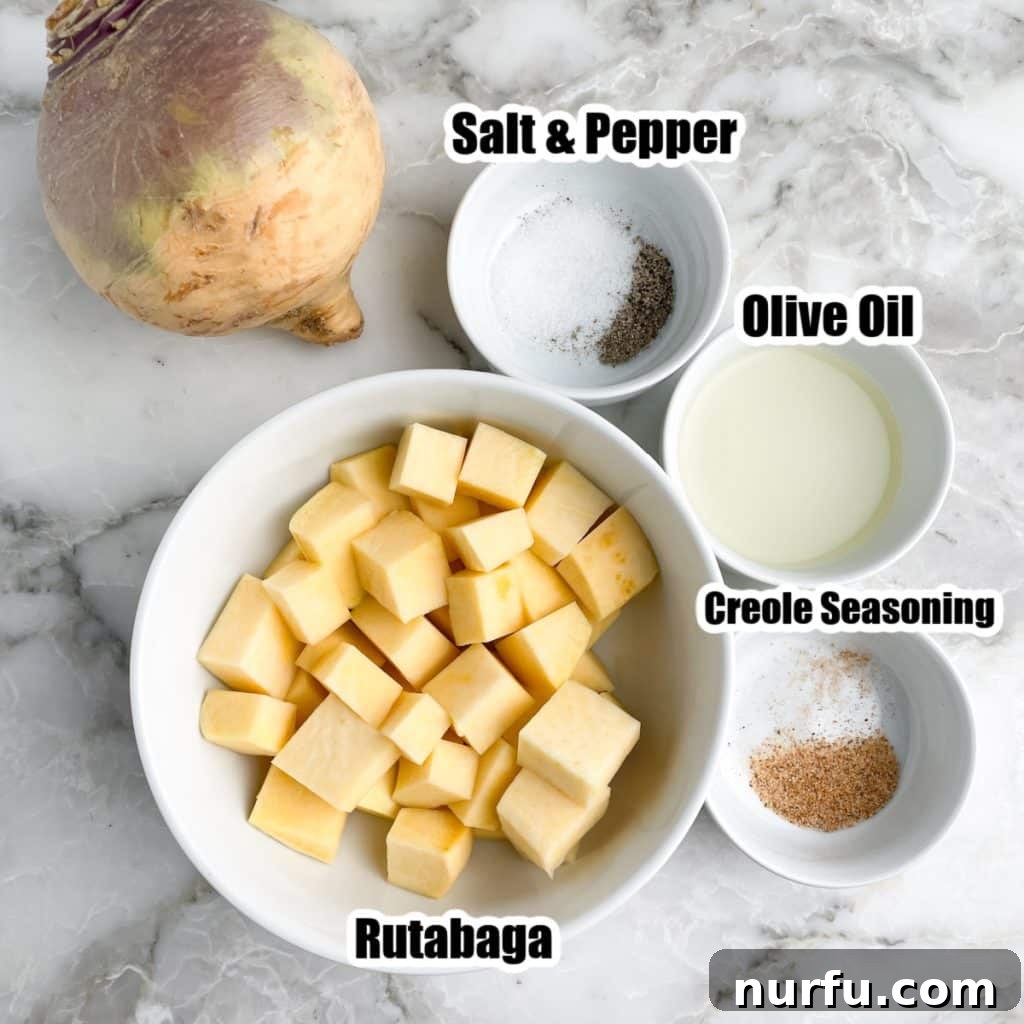
Crafting this delectable and healthy side dish requires just a handful of simple ingredients, proving that healthy and flavorful meals don’t need to be complicated or expensive:
- Rutabagas: The magnificent star of our show! When selecting rutabagas, look for ones that are firm to the touch, smooth-skinned, and feel notably heavy for their size. These characteristics indicate freshness and good moisture content. Avoid any with soft spots, deep cuts, or significant blemishes, as these can be signs of spoilage or damage. Their robust nature means they store quite well in a cool, dark place, so you can always have some on hand for spontaneous cooking.
- Olive Oil: A cornerstone in healthy cooking, extra virgin olive oil is absolutely essential for achieving that coveted golden-brown, slightly crispy exterior and tender, creamy interior. Its mild, fruity flavor complements the rutabaga without overpowering its natural taste. For those looking for alternatives, avocado oil, grapeseed oil, or even melted coconut oil can also be used, each offering slightly different flavor nuances.
- Seasonings: Our base recipe calls for a simple yet potent trio that creates a fantastic flavor profile: salt, ground black pepper, and Cajun seasoning. This blend adds a fantastic depth of flavor, a touch of savory warmth, and a subtle kick. The salt enhances all the other flavors, while the pepper adds a mild piquancy. Cajun seasoning is a blend often containing paprika, garlic powder, onion powder, and various peppers, contributing to a complex and irresistible taste. Feel free to adjust the quantities to your personal taste preference or explore the exciting seasoning variations we suggest further down in this guide for endless possibilities!
Step-by-Step Guide: How to Make Roasted Rutabaga
Follow these simple, clear instructions to prepare a batch of perfectly roasted rutabaga that’s deliciously crispy on the outside and wonderfully tender on the inside – a true delight for any meal.
- Prepare Your Oven and Baking Sheet: Begin by preheating your oven to a robust 425 degrees F (220 degrees C). This high heat is crucial for achieving rapid caramelization and that desired crispiness on the rutabaga cubes. While the oven preheats, line a large baking sheet with aluminum foil or parchment paper. This vital step ensures easy cleanup and, more importantly, prevents the rutabaga from sticking to the pan, guaranteeing a better roast.
- Clean, Peel, and Cube the Rutabaga: Thoroughly clean the rutabagas under cool running water, scrubbing off any dirt. Using a sharp, sturdy knife or a heavy-duty vegetable peeler, carefully remove the thick, waxy outer skin. Rutabaga skin can be quite tough, so exercise caution. Once peeled, cut off the top and bottom ends of each rutabaga. Next, slice the rutabaga into thick disks, then cut each disk into strips, and finally, dice them into uniform small cubes, roughly ¾ to 1 inch in size. Consistency in size is key here, as it ensures all pieces cook evenly at the same rate. Transfer all the cubed rutabaga into a large mixing bowl.
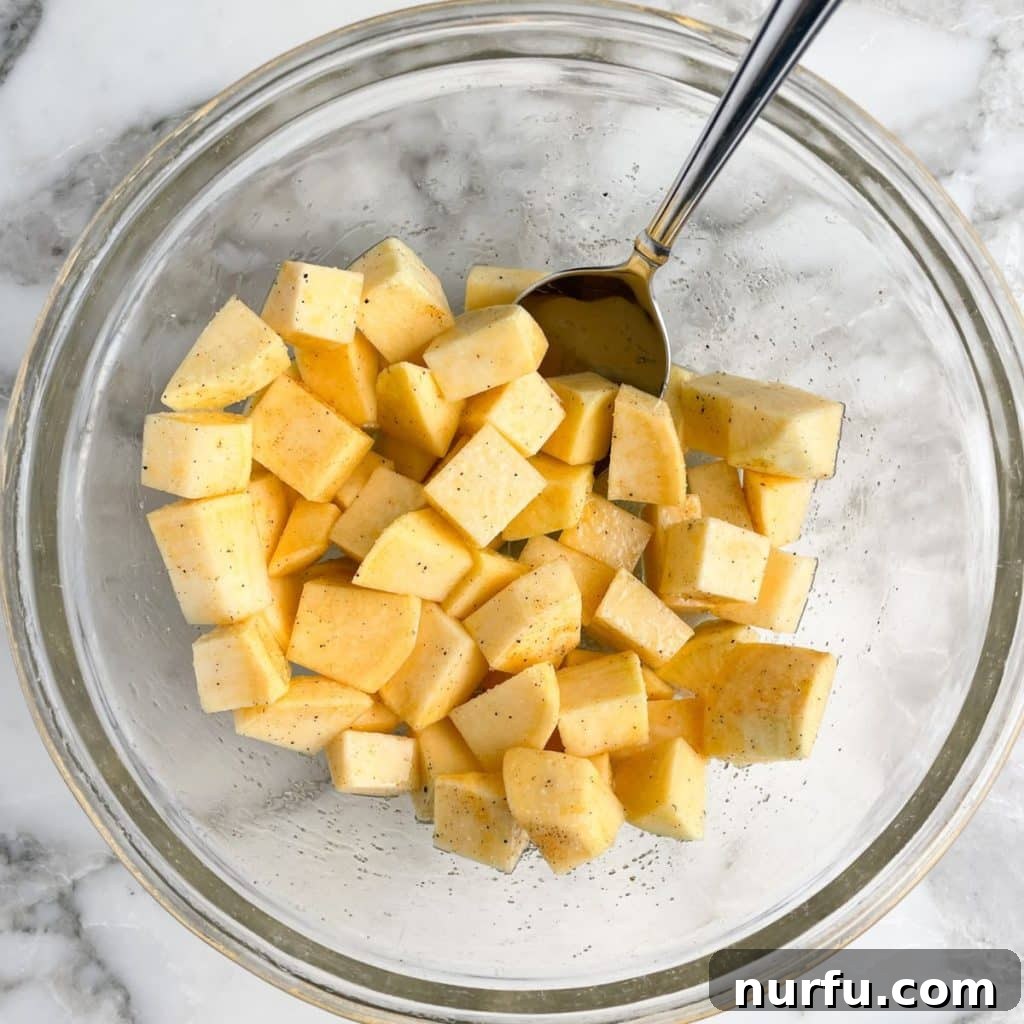
- Season Generously: Drizzle the measured olive oil evenly over the rutabaga cubes in the bowl. Next, sprinkle the salt, ground black pepper, and your chosen seasoning (such as Cajun or Creole seasoning for a delightful kick) evenly over the oil-coated rutabaga. Don’t be shy with the seasonings, as rutabaga has a mild flavor that can handle a good amount of spice.
- Toss to Coat: Using your clean hands or a large sturdy spoon or spatula, toss the rutabaga cubes thoroughly. Mix them until each and every piece is lightly and uniformly coated with the olive oil and seasonings. Ensure no dry spots remain; this even coating is absolutely vital for developing fantastic flavor and achieving that sought-after crispy texture during roasting.
- Arrange on Baking Sheet: Carefully spread the seasoned rutabaga cubes onto the prepared baking sheet. It is critically important to arrange them in a single layer, ensuring there is ample space between each cube. Do not overcrowd the pan. If the rutabaga pieces are too close together, the moisture they release during cooking will cause them to steam instead of roast, resulting in a soggy, rather than crispy, texture. If necessary, divide the rutabaga between two baking sheets to ensure optimal spacing.
- Roast to Perfection: Place the baking sheet (or sheets) in the preheated oven and roast for a total of 25-30 minutes. Halfway through the cooking time (typically around 12-15 minutes), use a spatula to flip the rutabaga cubes. This ensures even browning and crisping on all sides. Continue roasting until the rutabaga is fork-tender – meaning a fork can easily pierce a cube with little resistance – and beautifully golden brown, with slightly caramelized, crispy edges. Serve immediately and enjoy your perfectly roasted rutabaga!
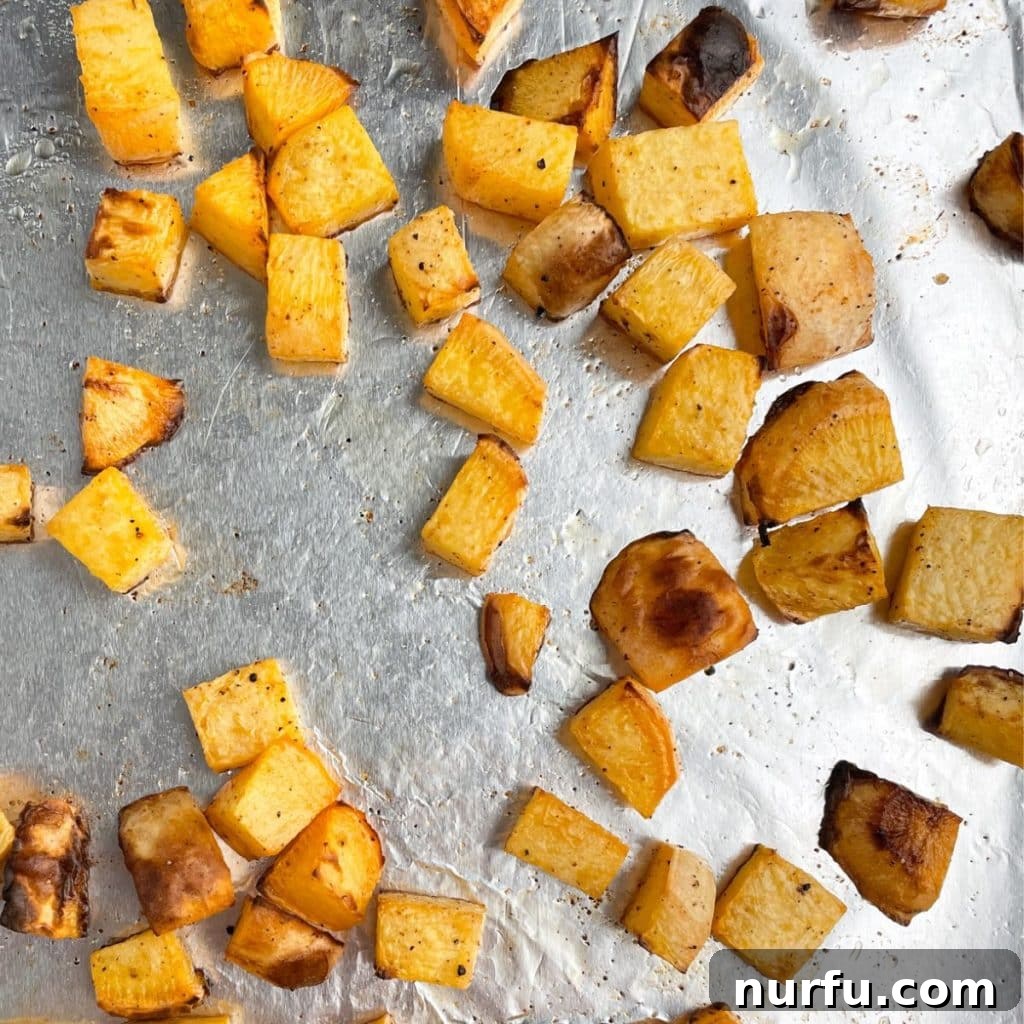
Expert Tips for Mastering Your Roasted Rutabaga
Achieving restaurant-quality roasted rutabaga is straightforward when you follow these helpful tips and tricks. These details can make all the difference between good and absolutely amazing!
- Precision in Cubing: As emphasized in the steps, proper preparation is fundamental. After thoroughly cleaning, peeling the thick, waxy skin of a rutabaga often requires more than a flimsy peeler. A sturdy, sharp vegetable peeler or even a sharp chef’s knife is recommended. Once peeled, strive for uniform, bite-sized cubes, typically ¾ to 1 inch. This consistency ensures that every single piece cooks evenly, preventing some from being undercooked and hard while others are overly soft or mushy.
- Avoid Overcrowding the Pan: This is perhaps the most critical tip for perfect roasting, not just for rutabaga but for any roasted vegetable. When vegetables are packed too tightly on a baking sheet, the moisture they release during cooking has nowhere to escape. This creates steam, which in turn causes the vegetables to become soggy and soft instead of developing a crispy, caramelized exterior. Give your rutabaga cubes plenty of space to breathe; if necessary, use two baking sheets to ensure ample space between individual cubes.
- High Heat is Your Best Friend: Roasting rutabaga at a high temperature, typically between 400-425°F (200-220°C), is ideal for promoting rapid caramelization, often referred to as the Maillard reaction. This high heat helps to quickly create that desirable golden-brown crust and tender interior, locking in the flavors and enhancing the texture.
- Flip for Evenness: Don’t forget this simple but effective step! Flipping the rutabaga cubes halfway through the cooking process ensures that all sides get a chance to make direct contact with the hot baking sheet. This leads to more uniform browning and crisping, giving you consistently textured and flavored pieces throughout your dish.
- Taste and Adjust Seasoning: Before serving your roasted rutabaga, always taste a piece. The natural sweetness of rutabaga can be beautifully enhanced by salt, and different seasonings can be brought to life. You might find it needs a little more salt to pop, an extra grind of black pepper, or a final pinch of your favorite seasoning to truly sing and perfectly complement your main dish.
- Don’t Skimp on the Oil: While you certainly don’t want to drown your rutabaga in oil, a good, even coating of olive oil (or your chosen alternative) is crucial. The oil serves multiple purposes: it contributes to the flavor, helps prevent sticking to the baking sheet, and most importantly, it’s essential for conducting heat and creating that desirable crispy texture on the exterior of the rutabaga cubes.
Endless Flavor Variations for Your Seasoned Roasted Rutabaga
One of the most appealing aspects of rutabaga is its mild, earthy flavor profile, which makes it an incredibly versatile canvas for various seasonings. Don’t be afraid to get creative and customize your roasted rutabaga to suit any meal, mood, or dietary preference. Here are a few suggestions to inspire your culinary adventures and transform your rutabaga:
- Savory & Classic Enhancements:
- Garlic Lover’s Delight: For an undeniably fragrant and savory depth, incorporate 1 teaspoon of garlic powder (or 2-3 cloves of finely minced fresh garlic, added during the last 10-15 minutes of roasting to prevent burning) along with your salt and pepper.
- Onion & Herb Blend: Add ½ teaspoon of onion powder and a blend of classic dried herbs like thyme, rosemary, or sage for an aromatic, comforting flavor that evokes rustic, hearty meals.
- Ranch Seasoning: For a simple, family-friendly twist that appeals to many palates, sprinkle a packet of store-bought ranch seasoning mix over your rutabaga before roasting.
- Smoked Paprika: A teaspoon of smoked paprika adds a beautiful reddish hue and a deep, smoky undertone that pairs wonderfully with a variety of meats or vegetarian dishes.
- Spicy & Bold Kicks:
- Amp Up the Heat: In addition to the Creole or Cajun seasoning mentioned in our recipe, a generous pinch of red pepper flakes or a dash of cayenne pepper will add a lovely warmth and subtle (or not-so-subtle!) heat for those who enjoy a bit of spice.
- Curry Infusion: For an exotic and aromatic touch, mix ½ to 1 teaspoon of mild or hot curry powder with a pinch of turmeric. This vibrant seasoning is fantastic with chicken, lentil dishes, or even as a standalone snack.
- Sweet & Earthy Delights:
- Maple Cinnamon Dream: For a delightful autumnal or holiday side dish, toss your rutabaga with 1-2 tablespoons of pure maple syrup and a generous sprinkle of ground cinnamon before roasting. A pinch of nutmeg or allspice can also be added for extra warmth.
- Brown Sugar Glaze: A spoonful of brown sugar melted with a knob of butter can create a sweet, sticky, and slightly caramelized glaze that’s simply irresistible and great for a Thanksgiving or Christmas spread.
- Global Inspired Flavors:
- Mediterranean Zest: Use a Greek seasoning blend, fresh oregano, and a squeeze of fresh lemon juice after roasting to complement dishes like falafel, grilled chicken, or lamb. The bright, tangy notes are a perfect contrast.
- Italian Herb Garden: A classic Italian seasoning blend (containing oregano, basil, thyme, and rosemary) pairs beautifully with a sprinkle of grated Parmesan cheese (added during the last 5 minutes of roasting) for a Mediterranean-inspired side dish that’s incredibly savory.
- Asian Flair: A drizzle of sesame oil, a dash of soy sauce (or tamari for gluten-free), and a sprinkle of ginger powder can give your rutabaga an unexpected and delicious Asian-inspired twist.
Remember to always taste and adjust the amount of seasonings to your personal preference. A little experimentation in the kitchen can lead to discovering your next favorite flavor combination for roasted rutabaga!
Storage and Reheating: Keeping Your Roasted Rutabaga Fresh
Roasted rutabaga is not only delicious fresh out of the oven but also holds up remarkably well as leftovers, making it an excellent component for meal prep or a convenient dish to enjoy throughout the week. Here’s how to properly store and reheat it to maintain its best texture and flavor:
- Refrigerator Storage: Allow any leftover roasted rutabaga to cool completely to room temperature before storing. This prevents condensation from forming and keeps the rutabaga from becoming soggy. Transfer it to an airtight container – a glass container works particularly well for maintaining freshness – and store it in the refrigerator for up to 3-4 days.
- Freezing for Longer Preservation: If you’ve made a larger batch or wish to prepare ahead for future meals, roasted rutabaga freezes beautifully. Once the rutabaga has completely cooled, spread the roasted cubes in a single layer on a parchment-lined baking sheet. Place the baking sheet in the freezer for about an hour, or until the cubes are individually frozen solid. This “flash freezing” step prevents them from clumping together in a large block. Once frozen, transfer the individual rutabaga cubes to a freezer-safe bag or container, ensuring you remove as much air as possible to prevent freezer burn. It can be stored in the freezer for up to 3 months.
- Reheating Instructions for Best Results:
- From Refrigerator (Oven/Air Fryer Recommended): For the best texture, resembling freshly roasted, reheat refrigerated rutabaga in the oven or an air fryer. Spread the cold cubes on a baking sheet (or in the air fryer basket) and warm at 375 degrees F (190 degrees C) for about 10-15 minutes, or until thoroughly heated through and re-crisped on the edges. An air fryer at 350 degrees F (175 degrees C) for 5-8 minutes will yield extra crispiness. Microwaving is an option for speed, but it typically results in a softer, less crispy texture.
- From Freezer: For optimal results, thaw frozen roasted rutabaga in the refrigerator overnight before reheating. Once thawed, follow the reheating instructions for refrigerated rutabaga in the oven or air fryer. While it is possible to roast directly from frozen, it may require a longer cooking time and could result in a slightly different, softer texture.
Perfect Pairings: What to Serve with Roasted Rutabaga
The delightful versatility of roasted rutabaga makes it an ideal accompaniment to a wide variety of main dishes, easily fitting into different meal categories and cuisines. Its earthy sweetness and tender texture can elevate almost any meal, offering a refreshing change from more common side dishes. Here are some fantastic pairing ideas to inspire your next meal:
- Hearty Meats: Roasted rutabaga is a natural and excellent partner for robust meat dishes. Its mild flavor and firm texture beautifully complement our favorite air fryer meatloaf, a perfectly juicy seared steak, tender pork tenderloin, succulent roasted lamb chops, or even classic pot roast. The rich, savory flavors of the meat are wonderfully balanced by the subtle sweetness of the rutabaga.
- Poultry Perfection: From succulent whole roasted chicken to crispy BBQ chicken breasts, comforting baked chicken thighs, or classic breaded chicken tenders, rutabaga offers a light yet satisfying side that won’t overpower the delicate flavors of poultry. Its earthiness provides a grounding contrast.
- Fabulous Fish & Seafood: For a lighter, healthier meal, pair roasted rutabaga with baked or grilled fish, such as flaky salmon, mild cod, or our easy air fryer fish sticks. The mild flavors of the rutabaga harmonize beautifully with seafood, creating a balanced and nutritious plate.
- Vegetarian & Vegan Mains: Don’t limit roasted rutabaga to meat-centric meals! It can be a wonderful and substantial side for vegetarian and vegan dishes like hearty lentil loaves, flavorful black bean burgers, alongside a vibrant quinoa salad for added substance, or even stirred into a hearty vegetable stew.
- Breakfast & Brunch: Think outside the box! Leftover roasted rutabaga can be chopped and added to breakfast hashes with fried eggs and crispy bacon or sausage, offering a unique and healthy twist to your morning meal that’s both flavorful and filling.
Explore More Easy and Delicious Side Dishes
If you loved this simple and flavorful roasted rutabaga recipe and are keen to discover more wholesome side dishes that are easy to prepare and perfect for any meal or occasion, you’re in luck! Expand your culinary repertoire with these fantastic recipes:
- Perfect Baked Potatoes: Master the art of baking a fluffy, tender potato with a crispy skin in the oven – a timeless, comforting classic that pairs with almost anything.
- Simple Baked Sweet Potatoes: Discover an incredibly easy and delicious way to prepare sweet potatoes, rich in natural sweetness and essential nutrients, perfect for a healthy side.
- Creamy Whipped Sweet Potatoes: Indulge in a decadent yet surprisingly healthy side with this recipe for velvety, whipped sweet potatoes, offering a touch of natural sweetness that’s ideal for a special meal.
- Mashed Rutabaga: For another comforting take on this versatile root vegetable, try a creamy mashed rutabaga recipe. It offers a unique, slightly sweeter flavor profile compared to traditional mashed potatoes and is an excellent low-carb alternative.
- Rutabaga Fries: Craving french fries but want a healthier, lower-carb option? Rutabaga can be easily cut into fry shapes and roasted or air-fried for a surprisingly delicious and satisfying alternative that hits all the right savory notes.
- Roasted Brussels Sprouts: Learn to transform these often-maligned vegetables into crispy, caramelized delights that even skeptics will love.
- Garlic Parmesan Green Beans: A quick and flavorful way to serve a classic green vegetable, perfect for adding a touch of elegance to any plate.
Frequently Asked Questions About Rutabaga
Here are some common questions about rutabaga to help you confidently incorporate this wonderful root vegetable into your cooking and get the most out of its unique qualities:
- Can you eat rutabaga raw? Yes! While commonly cooked, rutabaga can absolutely be enjoyed raw. When raw, it has a slightly peppery, crunchy texture and a mild, earthy flavor, making it a great addition to salads, slaws, or simply grated for a fresh snack.
- Is rutabaga healthier than potatoes? Nutritionally, rutabaga is generally considered healthier than an equal serving of white potatoes, especially for those monitoring carbohydrate intake. It’s significantly lower in net carbohydrates and calories, while also being higher in beneficial Vitamin C and dietary fiber. This makes it an excellent choice for a low-carb diet or simply for boosting your overall nutrient profile.
- How do I choose a good rutabaga at the store? When selecting rutabagas, look for those that are firm to the touch, have relatively smooth skin, and feel heavy for their size. These indicators point to a fresh, well-hydrated vegetable. Avoid any rutabagas with soft spots, deep cuts, or excessive blemishes, which can be signs of age or damage. The skin typically has a characteristic purplish-yellow hue.
- What’s the difference between rutabaga and a turnip? While often confused and sometimes even called “Swedish turnip,” rutabagas and turnips are distinct vegetables. Rutabagas are generally larger, denser, and possess a milder, sweeter, and more earthy flavor than turnips. Turnips are typically smaller, white and purple, and have a sharper, more peppery, sometimes slightly bitter taste. Botanically, rutabagas are a hybrid of cabbage and turnip, giving them their unique characteristics.
- Can I peel rutabaga with a regular vegetable peeler? Rutabaga skin can be quite thick and tough, especially on larger specimens. While a regular swivel vegetable peeler might work for smaller, younger rutabagas, a sharp paring knife or a heavy-duty Y-peeler is often more effective, safer, and less frustrating for peeling the denser skin of larger rutabagas. Be sure to use a sturdy cutting board and a firm grip.
Roasted Rutabaga Recipe Card
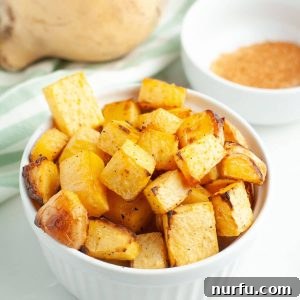
Roasted Rutabaga
Heather Seeley
10
30
40
4
Print Recipe
Ingredients
- 2 rutabagas cleaned, peeled, and cubed
- 2 tablespoons olive oil
- 1/2 teaspoon salt
- 1/4 teaspoon ground black pepper
- 1/4 teaspoon Creole seasoning
Instructions
-
Preheat oven to 425 degrees F (220 C). Line a baking sheet with aluminum foil or parchment paper. Clean, peel, and cut rutabaga into small, uniform cubes. Place them in a large bowl.
-
Pour olive oil, salt, pepper, and Creole seasoning over the rutabaga. Toss thoroughly to coat all cubes evenly.
-
Spread the seasoned rutabaga cubes on the lined baking sheet in a single layer, ensuring they are not overcrowded for optimal roasting. Bake for 25-30 minutes, flipping halfway through, or until fork-tender and beautifully golden brown with slightly crispy edges.
Video
Watch a video demonstration of this recipe here to see the steps in action!
Nutrition Information (Approximate Per Serving)
Carbohydrates: 17g |
Protein: 2g |
Fat: 7g |
Saturated Fat: 1g |
Fiber: 5g |
Sugar: 9g
Nutrition information is automatically calculated and should only be used as an approximation. Values can vary based on specific ingredients and preparation methods.
Additional Info
Side Dish
American
We hope you thoroughly enjoy this delightful and healthy roasted rutabaga recipe. It’s a wonderful way to introduce a new, nutritious vegetable into your diet or to simply enjoy a classic root vegetable in a fresh, flavorful, and low-carb way. Don’t forget to experiment with different seasonings and serving suggestions to make it truly your own! Happy cooking!