
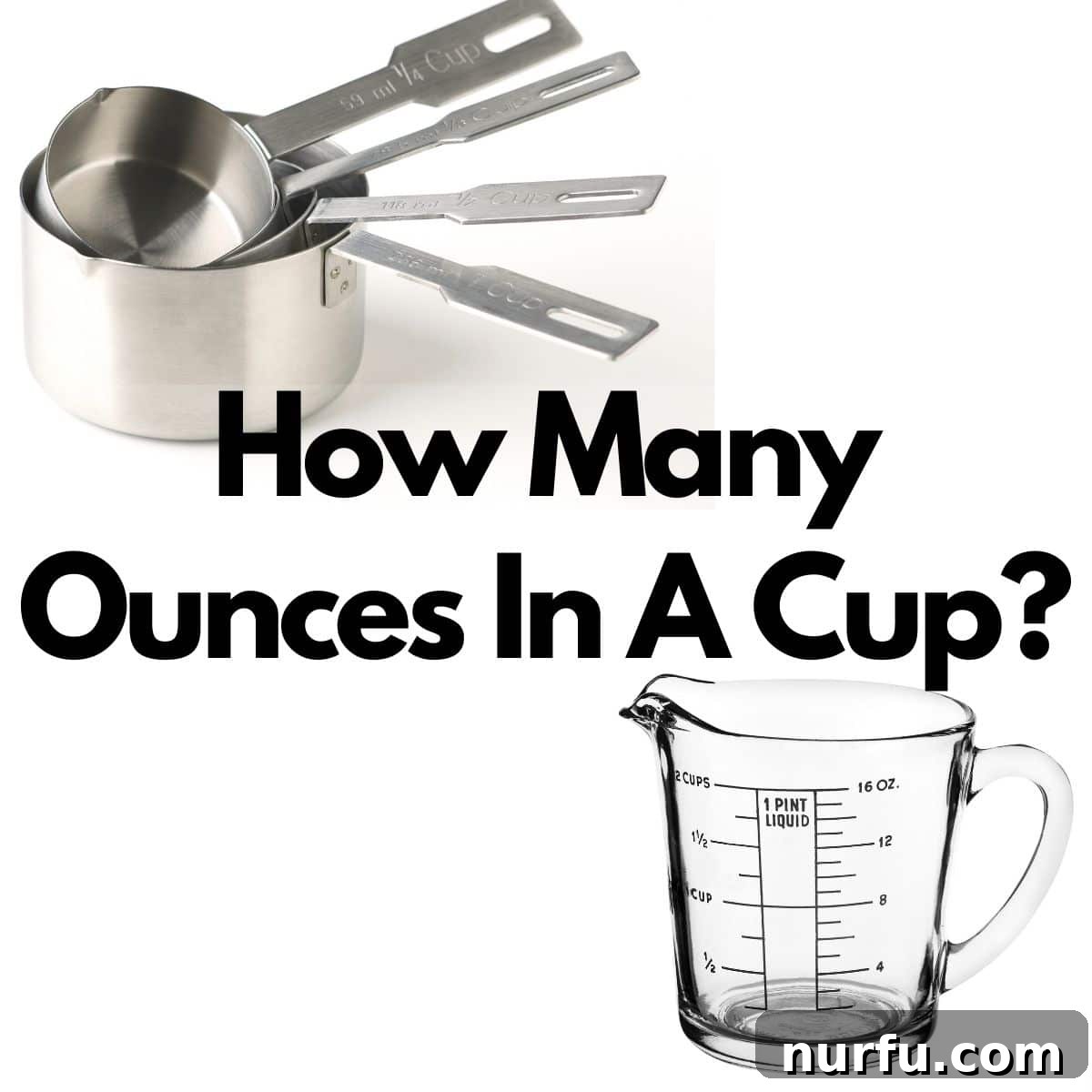
Ever found yourself staring at a recipe, wondering, “How many ounces in a cup?” You’re not alone! Kitchen conversions can be a confusing maze, especially with terms like “fluid ounces” and “dry ounces” thrown into the mix. Getting your measurements right is the secret ingredient to culinary success, ensuring your dishes turn out exactly as intended, whether you’re a seasoned chef or a beginner baker.
This comprehensive guide will demystify kitchen measurements, explaining the crucial differences between fluid and dry ingredients, providing essential conversion charts, and offering practical tips for precise cooking and baking. We’ll answer your most pressing questions and even share a printable measurement chart for quick reference, making your time in the kitchen much smoother and more enjoyable.
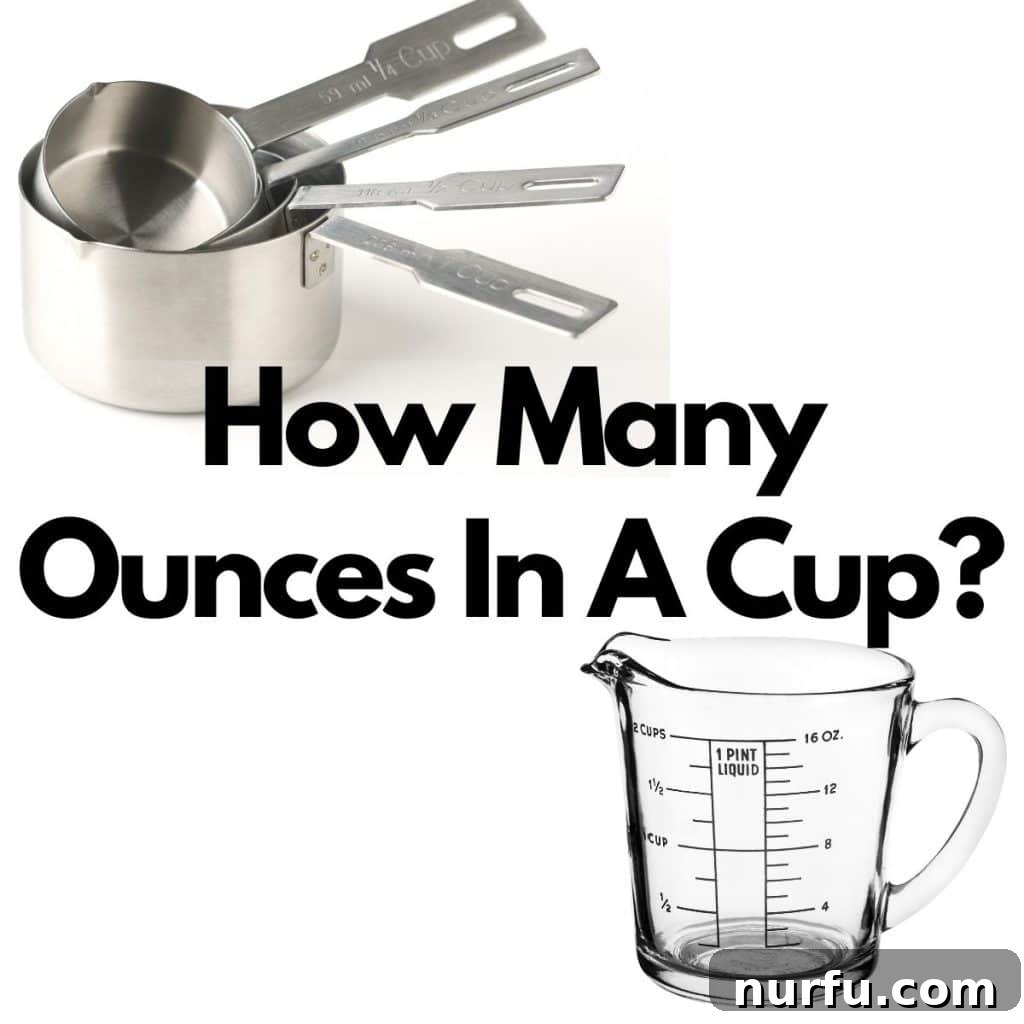
How Many Fluid Ounces in a Cup? Understanding Liquid Measurements
When we talk about liquids in cooking and baking, we almost exclusively refer to “fluid ounces.” A fluid ounce is a unit of volume, used for measuring ingredients like water, milk, oil, and anything else that pours. It’s vital to distinguish this from the “ounce” used for dry ingredients, which measures weight. In the United States customary system, the conversion for liquid measurements is straightforward:
- 1 cup = 8 fluid ounces = 16 tablespoons
- 3/4 cup = 6 fluid ounces = 12 tablespoons
- 1/2 cup = 4 fluid ounces = 8 tablespoons
- 1/4 cup = 2 fluid ounces = 4 tablespoons
Understanding these fundamental conversions is key to accurately following recipes. Whether you’re whipping up a batch of delicious pancakes and need precisely 1 cup of milk, or mixing a refreshing blushing mimosa that calls for a specific amount of orange juice, knowing these fluid ounce equivalents will prevent errors.
In the kitchen, the correct measurement method is paramount, especially when it comes to the delicate balance required for baking. Unlike cooking, where slight variations often go unnoticed, baking is a science. A little too much or too little liquid can significantly alter the texture, consistency, and overall outcome of your baked goods. For instance, using too much liquid can result in a soggy cake, while too little might lead to a dry, crumbly one.
Essential Liquid Measurement Conversions (US Standard to Metric)
While most home cooks in the US primarily use standard measurements, many international recipes, or even local ones adopting modern practices, will call for metric units. Having a reliable conversion chart that bridges both systems is incredibly valuable. This free printable conversion table below offers a comprehensive overview, helping you navigate between US standard fluid ounces and milliliters with ease. It’s perfect for adapting recipes or understanding foreign cookbooks.
US Standard = Metric (approximate measurement)
- 1/8 teaspoon = 0.5 mL
- 1/4 teaspoon = 1.2 mL
- 1/2 teaspoon = 2.5 mL
- 3/4 teaspoon = 3.7 mL
- 1 teaspoon = 1/3 tablespoon = 4.9 mL
- 1 tablespoon = 1/2 fluid ounce = 3 teaspoons = 14.8 mL
- 2 tablespoons = 1 fluid ounce = 1/8 cup = 29.6 mL
- 1/4 cup = 2 fluid ounces = 59.1 mL
- 1/2 cup = 4 fluid ounces = 118.3 mL (Correction for common culinary context, original had 73.9 mL which is closer to 1/3 cup)
- 3/4 cup = 6 fluid ounces = 177.4 mL
- 1 cup = 8 fluid ounces = 236.6 mL
- 2 cups = 16 fluid ounces = 473.2 mL
- 4 cups = 32 fluid ounces = 1 quart = 946 mL
- 1 gallon = 128 fluid ounces = 8 pints = 4 quarts = 3785 mL = 3.785 L (Rounded to 4L in original, kept both for precision)
These approximate metric conversions are indispensable for international recipes or when a recipe explicitly calls for milliliters. Remember that minor discrepancies can occur due to rounding, but for most home cooking and baking purposes, these figures provide excellent accuracy.
Decoding Dry Weight Measurements: Ounces and Grams
In stark contrast to fluid ounces, which measure volume, dry ounces measure weight. This distinction is incredibly important for dry ingredients like flour, sugar, breadcrumbs, oats, and chocolate chips. While some recipes might list these ingredients in cups, measuring them by weight (in ounces or grams) offers far greater accuracy. The density of dry ingredients can vary significantly based on how they are packed, sifted, or even the humidity in your kitchen. A cup of flour, for example, can weigh differently depending on how it’s scooped.
US Standard = Metric (approximate measurement)
- 1/4 ounce = 7 grams
- 1/2 ounce = 15 grams
- 1 ounce = 30 grams
- 2 ounces = 60 grams
- 4 ounces = 1/4 pound = 115 grams
- 8 ounces = 1/2 pound = 225 grams
- 12 ounces = 3/4 pound = 340 grams
- 16 ounces = 1 pound = 455 grams
For recipes like this tasty meatloaf, where an ingredient such as bread crumbs is called for, measuring by weight ensures consistency. Using a kitchen scale for dry ingredients is a game-changer, providing precision that volumetric measuring cups simply cannot match. It eliminates the guesswork and variability associated with how tightly an ingredient is packed into a cup, leading to more consistent and professional-level results, especially in baking where ingredient ratios are critical.
Is a Dry Measuring Cup the Same as a Liquid Measuring Cup?
While it might seem like a cup is a cup, regardless of its contents, there’s a significant difference in design and function between dry and liquid measuring cups. Both types technically hold the same *volume* – one cup is indeed one cup of space. However, the way you use them for accurate measurement varies dramatically, and using the wrong type can lead to significant errors.
Liquid measuring cups are designed with a pouring spout and clear markings, often with a little extra space at the top to prevent spills when transferring liquids. Their transparent material allows you to read the measurement line accurately at eye level, ensuring you get the exact amount of milk, water, or oil. Trying to level off flour in a liquid measuring cup is practically impossible and messy.
Dry measuring cups, on the other hand, have a flat top and are designed to be filled to the brim, allowing you to level off the excess with a straight edge (like the back of a knife or a specific leveling tool). This method ensures you get a precise, unpacked volume of ingredients like flour, sugar, or cocoa powder. Attempting to measure liquids in a dry measuring cup can lead to spills and inaccurate readings, as you can’t easily read the measurement below the brim.
Using the appropriate measuring tool for the ingredient type is a fundamental rule in the kitchen, particularly in baking. It’s a simple distinction that can make a world of difference in the final product of your culinary endeavors.
Essential Tools for Accurate Kitchen Measuring
Achieving precision in the kitchen relies heavily on having the right tools. Here are the three primary types of measuring tools every home cook and baker should have, along with their ideal uses:
Liquid Measuring Cups
These cups are typically made from clear glass or plastic and feature a handle, a pouring spout, and measurement lines (often in cups, fluid ounces, and milliliters) clearly marked on the side. The extra space above the highest measurement line is crucial for preventing spills when transporting liquids. To use them correctly, place the cup on a flat surface and view the liquid at eye level to ensure the bottom of the meniscus (the curve of the liquid surface) aligns with the desired marking. They are ideal for measuring any liquid ingredient, such as water, milk, broths, oils, and vanilla extract.
Dry Measuring Cups
Dry measuring cups are usually sold in sets (e.g., 1 cup, 1/2 cup, 1/3 cup, 1/4 cup) and are made from plastic or metal. They have a flat rim, designed specifically for leveling off ingredients. To measure dry ingredients like flour, sugar, or breadcrumbs, spoon the ingredient into the cup until it overflows slightly. Then, use the flat side of a knife or a straight-edged utensil to scrape across the top of the cup, removing any excess and ensuring a precise, level measurement. This method is crucial for accuracy, preventing common errors like packing flour too tightly, which can add significant extra weight.
Measuring Spoons
Measuring spoons are small, individual spoons usually sold in sets for common measurements like 1 tablespoon, 1 teaspoon, 1/2 teaspoon, 1/4 teaspoon, and sometimes 1/8 teaspoon. They are versatile and can be used for both dry ingredients (like spices, baking powder, baking soda, salt) and wet ingredients (like vanilla extract, honey, or smaller amounts of oil). Similar to dry measuring cups, when measuring dry ingredients with spoons, you should level them off for accuracy.
Kitchen Scale
While not mentioned in the original list, a digital kitchen scale is arguably the most accurate tool for measuring dry ingredients by weight (grams or ounces). Many professional bakers swear by scales because they eliminate the variability of packing density in measuring cups. If a recipe provides weight measurements for flour, sugar, or other dry goods, a kitchen scale is your best friend for guaranteed precision.
How Many Cups Is 8 Ounces? (Fluid Ounces)
When referring to fluid ounces, 8 fluid ounces is exactly equivalent to one standard US cup. This is one of the most fundamental conversions in the kitchen. Here’s a quick reminder:
- 1 cup = 8 fluid ounces
- 3/4 cup = 6 fluid ounces
- 1/2 cup = 4 fluid ounces
- 1/3 cup = 2.67 fluid ounces (approx. 3 fluid ounces is a common rounding, but 2.67 is more precise)
- 1/4 cup = 2 fluid ounces
Always remember that this conversion specifically applies to liquids, where “ounces” denotes volume. For dry ingredients, 8 ounces would refer to weight and would not consistently fill one cup due to varying densities.
Does 2 Tablespoons Equal 1 Fluid Ounce?
Yes, absolutely! This is another crucial conversion for liquid measurements. 1 fluid ounce is equal to 2 tablespoons. This conversion is especially handy when you need to measure small amounts of liquid ingredients accurately, like extracts or specific dressings. For example, if a recipe calls for 1 fluid ounce of lemon juice, you can confidently use 2 tablespoons.
- 2 tablespoons = 1 fluid ounce = 30 mL (approximately 29.6 mL)
How Many Ounces In A Cup Of Water?
Given that water is a liquid, the conversion is straightforward: there are 8 fluid ounces in 1 cup of water. Water is often used as the benchmark for fluid measurements because its density is very close to 1 gram per milliliter or 1 ounce per fluid ounce, simplifying calculations. So, whether you’re measuring for a recipe or tracking your daily hydration, 1 cup of water reliably equals 8 fluid ounces.
How Many Ounces In A Cup Of Flour?
This question brings us back to the critical distinction between fluid ounces (volume) and dry ounces (weight). When a recipe asks for “ounces of flour,” it’s referring to weight. The approximate weight of one cup of all-purpose dry flour is around 4.5 ounces (or about 125-130 grams). However, this can vary significantly based on:
- **Type of flour:** All-purpose, bread flour, cake flour, whole wheat flour all have different densities.
- **How it’s scooped:** Sifting, spooning, or scooping directly from the bag can lead to varying amounts of compaction.
- **Humidity:** Environmental factors can also affect flour density.
This variability highlights why professional bakers and many advanced recipes prefer to measure flour by weight using a kitchen scale rather than by volume with a measuring cup. If you consistently struggle with baking results, investing in a kitchen scale and converting your flour measurements to weight can be a game-changer for consistency and accuracy.
Your Handy Printable Kitchen Conversion Chart
To make your cooking and baking journey even easier, we’ve compiled a comprehensive, free printable dry and liquid conversion chart. This invaluable resource is perfect for quick look-ups in the midst of preparing a meal. Print it out, laminate it, and stick it on your fridge or inside a cabinet door for instant access. It covers everything from how many ounces in a cup to teaspoon-to-tablespoon conversions, ensuring you have all the answers at your fingertips without needing to consult your phone or a cookbook every time.
Having this chart readily available will boost your confidence in the kitchen and significantly speed up your recipe preparation. No more frantic searches when you need to quickly convert teaspoons to tablespoons or understand the metric equivalent of a cup!
Mastering Kitchen Measurements for Culinary Success
Mastering kitchen measurements, whether it’s understanding how many ounces are in a cup, distinguishing between fluid and dry ounces, or converting between different units, is a foundational skill for anyone who loves to cook or bake. The difference between an average dish and an extraordinary one often lies in the precision of ingredient measurements.
By utilizing the right tools – liquid measuring cups, dry measuring cups, measuring spoons, and especially a kitchen scale for weight-based measurements – and referring to reliable conversion charts, you can ensure consistent, delicious results every time. Remember, cooking often allows for a bit of creativity, but baking is truly a science where exact ingredient ratios are paramount for success.
For those moments when you need a quick, specific conversion not covered in our chart, don’t hesitate to try an online calculator. But for day-to-day cooking, keeping a printed chart handy is incredibly practical. Happy cooking and baking!
Explore More Essential Kitchen Measurements
Elevate your kitchen skills further with our other helpful guides and free printables:
- How many teaspoons in a tablespoon? – Free Printable
- How many cups in a quart, pint, gallon? – Free Printable
- Stick of butter conversion – Free Printable
- Air fryer cooking chart – Free Printable
- How much yeast in a packet?