
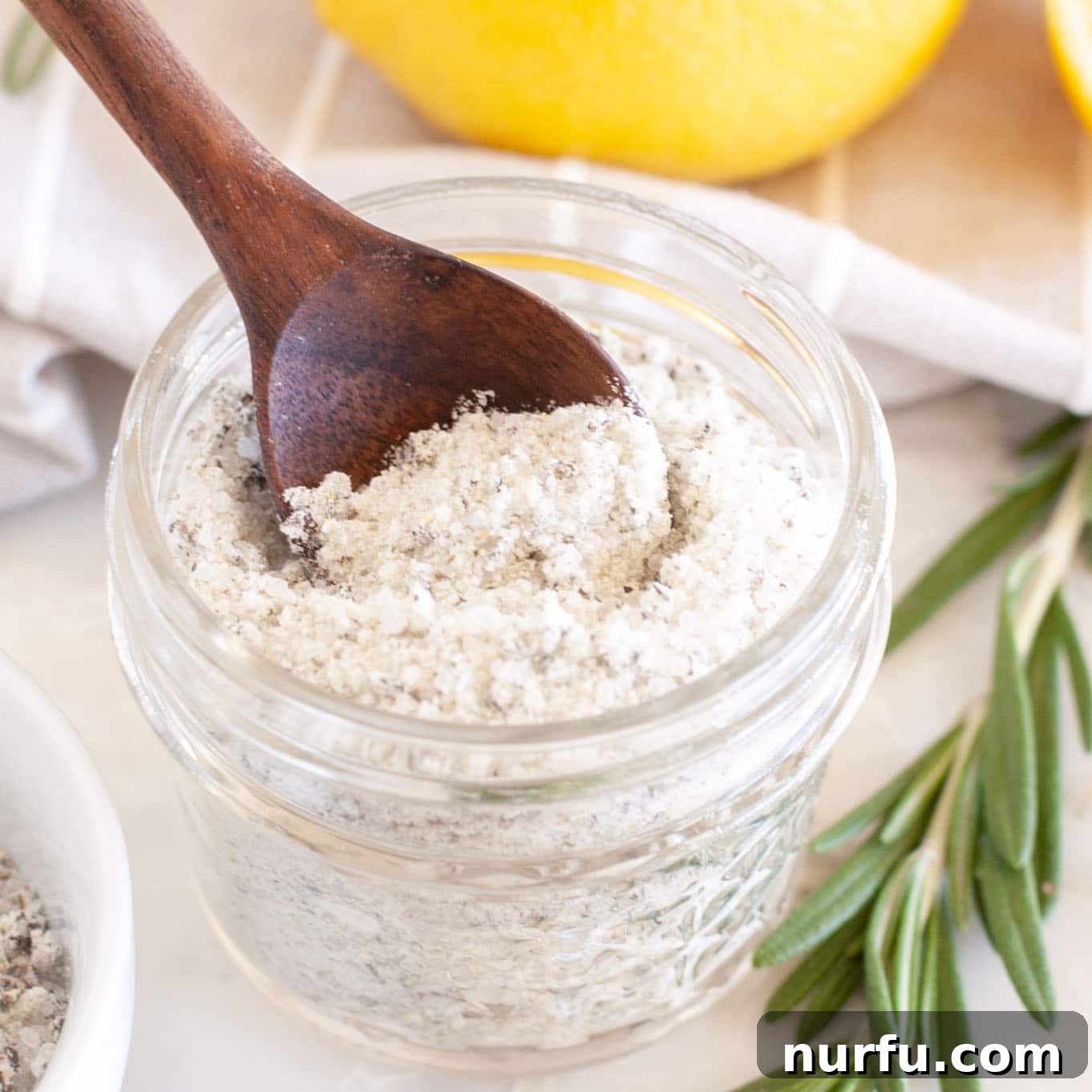
Homemade Rosemary Salt: Elevate Your Culinary Creations with Fresh, Aromatic Flavor
Homemade rosemary salt is more than just a seasoning; it’s a simple culinary revelation that can transform ordinary dishes into extraordinary meals. Forget the expensive gourmet salts from specialty stores; with just three core ingredients and a few easy steps, you can craft your own aromatic blend right in your kitchen. This DIY approach not only puts you in control of the flavors but also offers a more budget-friendly alternative to pre-made spice mixes.
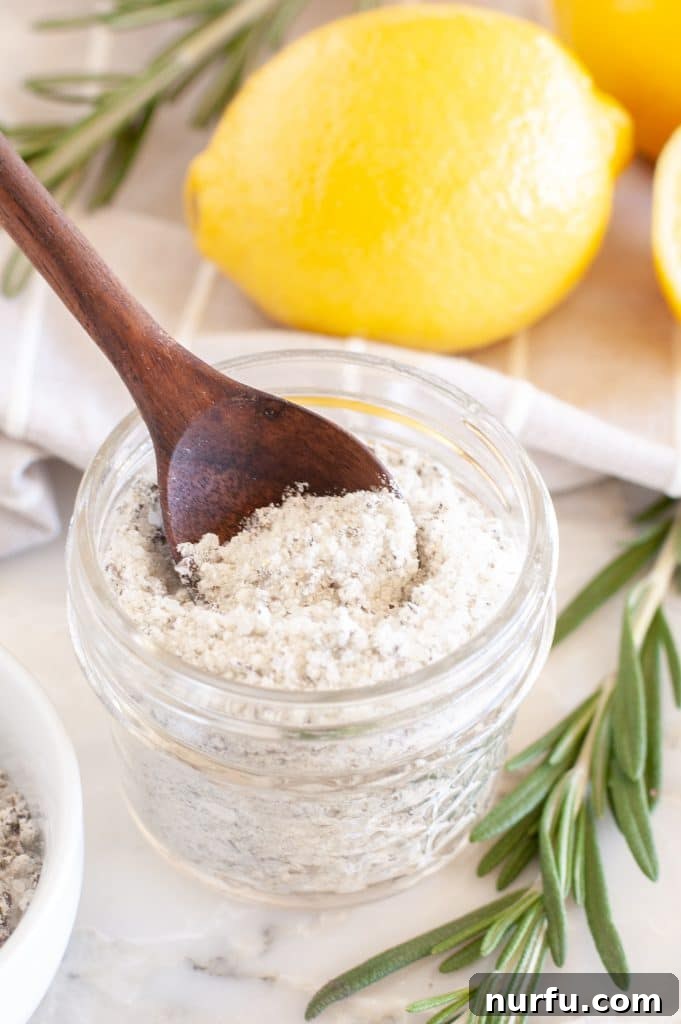
Making your own seasoning blends, similar to crafting an all-purpose chicken seasoning from scratch, offers unparalleled advantages. The primary benefit is the freedom to customize the flavors precisely to your palate. Do you prefer a bolder rosemary presence, or perhaps a hint more citrus? When you make it yourself, you dictate the balance. Beyond personalization, homemade blends are often fresher, free from unwanted additives, and significantly more economical than their store-bought counterparts.
This vibrant rosemary salt is an essential addition to any well-stocked spice rack, and it doubles as a thoughtful, impressive gift. Imagine presenting this fragrant mixture in an elegant jar, tied with a rustic ribbon, accompanied by a bottle of exquisite olive oil and a warm, crusty loaf of artisan bread. It’s a gesture that speaks volumes about care and good taste.
Why This Rosemary Salt Recipe is a Must-Try
This particular rosemary salt recipe stands out for several compelling reasons, making it a favorite for both novice cooks and seasoned home chefs.
- Unforgettable Flavor Profile: This infused salt imparts a complex, savory depth to countless dishes. The woodsy notes of rosemary, brightened by a hint of citrus, create a harmonious blend that elevates simple ingredients.
- Effortless Preparation: Requiring only three basic ingredients and minimal hands-on time, this recipe is incredibly straightforward. It’s a testament to how easily gourmet flavors can be achieved at home.
- Remarkable Versatility: The culinary applications for this rosemary salt are virtually limitless. Use it to enhance roasted vegetables, sprinkle it over eggs, mix it into softened butter for an irresistible bread spread, or use it as a finishing salt for delicate fish or crispy french fries. Its adaptability makes it a true kitchen essential.
The Simple Ingredients Behind Extraordinary Flavor
Crafting this sensational rosemary salt begins with selecting the right high-quality ingredients. Each component plays a crucial role in creating the perfect flavor balance.
Choosing Your Salt: The Foundation of Flavor
For this aromatic blend, I highly recommend using coarse sea salt. Its larger granules not only provide a satisfying crunch but also interact beautifully with the fresh herbs during processing, ensuring even distribution and infusion. Coarse salts are also less likely to dissolve too quickly, allowing the rosemary and lemon flavors to properly meld. While coarse sea salt is my preferred choice, feel free to experiment with other coarse varieties such as kosher salt or even Himalayan pink salt, each offering a slightly different mineral profile and aesthetic appeal. Avoid fine table salt, as it can make the final product too dense and overly salty.
Fresh Rosemary: The Aromatic Heart
Fresh rosemary is indispensable for this recipe. This beloved herb is renowned for its distinctive woodsy, piney, and earthy flavor notes, with a subtle peppery undertone. The essential oils in fresh rosemary are potent and fragrant, releasing their best qualities when gently warmed and combined with salt. When selecting rosemary, look for vibrant green sprigs that are firm and free from any wilting or browning. Opting for fresh rosemary over dried will yield a superior, more vibrant flavor that truly defines this salt blend.
Lemon Zest: A Bright, Citrusy Spark
The addition of lemon zest is optional, but it’s a component I enthusiastically endorse. The zest, which contains the lemon’s aromatic oils, introduces a bright, fresh, and slightly tangy element that beautifully complements the robust character of rosemary. It acts as a natural flavor enhancer, cutting through the richness of certain dishes and adding a delightful zing. When zesting, use a microplane or fine grater to remove only the yellow outer layer, avoiding the bitter white pith underneath.
Crafting Your Own Rosemary Salt: A Step-by-Step Guide
Making rosemary salt is surprisingly simple, requiring minimal effort for maximum flavor reward. Follow these steps for a perfect batch every time.
Preparation is Key
- Begin by preheating your oven to a low 200 degrees Fahrenheit (95 degrees Celsius). This gentle heat is crucial for slowly drying the herbs and zest without burning them, ensuring their aromatic oils are preserved.
- Line a baking sheet with parchment paper or foil. This prevents sticking and makes cleanup a breeze.
- Carefully remove the fresh rosemary leaves from their woody stems. Discard the stems.
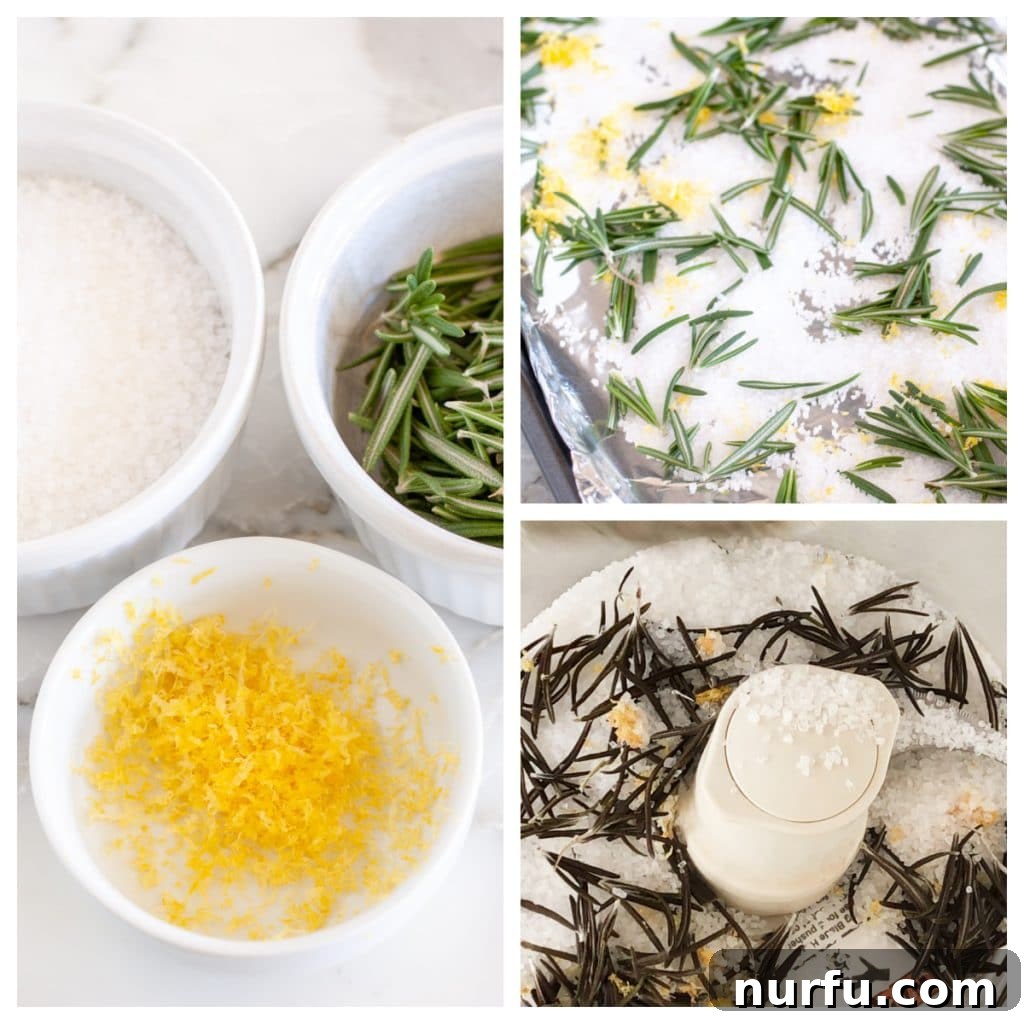
- Evenly spread the coarse sea salt, fresh rosemary leaves, and lemon zest in a single layer over the prepared baking sheet. Ensure the ingredients are not clumped together, allowing for consistent drying.
The Gentle Drying Process
- Bake the mixture in the preheated oven for 10-15 minutes. The goal is to gently dry the rosemary and lemon zest, making them brittle enough to process without losing their vibrant essential oils. Keep a close eye on it to prevent burning. The rosemary should be fragrant and slightly crisp.
- Once baked, remove the baking sheet from the oven and allow the mixture to cool completely to room temperature. This step is vital to prevent steam from building up and causing clumping later during storage.
Achieving the Perfect Blend
- Carefully pour the cooled salt mixture into a food processor or a high-quality blender.
- Pulse the mixture 6-8 times, or until the rosemary leaves are finely chopped and evenly distributed throughout the salt. Be careful not to over-process; you want a textured salt with visible rosemary flecks, not a fine powder. Over-blending can turn the salt into a fine powder, which might not be desirable for all uses.
Optimal Storage for Lasting Freshness
- Once blended, immediately transfer the infused salt into an airtight container. A glass jar with a tight-fitting lid is ideal for preserving its freshness and aroma.
Unleash Flavor: Creative Culinary Applications for Rosemary Salt
The versatility of homemade rosemary salt is truly one of its greatest assets. Its robust yet refreshing flavor profile makes it a fantastic addition to a wide array of dishes.
Enhancing Meats and Poultry
Sprinkle this aromatic salt generously over poultry, such as chicken breast (air fryer chicken breast, for example) or turkey (turkey tenderloins), before roasting or grilling to infuse it with a Mediterranean flair. It’s equally superb on pork loin (air fryer pork loin) or lamb, creating a savory crust and tender interior. For fish, a light dusting before baking or pan-searing highlights the delicate flavors beautifully.
Transforming Vegetables
Rosemary salt is a game-changer for vegetables. Toss it with root vegetables like potatoes, carrots, or parsnips before roasting. It’s also excellent on roasted acorn squash (air fryer acorn squash) or a medley of air fryer mixed vegetables. Grilled asparagus, green beans, or even simple sautéed mushrooms receive a delightful herbaceous boost.
Elevating Everyday Dishes
Don’t limit this flavored salt to main courses! A pinch can elevate scrambled or fried eggs, giving them a gourmet touch. Sprinkle it over freshly popped popcorn for an unexpectedly sophisticated snack. For a simple yet indulgent treat, mix it into softened butter or olive oil and spread it generously on warm, crusty bread or use it to make flavorful focaccia.
Gourmet Gifting Made Easy
As mentioned, homemade rosemary salt makes an exceptional gift. Consider pairing it with a set of mini olive oils, a wooden spoon, or even a small herb growing kit for a truly thoughtful present. It’s perfect for housewarmings, holiday gifts, or as a host/hostess thank you. Your friends and family will undoubtedly appreciate the handcrafted effort and delicious result.
Expert Tips for Making the Best Rosemary Salt
To ensure your homemade rosemary salt turns out perfectly every time, keep these helpful tips in mind:
- Don’t have a food processor? No problem! While a food processor makes quick work of blending, you can still achieve excellent results. Simply finely chop the rosemary leaves and lemon zest with a sharp knife until they are very small. Then, combine them thoroughly with the coarse sea salt using your hands or a spoon. The texture might be slightly coarser, but the flavor will be just as fantastic.
- Mind the oven: don’t overbake the rosemary. Rosemary can burn quickly if exposed to high heat or baked for too long, which will result in a bitter flavor. The low temperature and short baking time are designed to gently dry the herbs, not cook them. If you’re concerned about baking, an alternative is to spread the rosemary and zest on a baking sheet and allow them to air dry at room temperature for 1-2 hours, or until visibly dried and brittle.
- Achieving your desired texture: don’t over-blend the salt. When using a food processor, pulse the mixture in short bursts. Blending for too long can turn your beautiful coarse salt into a fine powder, altering its texture and how it dissolves on food. Aim for a consistency where the rosemary is finely chopped but the salt crystals retain their size.
- Choose the right salt: avoid table salt. Table salt is typically very fine and often contains anti-caking agents, which can affect the overall texture and purity of your rosemary salt. Stick to coarse sea salt or kosher salt for the best results, as their larger crystals are ideal for absorbing and carrying the flavors.
- Flavor Variations to Explore: Once you’ve mastered the basic recipe, feel free to get creative! Consider adding a pinch of garlic powder for a savory twist, a touch of red pepper flakes for subtle heat, or even experimenting with other fresh herbs like thyme or oregano for different aromatic profiles. Just remember to dry any fresh additions alongside the rosemary and lemon zest.
Storage and Shelf Life: Keeping Your Rosemary Salt Fresh
Proper storage is crucial to maintaining the vibrant flavor and aroma of your homemade rosemary salt.
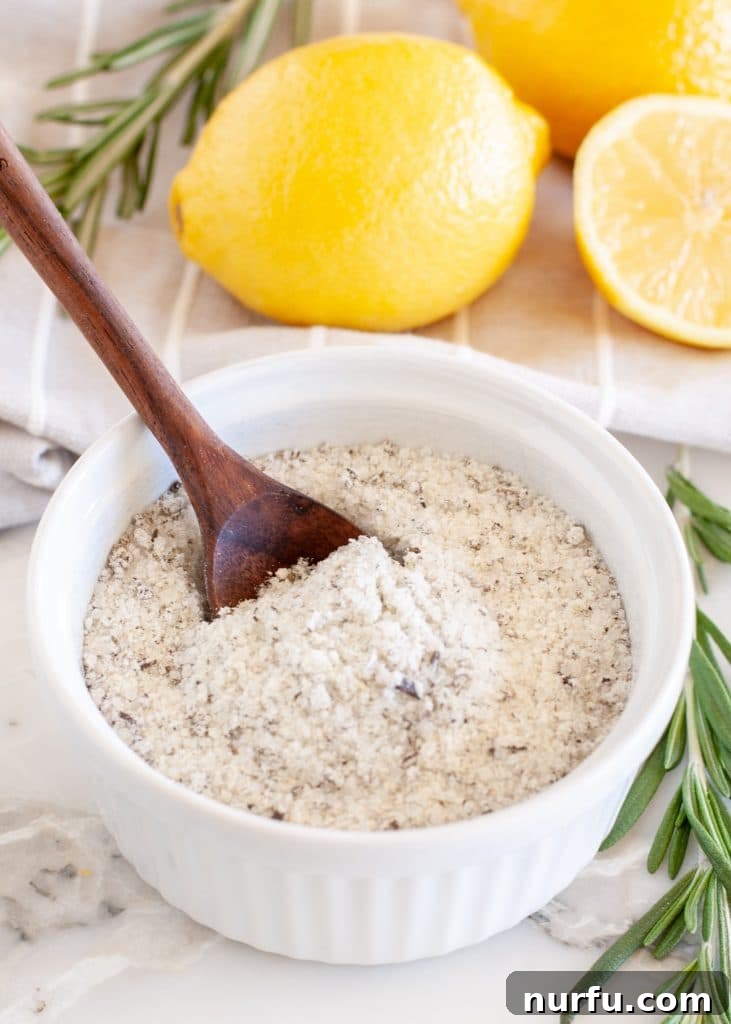
Store your freshly made rosemary salt in an airtight container, such as a glass jar with a tight-fitting lid. Keep it in a cool, dry place away from direct sunlight and humidity. A pantry or cupboard is ideal. When stored correctly, this flavorful salt should retain its potency and freshness for up to one year. Over time, the colors may slightly fade, but the essential oils of the rosemary and lemon will continue to impart their delicious essence.
Common Questions About Homemade Rosemary Salt (FAQs)
Here are answers to some frequently asked questions about making and using rosemary salt:
Yes, you can use dried rosemary in this recipe. However, dried herbs are typically more potent than fresh ones. If you’re substituting, I recommend using about half the amount of dried rosemary compared to what the recipe calls for fresh. For instance, if the recipe specifies 1/2 cup of fresh rosemary leaves, use about 1/4 cup of dried rosemary. You won’t need to dry it in the oven; simply combine it directly with the salt and lemon zest before processing.
The key to preventing clumping is ensuring that all ingredients, especially the rosemary and lemon zest, are completely dry before blending and storing. Any residual moisture will cause the salt to clump. After baking and cooling, verify that the herbs are brittle and the zest is firm. Storing the salt in an airtight container in a cool, dry environment also helps significantly.
For the best flavor, use organic, unwaxed lemons if possible. If organic lemons are unavailable, thoroughly wash and scrub conventional lemons to remove any wax or pesticides before zesting. Fresh, firm lemons will yield the most aromatic zest.
Absolutely! This recipe provides a fantastic base for experimentation. Thyme, oregano, or a blend of “Herbes de Provence” would all complement rosemary beautifully. Just ensure any fresh herbs are thoroughly dried alongside the rosemary and lemon zest before blending to prevent moisture issues.
Beyond Rosemary: Explore More Homemade Seasoning Blends
Once you experience the satisfaction and superior flavor of homemade seasoning blends, you’ll likely want to explore more. Crafting your own mixes not only provides flavor control but also ensures you’re using fresh, quality ingredients free from unwanted additives.
- Sloppy Joe Mix – An effortless blend that’s perfect for whipping up delicious homemade sloppy joe sandwiches.
- Jamaican Jerk Seasoning – This vibrant seasoning offers a delightful balance of sweet, salty, and spicy notes, ideal for chicken and fish.
- French Fry Seasoning – A versatile blend that adds a burst of flavor to French fries, roasted potatoes, and a variety of vegetables.
- Chili Seasoning – Your secret weapon for preparing a rich, flavorful pot of homemade chili.
I genuinely hope you try making your own rosemary salt at home. It’s a simple step that can significantly enhance your everyday cooking and impress anyone you share it with.
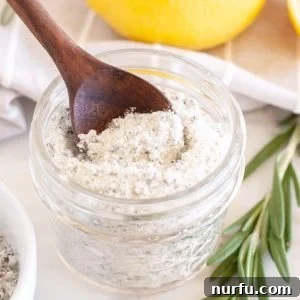
Rosemary Salt
Heather Seeley
5 minutes
15 minutes
20 minutes
1
cups
Ingredients
-
3/4
cup
coarse sea salt -
1/2
cup
fresh rosemary leaves -
zest
of a lemon
Instructions
-
Preheat oven to 200 degrees F. Line a baking sheet with foil or parchment paper.
-
Remove leaves from rosemary sprigs. Spread salt, rosemary leaves, and lemon zest evenly over the baking sheet.
-
Bake for 10-15 minutes. Remove from oven and let cool completely.
-
Pour the cooled salt mixture into a food processor or a good blender and pulse until combined, about 6-8 pulses, or until rosemary is finely chopped.
-
Store in an airtight container in a cool, dry place.
Video
Nutrition
Nutrition information is automatically calculated and should be used as an approximation.
Additional Info
Side Dish
American
Conclusion: Your Kitchen’s New Secret Weapon
Homemade rosemary salt is more than just a seasoning; it’s a versatile, flavor-packed ingredient that promises to elevate your cooking with minimal effort. Its fresh, aromatic profile adds a gourmet touch to everything from roasted meats and vegetables to everyday eggs and bread. Easy to make, customizable, and a fantastic gift, this simple blend is truly a kitchen essential you’ll wonder how you ever lived without.
Embark on this delightful culinary journey and discover the profound difference a truly fresh, homemade seasoning can make. Give this rosemary salt a try, and let its incredible flavor inspire your next meal!