
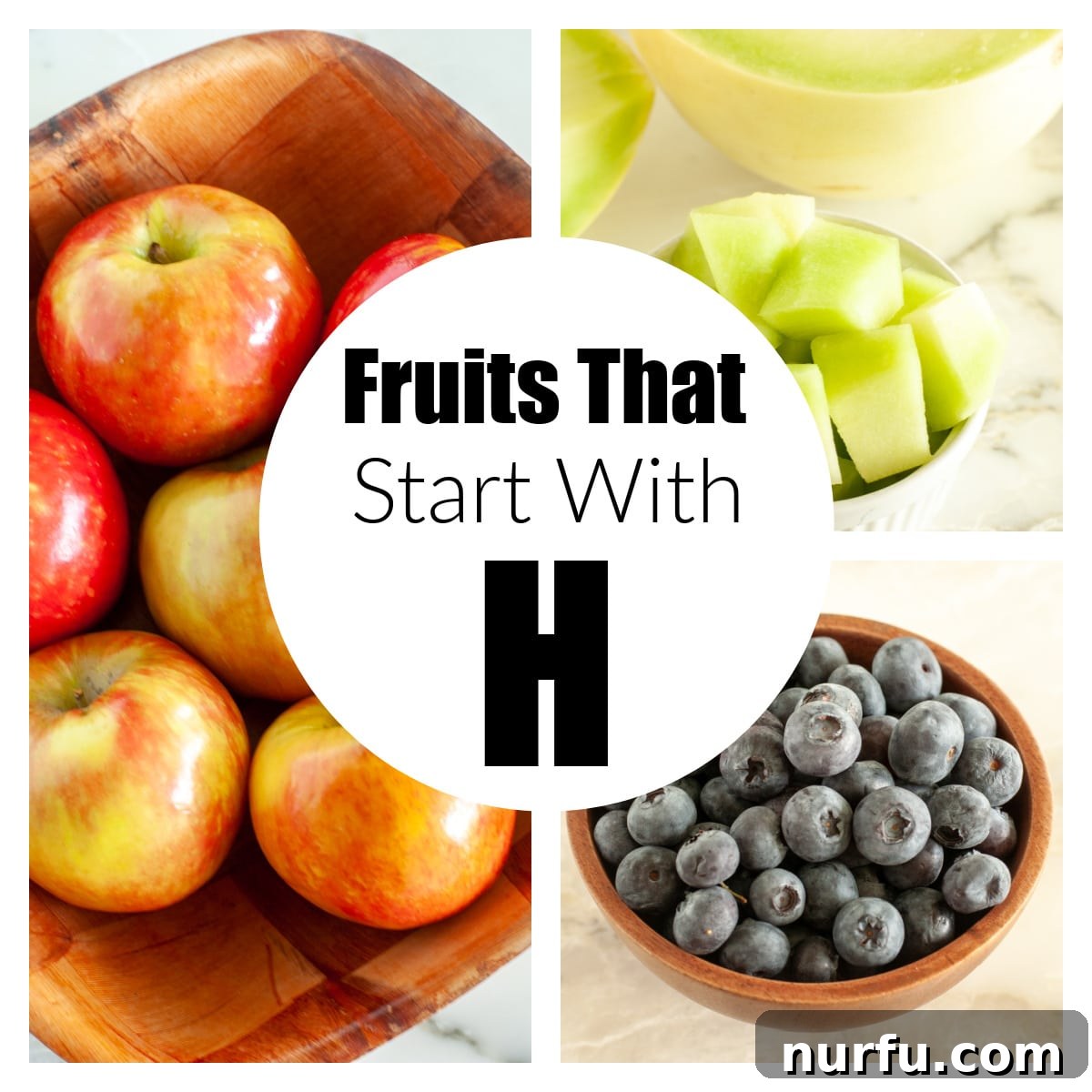
Discover 18 Incredible Fruits That Start With H
Embark on a delightful journey through the alphabet as we explore the vibrant world of fruits! From familiar favorites like the crisp Honeycrisp apple to exotic discoveries such as the uniquely textured Hala fruit, nature offers an astonishing array of flavors, textures, and aromas. In this comprehensive guide, we’ll dive deep into 18 fascinating fruits that begin with the letter ‘H’, unraveling their origins, nutritional benefits, culinary uses, and intriguing characteristics. Prepare to broaden your fruity horizons and perhaps find a new obsession!
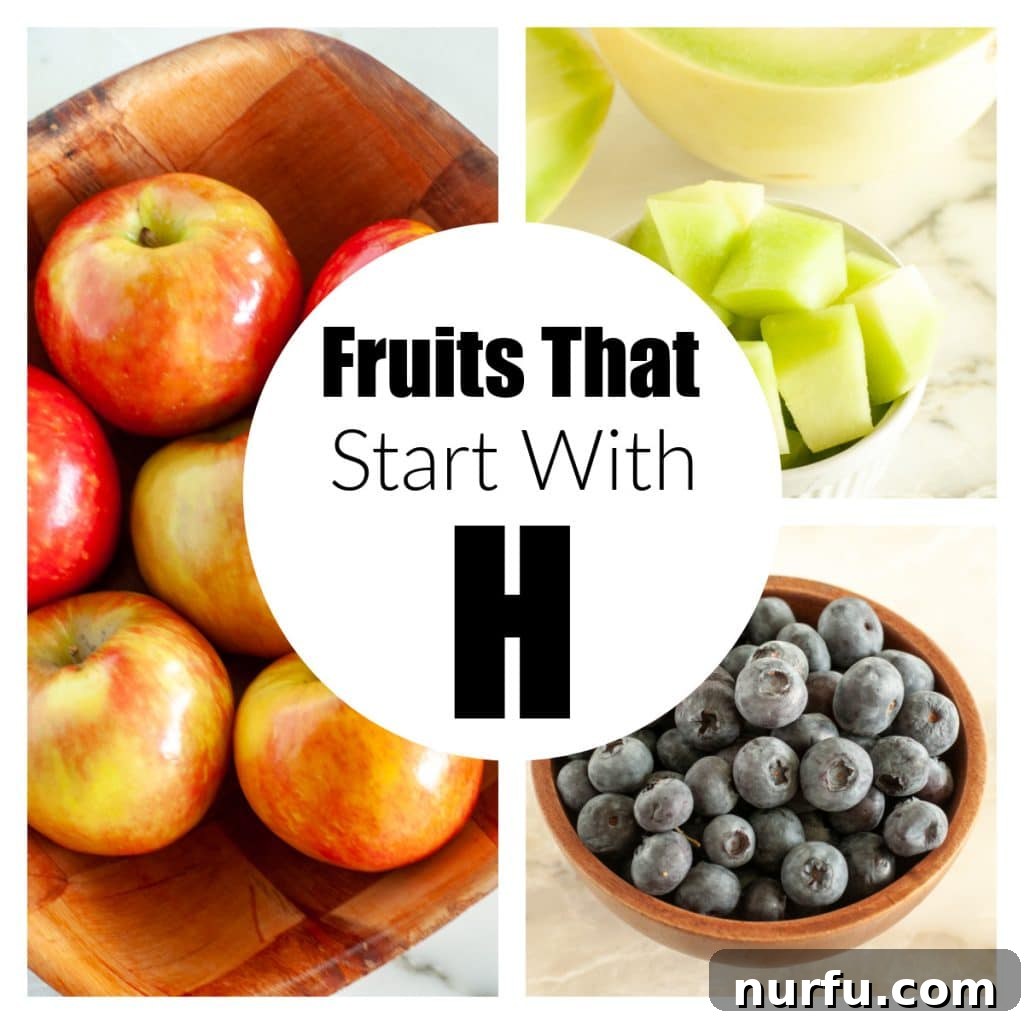
The world of fruits is incredibly diverse, offering a spectrum of tastes, from wonderfully sweet to refreshingly tart, and textures ranging from juicy to subtly crisp. Delving into this list of ‘H’ fruits will not only expand your knowledge but might also inspire new culinary adventures. Let’s uncover these 18 remarkable fruits!
1. Honeycrisp Apple
The Honeycrisp apple, a true superstar in the apple world, was meticulously developed by the University of Minnesota in the 1960s and introduced to the commercial market in the 1990s. Its name perfectly encapsulates its essence: “honey” for its delightful sweetness and “crisp” for its famously satisfying, almost explosive crunch. This apple variety is renowned for its bright red skin often streaked with yellow-green, and its wonderfully sweet, subtly tart flavor profile. The Honeycrisp’s unique cellular structure gives it an unparalleled juiciness and an exceptionally crisp bite, making it a favorite for fresh eating.
Beyond being a perfect snack eaten raw, Honeycrisp apples are incredibly versatile in the kitchen. Their robust flavor and texture hold up well when cooked, making them an excellent choice for a wide range of baked goods such as classic apple pies, crumbles, muffins, and even savory dishes like pork loin with roasted apples. Rich in dietary fiber and Vitamin C, they offer a healthy and delicious addition to any diet. Their popularity continues to grow, cementing their status as a premium apple variety.
2. Hairless Rambutan (Pulasan)
Native to the lush tropical regions of Indonesia and Malaysia, the Hairless Rambutan, often known as Pulasan (Nephelium mutabile), is an intriguing tropical fruit closely related to the more common rambutan. As its name suggests, it distinguishes itself by lacking the “hairy” or spiky exterior of its cousin, offering a smoother, thicker skin that is typically reddish-brown to dark red. This makes it considerably easier to peel and enjoy. The flavor profile of the Pulasan is often described as sweeter and less acidic than the rambutan, with a rich, grape-like taste, sometimes compared to lychee but with its own distinct charm.
The fruit’s flesh is white, succulent, and easily separates from the seed, which is also edible after cooking. While it can be enjoyed fresh directly from the tree, its limited commercial cultivation outside of its native regions makes it a rare treat. Pulasan is not only a delightful snack but also provides vitamins and minerals, contributing to its status as a locally cherished and sought-after fruit. Its mild sweetness and smooth texture make it a refreshing choice for those exploring exotic fruits.
3. Highbush Blueberry
Highbush blueberries, scientifically known as Vaccinium corymbosum, are the most widely cultivated and commercially available type of blueberry, gracing grocery store shelves across North America. Indigenous to the eastern coastal regions of North America, these berries are beloved for their vibrant blue color, delicate sweetness, and juicy texture. They grow on relatively tall bushes, making harvesting easier, and are also a popular choice for home gardeners due to their adaptability and consistent yield.
These small powerhouses are not just delicious; they’re packed with nutritional benefits. Highbush blueberries are an excellent source of antioxidants, particularly anthocyanins, which contribute to their deep blue hue and are known for their anti-inflammatory properties. They are also rich in Vitamin C, Vitamin K, and dietary fiber. Their versatility in the kitchen is endless: enjoy them fresh in salads, cereals, or yogurts, blend them into smoothies, or bake them into muffins, pancakes, pies, and tarts. Frozen blueberries retain most of their nutritional value, making them a year-round superfood.
4. Heirloom Tomato
Yes, botanically speaking, tomatoes are fruits, and heirloom tomatoes stand out as a captivating category within the tomato family. Unlike their mass-produced hybrid counterparts, heirloom tomatoes are open-pollinated varieties that have been passed down through generations, often prized for their unique flavors, vibrant colors, and irregular shapes. They are not bred for uniform appearance or long shelf life but rather for their exceptional taste and rich horticultural history.
Heirloom tomatoes come in an astonishing array of colors including deep reds, sunny yellows, bright oranges, purples, greens, and even striped variations. Each variety boasts a distinct flavor profile, ranging from intensely sweet and juicy to subtly tart and complex. They are often chosen for their specific taste notes, making them ideal for different culinary applications. Sliced fresh, they elevate salads, sandwiches, and bruschetta. Their rich flavors also make them perfect for crafting gourmet sauces, salsas, and fresh juices. Preserving heirloom tomatoes through canning or drying allows their unique tastes to be enjoyed long after their growing season, celebrating their diverse characteristics and rich heritage.
5. Hackberry
The hackberry fruit is a small, dark red to purplish-black drupe that grows on the sturdy Celtis occidentalis tree, commonly found across North America. While often overlooked, these berries are a nutritional treasure, packed with protein, fat, and carbohydrates—a rarity for most fruits. Their taste is uniquely sweet and often compared to dates or even the nutty, chocolatey flavor of a peanut M&M, though without the chocolate coating.
Hackberries possess a crispy outer shell, a thin layer of dry, sweet pulp, and an edible seed at its core. Unlike most fruits that are readily available in grocery stores, hackberries are primarily found in nature, growing wild in forests and along riverbanks. Historically, indigenous peoples of North America utilized hackberries extensively, grinding them into a paste with fat and meat to create pemmican, a nutrient-dense survival food. Today, they remain a delightful foraging find, offering a unique opportunity to connect with nature and enjoy a truly distinctive, candy-like wild fruit. They can be eaten raw, or incorporated into jams, jellies, or even baked goods if you’re lucky enough to find a good harvest.
6. Hardy Kiwi
Defying its common name, Hardy Kiwi fruit, or Chinese Gooseberry (Actinidia arguta), is not native to New Zealand but rather hails from countries like Korea, Japan, and Northern China. These fascinating fruits resemble miniature versions of the fuzzy kiwi, typically the size of a large grape or cherry tomato, but with one key difference: their skin is smooth, thin, and entirely edible, eliminating the need for peeling. This makes them an incredibly convenient and appealing snack.
Hardy kiwis are known for being sweeter than their fuzzy counterparts, offering a concentrated burst of tropical, tangy-sweet flavor. Their vibrant green flesh, dotted with tiny black seeds, is juicy and refreshing. What sets them apart is their remarkable cold hardiness, allowing them to thrive in temperate climates where traditional kiwis wouldn’t survive. They are gaining popularity among home gardeners for their ease of growth and prolific yields. Hardy kiwis are excellent eaten fresh, added to fruit salads, or used in jams, jellies, desserts, and even savory dishes where a sweet-tart note is desired. They are also rich in Vitamin C and K, and a good source of fiber.
7. Horned Melon (Kiwano)
The Horned Melon, also widely known as Kiwano or African Horned Cucumber (Cucumis metuliferus), is an undeniably striking fruit with an appearance that makes it impossible to mistake. Its vibrant orange skin is covered in prominent, horn-like spines, giving it a truly alien and exotic look. Originally from South and Central Africa, this fascinating fruit is now cultivated in various parts of the world, including the United States, New Zealand, and Australia, where its unique appeal is appreciated.
Beneath its spiky exterior lies a soft, emerald green, jelly-like pulp filled with edible seeds. The flavor profile of a ripe horned melon is complex and refreshing, often described as a delicate blend of cucumber, zucchini, and lime, with subtle hints of banana or passionfruit. It’s an excellent source of Vitamin C, Vitamin A, and dietary fiber. To enjoy, simply slice it in half and scoop out the pulp, which can be eaten raw. It makes a stunning addition to fruit salads, adds an exotic touch to smoothies, or can be used in savory dishes and cocktails for a unique flavor twist. Its high water content also makes it incredibly hydrating.
8. Huckleberry
Often confused with blueberries, huckleberries are a distinct and cherished fruit primarily found growing wild in North America. While similar in appearance to blueberries, they are generally a bit larger and known for their deep blue, purple, red, or even black coloration. The taste of huckleberries is often described as more intensely tart and less sweet than blueberries, with a robust, wild flavor that truly sets them apart. They hold a special place in the Pacific Northwest and Rocky Mountain regions, even being the state fruit of Idaho.
Huckleberries are notoriously difficult to cultivate commercially, which is why most available huckleberries are wild-harvested. This wild origin contributes to their distinctive flavor and higher price point. Rich in antioxidants, Vitamin C, and dietary fiber, they are not only delicious but also incredibly nutritious. Their strong flavor makes them ideal for baking into pies, crumbles, and muffins, where their tartness provides a wonderful contrast. They also make exquisite jams, jellies, and sauces, perfectly capturing the essence of the wild wilderness. Foraging for huckleberries is a beloved tradition in many areas, connecting people to the land and its bountiful offerings.
9. Honeydew Melon
The honeydew melon, a classic summer fruit, is celebrated for its wonderfully sweet, juicy, and refreshing qualities. Characterized by its smooth, pale green flesh and firm, creamy white or light yellow rind, honeydew is a member of the muskmelon family, alongside its cousin, the cantaloupe. Believed to have originated in the Middle East, particularly in ancient Persia, honeydew melons have been cultivated for thousands of years and are now enjoyed globally.
This hydrating fruit is a powerhouse of nutrition, packed with essential vitamins and minerals. It’s an excellent source of Vitamin C, crucial for immune function and skin health, and Vitamin B (particularly B6 and folate), important for energy metabolism. Honeydew is also notably high in potassium, an electrolyte vital for maintaining fluid balance and healthy blood pressure. Its high water content makes it incredibly effective for hydration, especially during warm weather. Honeydews are a fantastic addition to fruit platters, a delightful base for smoothies, or can be blended into refreshing sorbets and desserts. Their mild, sweet flavor also pairs well with savory ingredients like prosciutto or feta cheese, offering a versatile culinary profile.
10. Hottentot Fig
The Hottentot Fig (Carpobrotus edulis) is a unique, sour-tasting fruit native to South Africa, often found growing along coastal areas. Despite its name, it’s not a true fig but rather a succulent plant that produces an edible fruit. This fruit is characterized by its distinctively tart flavor, setting it apart from the sweet, earthy taste of common figs. The fruit ripens from green to yellow, developing a soft, jelly-like pulp when fully mature.
While its sourness might be surprising, the Hottentot Fig can be eaten raw, though many prefer it for its culinary versatility. It’s often dried to intensify its flavor or transformed into delicious jams, jellies, and chutneys, where its tartness can be balanced with sugar and spices. Historically, it has been used in traditional medicine for its antiseptic and astringent properties. The plant itself is hardy and spreads easily, often used as a ground cover, but it’s the fruit that offers a truly distinct taste experience, reflecting the wild and rugged beauty of its South African origins.
11. Hazelnut
Surprising to some, a hazelnut is indeed considered a fruit from the hazel tree (genus Corylus). Botanically, it’s a nut, which is a type of dry fruit consisting of a kernel enclosed in a hard shell. Hazelnuts are highly prized for their rich, buttery, and slightly sweet flavor, making them a staple in cuisines worldwide, especially in confectionery. They can be enjoyed raw, roasted, or ground into a paste.
These crunchy delights are not only delicious but also incredibly nutritious. Hazelnuts are an excellent source of healthy monounsaturated fats, Vitamin E, manganese, and copper, as well as a good source of dietary fiber and protein. Their nutritional profile contributes to heart health and antioxidant protection. They are famously used in popular chocolate-hazelnut spreads, pralines, and a variety of baked goods, including cakes, cookies, and pastries. Savory applications also exist, such as in salads, Stuffings, or as a crunchy topping for main courses. The cultivation of hazelnuts has a long history, with archaeological evidence suggesting human consumption dating back thousands of years, highlighting their enduring appeal and versatility.
12. Huito Fruit (Jagua)
The Huito fruit, also known as Jagua (Genipa americana), is an exotic tropical fruit native to the Amazon rainforests of South America. It possesses a truly unique characteristic: when its pulp is applied to the skin, it oxidizes and creates a stunning, long-lasting blue-black dye. This natural pigment has been used for centuries by indigenous Amazonian tribes for temporary body art, ceremonial paintings, and as a natural dye for textiles.
While most renowned for its dye properties, the Huito fruit is also edible, though its taste is quite distinct. When raw, it often has a bitter and astringent flavor, which is why it’s not typically consumed fresh off the tree. Instead, it is commonly processed into juices, jellies, syrups, and fermented beverages, where its intense flavor can be balanced with sweeteners. The fruit is rich in iron, phosphorus, and B vitamins. Its striking natural blue color is so captivating that it’s increasingly explored in natural food coloring and cosmetics. The Huito fruit represents a fascinating intersection of nature’s beauty, culinary potential, and cultural heritage.
13. Himalayan Mulberry
The Himalayan Mulberry (Morus serrata) is a distinct variety of mulberry that originates from the majestic Himalayan mountains, thriving in regions across India, China, and parts of Central Asia. Unlike the more common black, red, or white mulberries, the Himalayan variety is known for its elongated shape, often reaching several inches in length, and its beautiful deep purplish-black color when ripe. These berries are highly prized for their exceptional flavor, which strikes a delightful balance between intense sweetness and a refreshing tartness.
Himalayan mulberries are remarkably hardy, adapting well to diverse climatic conditions, which contributes to their presence in various altitudes of their native range. They grow on robust trees and are often hand-picked when perfectly ripe to preserve their delicate texture and flavor. Beyond being a wonderful fresh snack, they are often used in traditional recipes for jams, jellies, fruit leathers, and juices. Rich in antioxidants, vitamins, and minerals, these mulberries are not only a culinary delight but also offer significant health benefits, making them a cherished fruit in the regions where they grow.
14. Hala Fruit
The Hala fruit (Pandanus tectorius), also known as “Thatch Screwpine,” is an extraordinary tropical fruit primarily found in the Pacific Islands, Southeast Asia, and parts of Australia. Its appearance is truly unique, resembling a large, segmented pineapple or an oversized, vibrant orange-red pinecone. The fruit is composed of numerous individual segments called “keys” or “cones,” each containing edible pulp at its base.
The edible part of the Hala fruit is characterized by its creamy texture and distinctly sweet, sometimes slightly fibrous taste, often with notes of pineapple and mango. While it can be eaten raw, careful preparation is required to access the juicy pulp and avoid the extremely fibrous outer and upper parts of each segment. It is frequently blended into refreshing juices, added to smoothies, or used in traditional desserts and dishes in Pacific island cuisines. The tree itself, the Pandanus, is culturally significant, with its leaves used for weaving and its wood for construction. The Hala fruit is not just a delicious tropical treat but also a symbol of resourcefulness and culinary tradition in its native regions, offering vitamins and minerals, particularly Vitamin C.
15. Honeyberry
The Honeyberry (Lonicera caerulea), also known as Haskap or Blue Honeysuckle, is a relatively new and exciting fruit gaining popularity, particularly in colder climates. Belonging to the honeysuckle family, these beautiful blue berries are elongated in shape, resembling a stretched blueberry. Their flavor is a delightful and complex cross between a blueberry and a raspberry, often described as having a unique tart-sweet profile with hints of blackcurrant.
Honeyberries are exceptionally cold-hardy, making them an excellent choice for gardeners in regions with harsh winters. They ripen very early in the season, often before strawberries, providing one of the first fresh fruit harvests of the year. These berries are a nutritional powerhouse, boasting even higher levels of antioxidants, particularly anthocyanins, than blueberries. They are also rich in Vitamin C and fiber. Their distinct flavor makes them incredibly versatile for culinary uses: perfect for eating fresh, adding to cereals, yogurts, and smoothies, or transforming into delicious jams, jellies, pies, and sauces. Honeyberries offer a unique and healthful alternative to more common berries, with a promising future in both home gardens and commercial markets.
16. Hawthorn Fruit
Hawthorn fruits, often called “haws,” are small, round to oval berries that grow on the hawthorn shrub or tree (genus Crataegus). These vibrant red or orange fruits are a common sight in hedgerows and woodlands across North America, Europe, and Northern Asia. While relatively small, they are packed with a tangy and tart flavor, balanced by a subtle sweetness, making them a unique culinary ingredient.
Historically, hawthorn fruits have been highly valued not only for their edibility but also for their significant medicinal properties. They are rich in antioxidants, flavonoids, and other bioactive compounds, and have been traditionally used as an herbal remedy, particularly for cardiovascular health. In the kitchen, their tartness shines when transformed into delicious jams, jellies, and sauces. They can also be used to make fruit wines, teas, and tinctures. While typically too tart to eat in large quantities raw, their unique flavor profile adds depth and complexity to various preparations, and their nutritional benefits make them a valuable wild food source. Always ensure proper identification before consuming foraged berries.
17. Hawaiian Mountain Apple
The Hawaiian Mountain Apple (Syzygium malaccense), locally known as ‘Ōhi’a ‘ai, is a beautiful and refreshing fruit that flourishes on trees across Hawaii, particularly on the wetter, rainy side of the Big Island. It’s also known by several other names, including Rose Apple, Malay Apple, or Water Apple, hinting at its delicate flavor and high water content. The fruit is distinctively bell-shaped, with a glossy, waxy red skin that can sometimes have pink or white variations.
When perfectly ripe, the Hawaiian Mountain Apple is incredibly juicy, crisp, and has a sweet, mildly floral taste, often likened to a subtle blend of rose water and apple, hence the “rose apple” moniker. Its flesh is white and watery, offering a wonderfully refreshing experience, especially in the tropical heat. It’s typically enjoyed fresh and raw, as its delicate flavor doesn’t always stand up well to cooking. Rich in water and modest in vitamins, it serves primarily as a hydrating and delicious snack. This fruit holds cultural significance in Hawaii and other Pacific islands, cherished for its beauty, refreshing taste, and seasonal abundance.
18. Hog Plum
The Hog Plum, scientifically known as Spondias mombin, is a versatile and edible drupe fruit native to the tropical Americas, including Central America, the Caribbean, and parts of South America. These plum-like fruits are typically small, growing to about 1.5 inches in length, and turn a vibrant yellow or orange when ripe. They grow in clusters on medium to large trees and are known by various regional names such as “Jocote” in Central America or “Amra” in parts of the Caribbean.
The taste of Hog Plums can vary significantly depending on their ripeness and specific variety, ranging from intensely tart and astringent when green to sweet and tangy with a hint of muskiness when fully ripe. The flesh is juicy and fibrous, surrounding a large, often spiky seed. They are a good source of Vitamin C and antioxidants. Hog Plums are incredibly versatile in local cuisines. They are commonly eaten fresh, either raw with a pinch of salt (when tart) or enjoyed for their sweetness. They are also frequently used to make refreshing juices, sauces for savory dishes, preserves, and fermented beverages. Their robust flavor profile makes them a popular ingredient in diverse culinary traditions across their native tropical regions.
Explore More Fruitful Knowledge!
What an incredible array of fruits that begin with the letter ‘H’! From the widely loved Honeycrisp apple to the exotic and lesser-known Hala fruit, this journey highlights the immense diversity and rich flavors our planet offers. Each fruit brings its own unique story, nutritional benefits, and culinary possibilities to the table. We hope this comprehensive guide has inspired you to explore these fantastic ‘H’ fruits and perhaps even try one you’ve never encountered before.
Did we miss any of your favorite ‘H’ fruits? We’d love to hear about them! Share your thoughts and discoveries in the comments section below. Happy fruiting!
- Fruits that start with G
- Fruits that start with L
- Fruits that start with N
- Fruits that start with E
- More Fruits that start with H
- Fruits that start with W
- Fruits that start with Y
Refreshing Honeydew Mocktail
Heather Seeley
5
5
2
Rate Recipe
Print Recipe
Ingredients
Honeydew Mocktail
- 2 cups cubed honeydew
- 1 teaspoon sugar
- 3 mint leaves
- 1 cup sparkling water
Instructions
Honeydew Mocktail
-
Blend all the ingredients in a blender until smooth.
-
Serve this refreshing honeydew mocktail over ice. Garnish with an extra mint leaf if desired.
Nutrition
Calories: 70kcal
|
Carbohydrates: 18g
|
Protein: 1g
|
Fat: 1g
|
Saturated Fat: 1g
|
Polyunsaturated Fat: 1g
|
Monounsaturated Fat: 1g
|
Sodium: 56mg
|
Potassium: 399mg
|
Fiber: 1g
|
Sugar: 16g
|
Vitamin A: 149IU
|
Vitamin C: 31mg
|
Calcium: 20mg
|
Iron: 1mg
Nutrition information is automatically calculated, so should only be used as an approximation.
Additional Info
Drinks
American
Like this? Leave a comment below!