
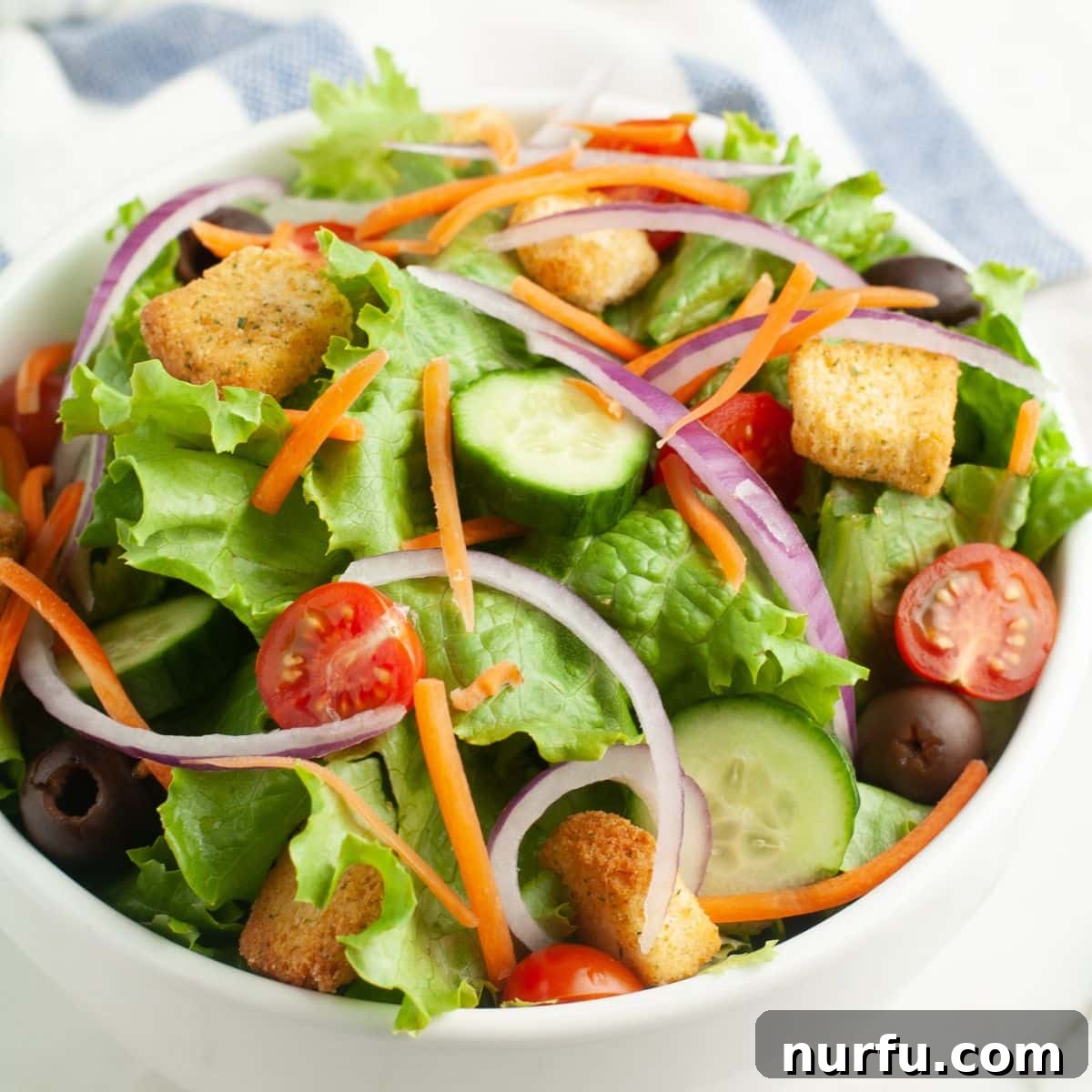
A classic house salad is a culinary staple, universally adored for its refreshing simplicity and vibrant flavors. More than just a side dish, it’s a delightful medley of crisp fresh vegetables, crunchy croutons, and a perfect dressing, adding a burst of color and a wholesome touch to any meal. This easy-to-make American house salad is incredibly versatile, making it an ideal accompaniment for a wide array of main courses or even a light, satisfying meal on its own.
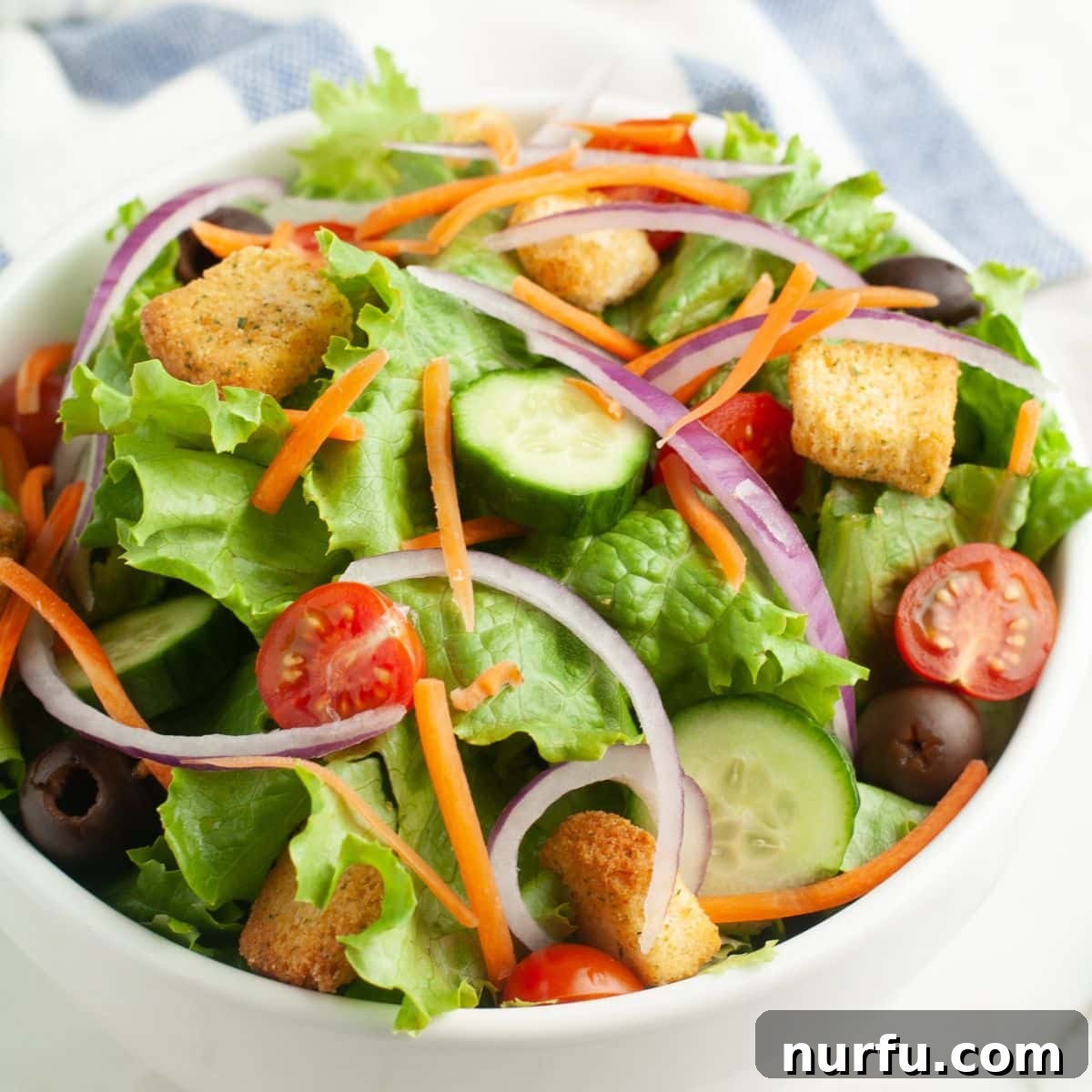
While often gracing the tables of your favorite restaurants, from bustling diners to high-end steakhouses, the beauty of a house salad truly shines when prepared at home. Creating your own homemade house salad is not only incredibly easy but also offers the unparalleled advantage of customization. You get to hand-pick every ingredient, ensuring peak freshness and tailoring it precisely to your family’s preferences and dietary needs. Say goodbye to the mundane and hello to a salad experience that’s uniquely yours!
Why a Classic House Salad Belongs in Your Recipe Repertoire
There are countless reasons to adore this timeless salad, establishing it as a go-to for busy weeknights, celebratory dinners, and everything in between. Its fundamental appeal lies in its:
- Effortless Freshness: At its core, this is a simple salad recipe that celebrates fresh vegetables and crisp lettuce. It’s a fantastic way to incorporate more greens and raw produce into your diet, offering a vibrant and healthy addition that pairs beautifully with almost any main course. The freshness invigorates your palate and complements richer dishes.
- Remarkable Speed: Life gets busy, but healthy eating doesn’t have to be complicated. A house salad can be assembled in mere minutes, especially if you opt for pre-chopped vegetables or prepare your ingredients in advance. This makes it an ideal last-minute side dish when you need something nutritious and delicious without the fuss.
- Unmatched Versatility: Consider this recipe your canvas for culinary creativity. It serves as a wonderful base salad, allowing you to experiment with an endless array of toppings, proteins, and dressings. Whether you’re craving something light and refreshing or a hearty, satisfying meal, the house salad adapts to your desires.
- Cost-Effectiveness: Eating healthy doesn’t have to break the bank. A homemade house salad often utilizes common, affordable vegetables, making it a budget-friendly option compared to restaurant salads or more complex recipes.
- Customizable for All Tastes: From picky eaters to gourmet enthusiasts, everyone can find something to love in a house salad. You control the ingredients, catering to allergies, preferences, and even specific dietary plans like vegetarian, vegan, or gluten-free.
Table of Contents
- Why a Classic House Salad Belongs in Your Recipe Repertoire
- The Anatomy of a Perfect House Salad: Essential Ingredients
- Crafting Your Own House Salad: A Simple Guide
- Elevate Your House Salad: Creative Variations
- The Art of Dressing: Choosing Your Perfect Companion
- Serving Your House Salad: From Side Dish to Main Event
- Expert Tips for a Flawless House Salad
- Storing Your Salad for Maximum Freshness
- Common Questions About House Salads
- Explore More Delicious Salad Recipes
- Classic House Salad Recipe
The Anatomy of a Perfect House Salad: Essential Ingredients
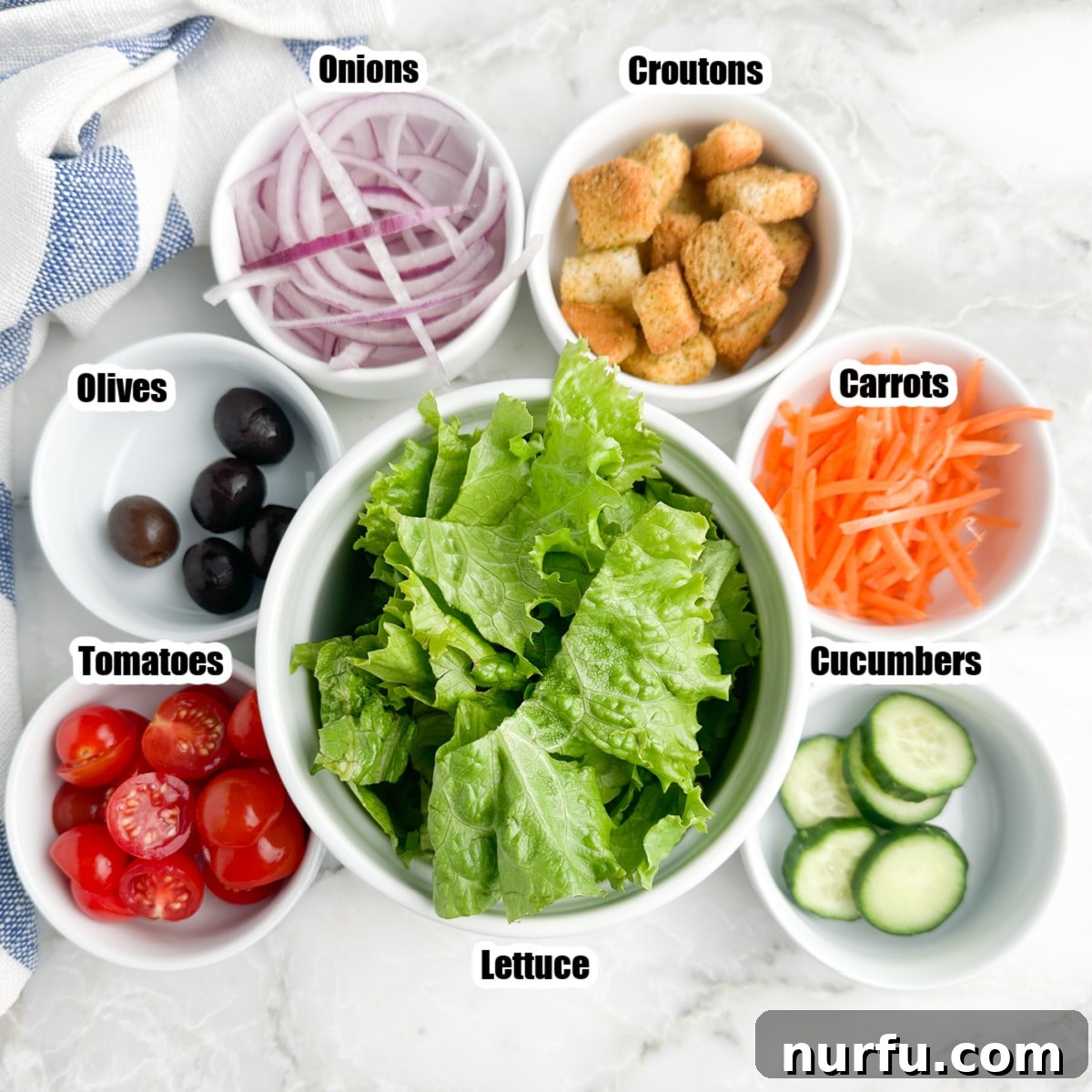
The beauty of a house salad lies in its straightforward yet harmonious combination of ingredients. This foundational recipe offers a fantastic starting point for a truly classic house salad, made with just a few simple components that are incredibly easy to customize and adapt to your liking.
- Lettuce: The Crisp Foundation – The heart of any great salad. For a classic house salad, Romaine lettuce and green leaf lettuce are stellar choices, offering a delightful crunch and mild flavor. If you prefer a firmer texture, iceberg lettuce works well, or for a softer, more diverse mix, consider a spring mix. Always aim for fresh, vibrant green leaves.
- Cucumbers: Cool and Refreshing – These add a wonderful cooling element and a satisfying bite. I often reach for English cucumbers or mini cucumbers because they are typically seedless or have very small, edible seeds, eliminating the need for arduous deseeding. Regular slicing cucumbers are also excellent, just be sure to peel them if the skin is thick or waxed.
- Tomatoes: Juicy Bursts of Flavor – Cherry tomatoes and grape tomatoes are ideal for salads. Their firm texture holds up beautifully when tossed, and their bite-sized nature means less mess. If you opt for larger, diced tomatoes, a crucial tip is to gently remove some of the seeds and excess liquid. This prevents your salad from becoming watery and keeps the other ingredients crisp.
- Onions: A Touch of Zesty Pungency – Red onion is a classic choice for house salads, providing not only a beautiful pop of color but also a sharp, zesty flavor that cuts through the other ingredients. For a milder flavor, you can soak sliced red onions in ice water for 10-15 minutes before adding them, or use thinly sliced green onions for a delicate touch.
- Carrots: Sweetness and Crunch – Shredded carrots contribute a subtle sweetness, a lovely texture, and a boost of vibrant orange color and nutrients. You can shred them yourself for ultimate freshness or use pre-shredded carrots for convenience.
- Black Olives: Savory and Salty Bites – Olives are an optional yet highly recommended ingredient, frequently found in many restaurant house salads. Their briny, savory flavor adds depth and a Mediterranean twist. Sliced black olives are most common, but feel free to experiment with Kalamata olives for a more robust flavor.
- Croutons: The Essential Crunch Factor – A house salad wouldn’t be complete without the satisfying crunch of croutons. They provide a textural contrast that elevates the entire dish. You can use store-bought varieties or easily make your own using day-old bread for an even fresher flavor.
- Optional Additions: Personalize Your Plate – This is where you truly make the salad your own. Consider adding shredded cheese (cheddar, mozzarella, Parmesan), crispy bacon bits, tangy pepperoncini peppers for a kick, or sunflower seeds for extra crunch and healthy fats.
- Dressing: The Unifying Flavor – The dressing brings all the elements together. The best part about making your own house salad is choosing your absolute favorite, whether it’s a creamy ranch, a zesty vinaigrette, or something entirely unique. We’ll dive deeper into dressing options later!
Crafting Your Own House Salad: A Simple Guide
Creating a delicious house salad at home is incredibly straightforward, requiring minimal effort for maximum flavor. Follow these simple steps to assemble a fresh and inviting salad:
- Prepare Your Ingredients with Care: Begin by thoroughly cleaning all your fresh produce under cold running water. For the lettuce, gently separate the leaves, rinse them well, and then dry them completely using a salad spinner or by patting them with paper towels. Properly dried lettuce is crucial for a crisp salad. Next, precisely chop your crispy lettuce, cucumbers, onions, tomatoes, and carrots into bite-sized pieces. Remember to slice the red onion thinly for a more delicate flavor distribution. If using larger tomatoes, remove any excess seeds and liquid.
- Thoughtful Assembly and Tossing: Once all your vegetables are prepped, place them into a large mixing bowl. The key here is to use a bowl spacious enough to allow for easy tossing without spilling. Gently toss the ingredients together. This ensures an even distribution of all the colorful components, making every forkful a delightful mix of flavors and textures. Add your croutons and any other optional toppings, like cheese or olives, at this stage.
- Serve with Your Chosen Dressing: The final touch is the dressing. While some prefer to dress the entire salad before serving, a common expert tip for preventing sogginess is to serve the dressing on the side. This allows each individual to add their preferred amount and keeps leftovers crisp. Offer a selection of your favorite homemade or bottled dressings for a personalized salad experience.
Elevate Your House Salad: Creative Variations
The inherent simplicity of the house salad makes it a fantastic canvas for culinary creativity. There are endless ways to customize this basic recipe, transforming it with different toppings, proteins, and dressings to suit any craving or occasion. Let’s explore a few great options to make this house salad truly your own:
Add a Protein Boost: Turn your side salad into a satisfying main course by incorporating a protein. Some excellent choices include:
- Grilled or Baked Chicken: Sliced chicken breast or thighs are a lean and flavorful addition.
- Shrimp: Grilled, sautéed, or chilled shrimp add a touch of elegance and fresh seafood flavor.
- Steak: Thinly sliced grilled steak offers a hearty and rich element.
- Shredded Pork: Leftover pulled pork can add a smoky, savory depth.
- Hard-boiled Eggs: A simple, classic, and protein-packed option.
- Roasted Chickpeas or Lentils: For a plant-based protein boost with added texture.
- Tofu or Tempeh: Marinated and grilled or pan-fried for a vegetarian/vegan option.
Embrace the Cheese: Cheese adds an irresistible creaminess and tang. Beyond the basics, consider:
- Shredded Cheddar, Mozzarella, and Colby Jack: Popular and delicious choices that melt beautifully if the salad is slightly warm.
- Grated Parmesan: A sharp, salty punch.
- Crumbled Blue Cheese: For a pungent, distinct flavor that pairs well with fruit or nuts.
- Crumbled Feta Cheese: Salty and tangy, great with Mediterranean-inspired additions.
- Crumbled Goat Cheese: Creamy and tart, often paired with berries or candied nuts.
Explore Other Toppings for Texture and Flavor: Don’t limit yourself to the traditional. These additions can completely change the character of your salad:
- Nuts and Seeds: Sunflower seeds, pumpkin seeds, chopped pecans, walnuts, or almonds add a fantastic crunch and healthy fats.
- Fresh Vegetables: Diced bell peppers (various colors), thinly sliced radishes for a peppery bite, shredded cabbage for extra crunch, or even steamed broccoli florets.
- Fruits: Sliced avocado for creaminess, thinly sliced apples or pears for a touch of sweetness, or even berries like strawberries or blueberries for a surprising twist.
- Legumes: Chickpeas, black beans, or cannellini beans add substance and fiber.
- Pickled Elements: Pepperoncinis, pickled red onions, or even capers can add a delightful tang.
- Fresh Herbs: Chopped fresh parsley, cilantro, dill, or basil can brighten the flavors.
By experimenting with these variations, your house salad can evolve with your mood, the season, or the meal it accompanies, ensuring it’s never boring.
The Art of Dressing: Choosing Your Perfect Companion
The dressing is the soul of any salad, unifying the ingredients and enhancing their individual flavors. While many restaurants pride themselves on their unique house salad dressing, the wonderful thing about cooking at home is the freedom to choose any dressing you desire – whether it’s a beloved homemade recipe or your favorite bottled option. The right dressing can transform your simple house salad into a gourmet experience. Here are a few timeless favorites and some ideas to inspire you:
- Creamy Ranch Dressing: A universally loved choice, ranch offers a rich, tangy, and herbaceous profile that appeals to nearly everyone. Its creamy texture coats every leaf and vegetable beautifully.
- Robust Blue Cheese Dressing: For those who appreciate a bolder flavor, blue cheese dressing provides a pungent, savory, and incredibly satisfying complement, especially when paired with ingredients like bacon or nuts.
- Spicy Buffalo Ranch: If you enjoy a kick, buffalo ranch combines the coolness of ranch with a fiery spice, adding an exciting dimension to your salad.
- Zesty Avocado Lime Ranch: A fresher, brighter take on ranch, incorporating the creaminess of avocado and the vibrant tang of lime for a truly refreshing flavor.
Beyond these popular choices, consider:
- Classic Vinaigrettes:
- Balsamic Vinaigrette: A sweet and tangy classic, often made with balsamic vinegar, olive oil, Dijon mustard, and a touch of honey or maple syrup.
- Red Wine Vinaigrette: A sharp, bright, and simple dressing, perfect for cutting through richer meals.
- Lemon Herb Vinaigrette: Light, fresh, and zesty, ideal for highlighting the natural flavors of the vegetables.
- Other Creamy Options:
- Thousand Island Dressing: Sweet, tangy, and rich, with a distinctive pink hue.
- Green Goddess Dressing: A flavorful and herbaceous dressing, often featuring mayonnaise, sour cream, and a blend of fresh herbs.
When selecting a dressing, consider the overall flavor profile you’re aiming for. A light vinaigrette is excellent for showcasing fresh vegetables, while a creamy dressing can add richness and make the salad feel more substantial. Don’t be afraid to experiment with homemade dressings; they often offer superior freshness and allow you to control the ingredients, such as sugar and sodium content.
Serving Your House Salad: From Side Dish to Main Event
The true beauty of this versatile salad lies in its adaptability. It can gracefully serve as a light, refreshing side dish that brightens any plate, or, with a few thoughtful additions, transform into a hearty and complete main meal. Let’s explore its potential:
As a Delightful Side Dish:
A house salad is the quintessential companion for countless main courses. Its crispness and fresh flavors provide a perfect counterpoint to richer, heavier dishes, balancing the meal and adding essential nutrients. Consider serving it alongside:
- Classic American Fare: Whether it’s juicy hamburgers, grilled chicken, savory pork chops, or sizzling hot dogs, a fresh salad offers a much-needed vegetable component.
- Italian Dinners: Pair it with comforting pasta dishes like a rich lasagna, creamy fettuccine alfredo, or a simple spaghetti marinara. The salad’s acidity helps to cleanse the palate.
- Pizza Night: A fresh house salad is the perfect light accompaniment to a cheesy, indulgent pizza, providing a refreshing contrast.
- Hearty Meat Dishes: Complements perfectly with roasted chicken, tender steak, baked fish, or meatloaf, adding a healthy and vibrant element to your plate.
- Sandwiches and Wraps: Elevate a simple lunch by serving a small house salad alongside a classic sandwich or a flavorful wrap, making it a more complete and satisfying meal.
- Soups and Stews: A crisp salad provides a refreshing textural contrast to warm, comforting bowls of soup or hearty stews.
Transforming it into a Main Meal:
With strategic additions, your house salad can easily become the star of your plate, offering a fulfilling and nutritious meal. The key is to add substantial protein and a variety of textures and flavors. Make this salad a main meal by topping it with:
- Grilled or Pan-Seared Proteins: Generous slices of chicken breast, succulent steak, or pan-seared shrimp.
- Plant-Based Power: Roasted chickpeas, black beans, lentils, or grilled tofu for a vegetarian or vegan option.
- Healthy Fats: Sliced avocado, a handful of mixed nuts (pecans, walnuts, almonds), or various seeds (sunflower, pumpkin) for satiety and extra nutrients.
- Grains for Substance: A scoop of quinoa, farro, or couscous can add another layer of texture and make the salad more filling.
- Cheeses: Crumbled feta, goat cheese, or a generous sprinkle of shredded cheddar can add richness and flavor.
Whether you’re looking for a simple side to round out a family dinner or a light yet satisfying lunch, the house salad is your adaptable culinary companion.
Expert Tips for a Flawless House Salad
Achieving a restaurant-quality house salad at home is entirely within reach with a few simple techniques. These tips will help ensure your salad is always fresh, crisp, and bursting with flavor:
- Precision in Preparation: The way you cut your vegetables significantly impacts the eating experience. Slice onions into very thin pieces to distribute their flavor evenly without overpowering other ingredients. Cut other vegetables, such as cucumbers, tomatoes, and carrots, into smaller, bite-sized pieces. This ensures that every forkful offers a balanced mix of ingredients and textures.
- The Golden Rule of Lettuce: Clean and Dry: This cannot be stressed enough – thoroughly cleaning and drying your lettuce is paramount for a crisp salad that lasts longer. Residual water on lettuce leaves can dilute your dressing and lead to soggy greens. I highly recommend using a salad spinner; it’s incredibly efficient at removing excess moisture. If you don’t have one, lay the washed leaves on paper towels and gently pat them dry. For ultimate convenience, you can also opt for pre-cleaned and pre-bagged lettuce from the grocery store.
- Master the Art of Advance Preparation: If you’re planning a meal or want to enjoy fresh salads throughout the week, intelligent meal prep is key. Chop all of your vegetables (cucumbers, tomatoes, carrots, onions), clean and dry your lettuce, and prepare your chosen dressing. Store each component in separate airtight containers in the refrigerator. When you’re ready to eat, simply assemble the salad and add the dressing just before serving. This method keeps everything fresh and crisp and significantly reduces meal-time stress.
- Dress Just Before Serving: To prevent your salad from becoming soggy, always add the dressing right before you plan to eat or serve it. If you’re packing a salad for lunch, store the dressing in a small separate container and add it at the last minute.
- Choose Fresh, High-Quality Ingredients: The flavor of your salad is only as good as its ingredients. Opt for seasonal vegetables when possible, and always pick produce that looks vibrant, firm, and free from blemishes.
- Temperature Matters: A cold salad is a refreshing salad. Ensure all your vegetables are well-chilled before assembly.
Storing Your Salad for Maximum Freshness
Proper storage is crucial to maintaining the crispness and flavor of your house salad, especially if you’ve prepped it in advance or have leftovers. The key distinction lies in whether the salad has been dressed or not:
Storing Undressed Salad:
It’s always best practice to store the salad without dressing. This prevents the vegetables from wilting prematurely and becoming soggy. To store an undressed salad:
- Separate Components: Keep the greens (cleaned and thoroughly dried) separate from other vegetables and toppings. You can place a paper towel at the bottom of an airtight container before adding the lettuce to absorb any residual moisture.
- Airtight Container: Place all the prepared, undressed vegetables in a large airtight container. This minimizes exposure to air, which can cause wilting and spoilage.
- Refrigeration: Store the container in the coldest part of your refrigerator.
- Shelf Life: An undressed house salad, properly stored, can typically last for 2-3 days, sometimes even up to 4 days, depending on the freshness of the initial ingredients.
Storing Dressed Salad (Not Recommended for Long-Term):
Once dressing is added, the salad’s shelf life significantly decreases, as the acid and oil in the dressing begin to break down the vegetables. If you have dressed leftovers:
- Immediate Consumption: Aim to eat dressed salad within a few hours. It will start to become soggy quite quickly.
- Short-Term Storage: If you absolutely must store it, place it in an airtight container and consume it within 12-24 hours. The texture will likely be compromised, but it will still be edible.
By keeping your dressing separate until serving, you ensure a crisp and delightful salad experience every time.
Common Questions About House Salads
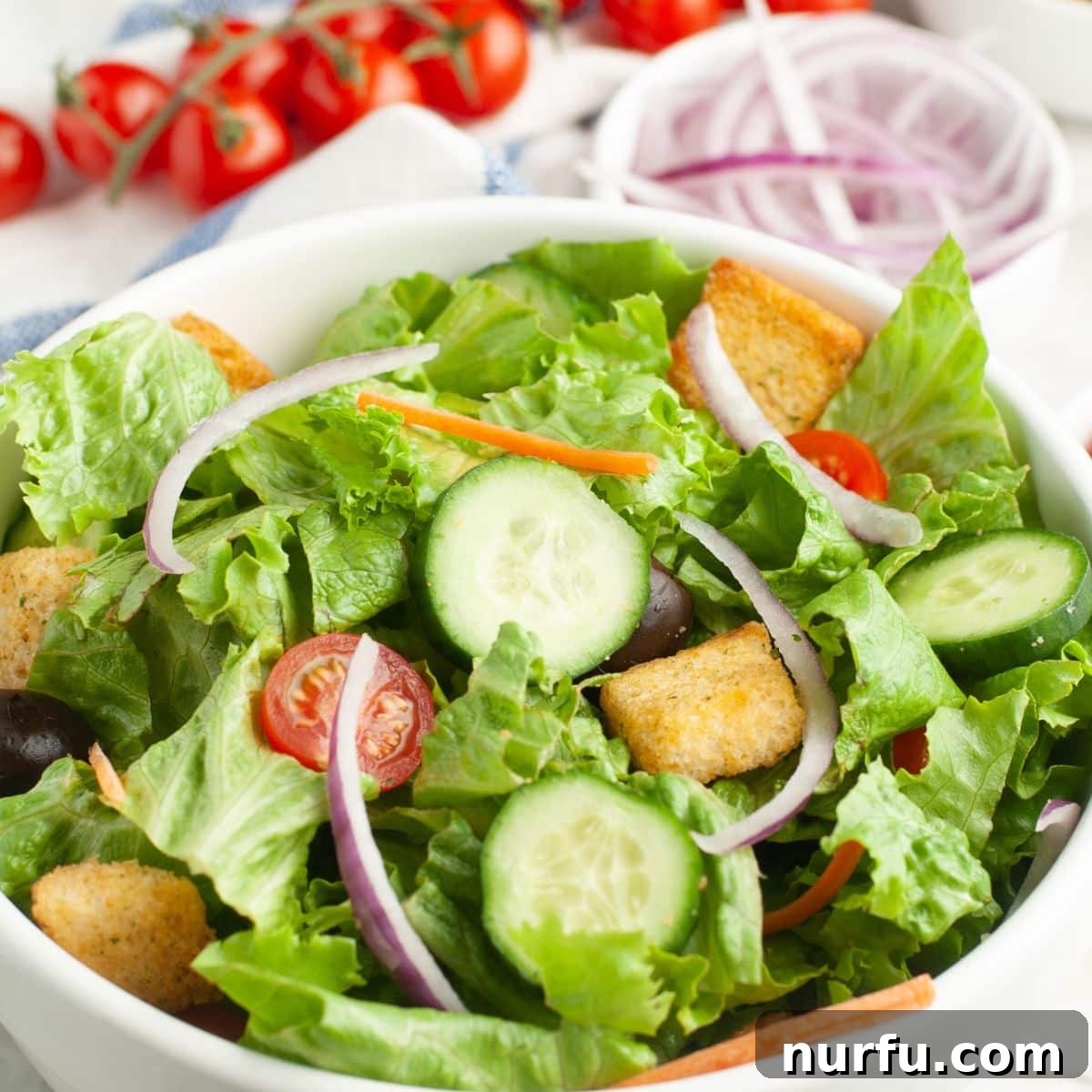
The term “house salad” typically refers to a simple, signature salad that a particular restaurant or “the house” consistently offers on its menu, often as a starter or a side dish. It’s usually a basic green salad with a few standard vegetable toppings and a generic vinaigrette or creamy dressing, representing the establishment’s go-to salad option.
While often used interchangeably and quite similar, there can be subtle differences. A “garden salad” typically implies a broader assortment of fresh vegetables, focusing purely on the produce. A “house salad,” on the other hand, often includes a more standardized set of ingredients, which usually features croutons and, occasionally, cheese and/or bacon bits, alongside the basic vegetables. The house salad is usually the restaurant’s basic offering, while a garden salad might sometimes suggest a wider, more varied selection of raw vegetables.
Absolutely! When prepared with fresh, whole ingredients and a sensible dressing, a house salad is an excellent healthy choice. It’s packed with vitamins, minerals, and fiber from the various vegetables. To maximize its health benefits, choose a light vinaigrette over heavy, creamy dressings, and be mindful of high-calorie toppings like excessive cheese or fried croutons.
Yes, pre-bagged salad mixes are a convenient option for a quick house salad. While they might sometimes lack the crispness of freshly washed and chopped whole lettuce, they save a lot of prep time. Just be sure to check the expiration date and give the greens an extra rinse if desired, especially if they appear a bit limp, and dry them thoroughly.
Explore More Delicious Salad Recipes
If you’ve enjoyed the simplicity and versatility of the classic house salad, you might be interested in exploring other delightful salad creations that bring fresh flavors to your table:
- Comforting Pea Salad: A creamy and satisfying side dish made with tender-crisp peas, rich cheese, and savory bacon. It’s a potluck favorite!
- Vibrant Corn Salad: A colorful, fresh, and slightly sweet salad that makes an excellent side dish, particularly wonderful during warmer months.
- Savory Salmon Salad: A creamy and delicious salad perfect for serving on a bed of greens, nestled in a sandwich, or as a flavorful dip.

Classic House Salad Recipe
Rate Recipe
Print Recipe
Ingredients
- 4 cups crisp lettuce, chopped
- 1/4 cup red onion, thinly sliced
- 1/2 cup English cucumbers, chopped
- 1 cup cherry tomatoes, cut in half
- 1/3 cup shredded carrots
- 1 cup croutons
- 1/3 cup black olives, sliced
- 1/4 cup salad dressing of choice
Instructions
-
Thoroughly clean and dry all vegetables. Chop the crisp lettuce, cucumbers, thinly slice the onions, halve the tomatoes, and shred the carrots into bite-sized pieces. Add any additional preferred toppings.
-
Combine all the prepared ingredients in a large bowl. Gently toss to ensure an even distribution of all components throughout the salad.
-
Serve the fresh house salad immediately with your favorite dressing on the side for optimal crispness and personalized enjoyment.
Notes
- Slice onions into thin pieces and cut the other vegetables into smaller, bite-sized pieces for the best texture.
- Make sure to thoroughly clean and dry lettuce, ideally using a salad spinner, so that it will last longer and prevent sogginess.
- To make this salad ahead of time, chop all vegetables, clean and dry the lettuce, and prepare the dressing. Store each component in separate airtight containers in the refrigerator, then assemble just before serving.
Nutrition
Carbohydrates: 12g |
Protein: 2g |
Fat: 2g |
Saturated Fat: 0.4g |
Polyunsaturated Fat: 0.3g |
Monounsaturated Fat: 2g |
Sodium: 247mg |
Potassium: 245mg |
Fiber: 2g |
Sugar: 3g |
Vitamin A: 2370IU |
Vitamin C: 12mg |
Calcium: 34mg |
Iron: 1mg
Nutrition information is automatically calculated, so should only be used as an approximation.