
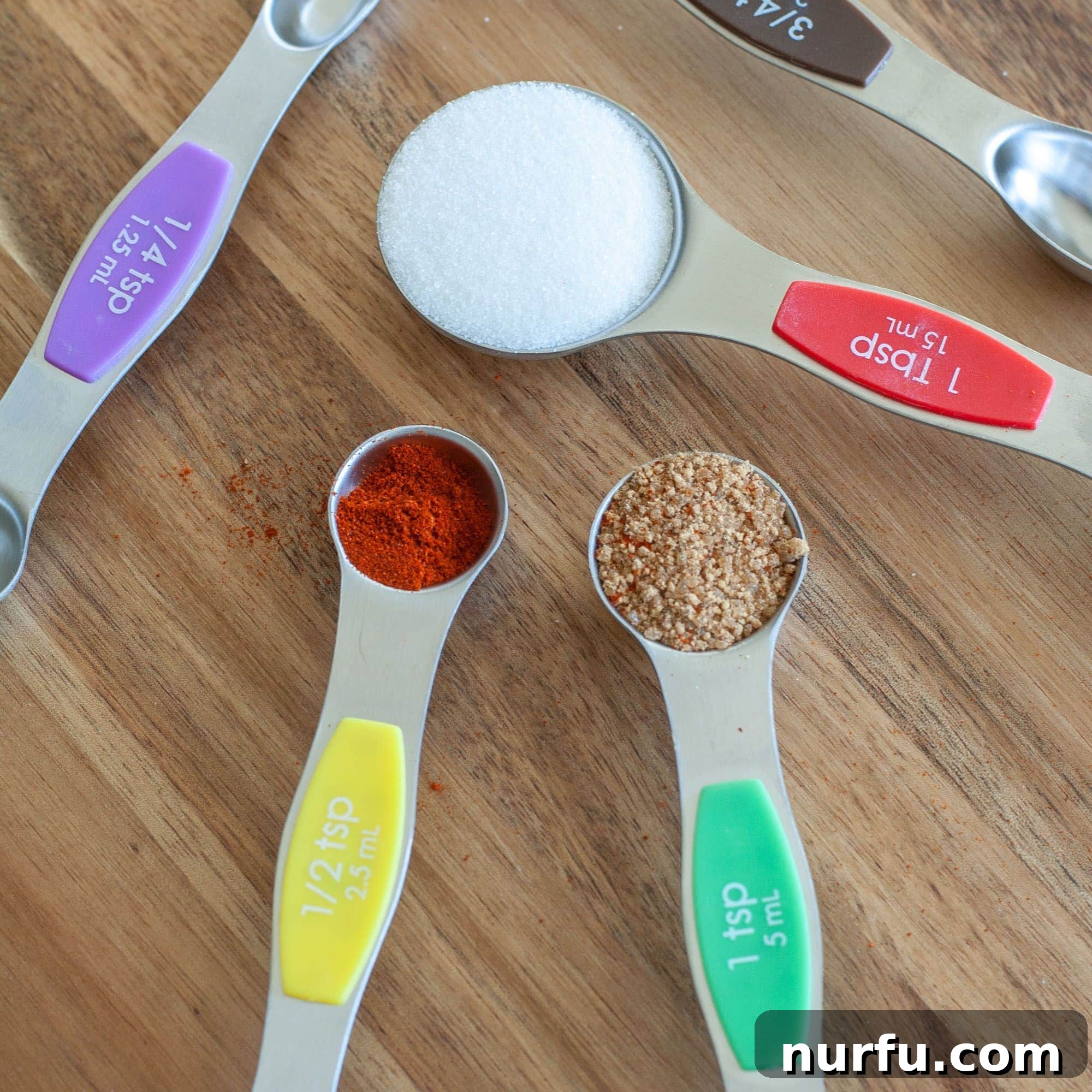
Are you in the middle of a recipe and suddenly find yourself asking, “How many teaspoons in a tablespoon?” This common question often arises when cooking or baking, highlighting the critical role of accurate measurements in achieving culinary success.
Understanding fundamental kitchen conversions isn’t just about following instructions; it’s about mastering the art of cooking, ensuring consistent results, and confidently adapting recipes. Whether you’re a seasoned chef or a beginner home cook, knowing these basic conversions by heart can save you time and prevent costly mistakes.
The Essential Kitchen Conversion: Teaspoons to Tablespoons
Let’s get straight to the answer that every home cook should commit to memory:
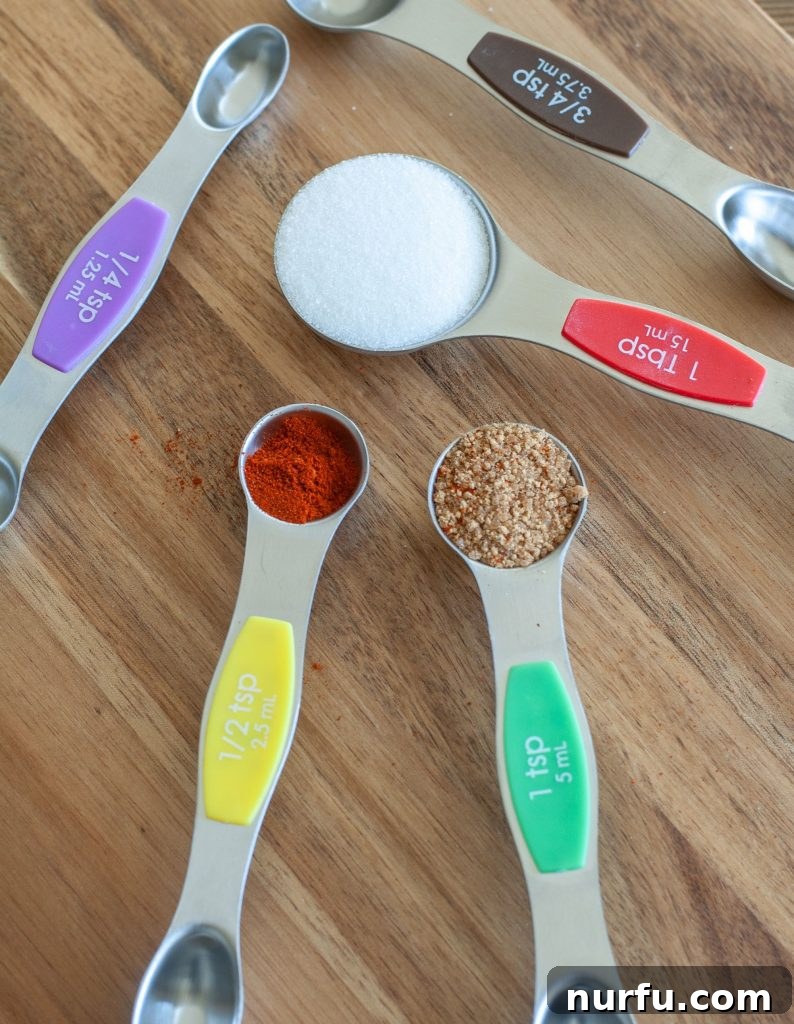
There are exactly 3 teaspoons (tsp) in 1 tablespoon (Tbsp).
This simple conversion is undeniably one of the most useful facts to know in any kitchen. It’s particularly invaluable when dealing with ingredients that demand precision, such as leavening agents like baking powder and baking soda, concentrated flavorings like extracts, and potent spices. Imagine you’re halving a recipe that calls for 1 tablespoon of vanilla extract; knowing this conversion instantly tells you to use 1 and a half teaspoons instead, without missing a beat.
Beyond preventing frantic searches for conversion charts, this knowledge empowers you to confidently scale recipes up or down. Whether you’re preparing a large family meal or a small serving for one, the ability to effortlessly adjust measurements ensures your dish turns out perfectly balanced every time. I’ve personally lost count of how many times I’ve wanted to double a beloved spice blend or halve a sauce recipe, only to find myself scrambling for my phone or a calculator. Having this core conversion internalized drastically streamlines the cooking process, allowing for more spontaneous and enjoyable culinary experiences.
To further simplify your kitchen endeavors, a comprehensive conversion chart can be a game-changer. I highly recommend keeping a laminated copy readily accessible in your kitchen. It acts as a quick reference for this and many other common conversions, becoming an indispensable tool for efficient and accurate cooking.
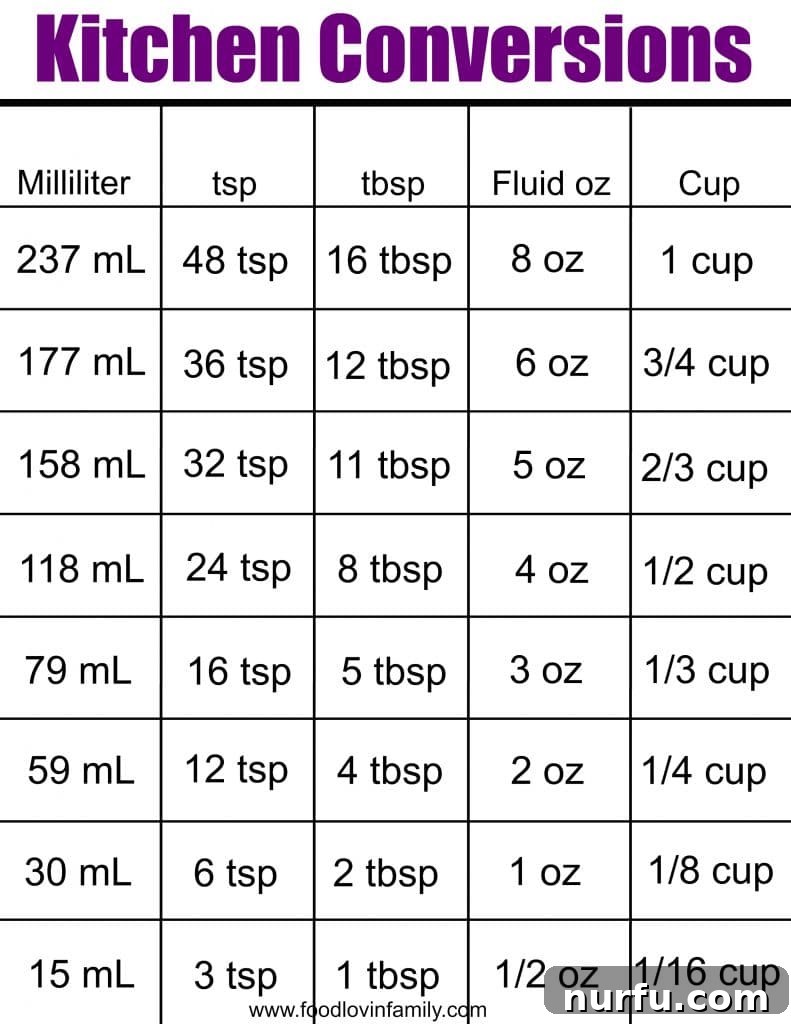
Download Your Printable Kitchen Conversion Chart Reference
Expand Your Kitchen Knowledge: More Common Conversions
Mastering the teaspoon-to-tablespoon conversion is just the beginning. The world of cooking and baking relies on various units of measurement, and understanding their relationships will elevate your culinary skills. Here’s an expanded look at other essential kitchen conversions that you’ll frequently encounter:
- Teaspoons and Tablespoons: 3 teaspoons = 1 tablespoon
- Tablespoons and Cups: 1/4 cup = 4 tablespoons
- Fluid Ounces and Tablespoons: 1 fluid ounce = 2 tablespoons
- Fluid Ounces and Cups: 1 cup = 8 fluid ounces
- Cups and Pints: 2 cups = 1 pint
- Pints and Quarts: 2 pints = 1 quart
- Quarts and Gallons: 4 quarts = 1 gallon
- Grams and Ounces: Approximately 28.35 grams = 1 ounce (weight)
- Milliliters and Liters: 1000 milliliters = 1 liter
These conversions are crucial for successful cooking, especially when following recipes from various sources or adapting them to different serving sizes. Familiarizing yourself with these relationships will build your confidence and accuracy in the kitchen.
Imperial vs. Metric: Understanding Measurement Systems
The culinary world uses two primary systems of measurement: the Imperial system and the Metric system. Knowing the distinctions between them is vital, particularly when navigating recipes from different parts of the globe.
The Imperial system, often referred to as the U.S. customary system in the United States, is predominantly used in the United States, Liberia, and Myanmar. It employs units like teaspoons, tablespoons, fluid ounces, cups, pints, quarts, and gallons for volume, and ounces and pounds for weight.
The Metric system, on the other hand, is the standard in most other countries worldwide. It’s a decimal-based system, meaning units are related by powers of ten, making conversions within the system straightforward. Common metric units in cooking include milliliters (mL) and liters (L) for volume, and grams (g) and kilograms (kg) for weight.
Key Differences to Note:
- One U.S. teaspoon is approximately 4.93 mL.
- A metric teaspoon is exactly 5 mL.
- One U.S. tablespoon is approximately 14.79 mL.
- A metric tablespoon is exactly 15 mL.
While these differences might seem subtle, they are usually negligible in most everyday cooking. For general recipes, using U.S. measuring tools for a recipe written in metric (and vice-versa) won’t typically cause a significant problem. However, for precise baking, where proportions are critical, these slight variances can sometimes influence the final texture and consistency. If you’re tackling a highly sensitive baking recipe, especially from an international source, it’s often best to invest in a set of metric measuring tools or a good digital scale that can switch between units.
The Curious Case of the Dessert Spoon
Beyond the standard teaspoon and tablespoon, some regions introduce additional units. Did you know there’s also something called a dessert spoon? This measurement, primarily used in Australia, New Zealand, and Canada, is equal to 10 mL. It falls neatly between a metric teaspoon (5 mL) and a metric tablespoon (15 mL), adding another layer to international recipe interpretation.
Measuring Wet vs. Dry Ingredients: Techniques and Considerations
While the fundamental conversions for cups, tablespoons, and teaspoons remain consistent for both wet and dry ingredients, the method of measurement often differs significantly to ensure accuracy.
Measuring Wet Ingredients:
Liquid ingredients such as water, milk, oils, and extracts should always be measured in a transparent liquid measuring cup. These cups typically have a spout for easy pouring and markings that allow you to read the measurement at eye level. To measure accurately:
- Place the liquid measuring cup on a flat, level surface.
- Pour the liquid into the cup until it reaches the desired marking.
- Bend down to eye level with the cup to ensure the bottom of the meniscus (the curve of the liquid’s surface) aligns with the measurement line. This technique prevents over or under-measuring due to parallax error.
Measuring Dry Ingredients:
Dry ingredients like flour, sugar, spices, and baking powder are best measured in dry measuring cups or spoons. These are designed to be filled to the brim and then leveled off for an accurate, consistent volume. To measure accurately:
- Spoon or scoop the dry ingredient into the measuring cup or spoon, ensuring it is overflowing. Do not pack ingredients like flour unless the recipe specifically calls for “packed flour.”
- Use a straight edge, such as the back of a knife or a flat spatula, to level off the excess ingredient across the top of the cup or spoon. This ensures a precise, level measurement.
A Note on Ounces: Fluid vs. Dry
It’s crucial to understand that “ounces” can refer to two different things in the kitchen: fluid ounces (a measure of volume) and ounces (a measure of weight). This is a common point of confusion for many home cooks:
- Fluid Ounces: Used for liquids, measuring volume. For example, 8 fluid ounces of water equals 1 cup.
- Ounces (Weight): Used for dry ingredients, measuring mass. For example, 8 ounces of flour by weight is significantly different in volume than 8 fluid ounces of water.
Never interchange fluid ounces with weight ounces unless a recipe explicitly specifies the density. For optimal accuracy with dry ingredients, especially in baking, a kitchen scale that measures by weight (grams or ounces) is often preferred over volume measurements.
Demystifying Abbreviations for Teaspoons and Tablespoons
When reading recipes, you’ll frequently encounter abbreviations for measurements. Knowing these common shorthand terms will help you navigate recipes with ease and prevent confusion between similar-sounding units.
- Teaspoon: Abbreviated as “tsp” (all lowercase).
- Tablespoon: Abbreviated as “Tbsp” or “T” (with a capital “T”).
The distinction in capitalization for tablespoons is a helpful visual cue to differentiate it from a teaspoon. While not always universally followed, the “T” for tablespoon and “t” for teaspoon is a common convention that minimizes errors. Other common abbreviations you might see include “c” for cup, “oz” for ounce, “lb” for pound, “pt” for pint, and “qt” for quart.
Investing in Quality: Best Measuring Spoons and Cups
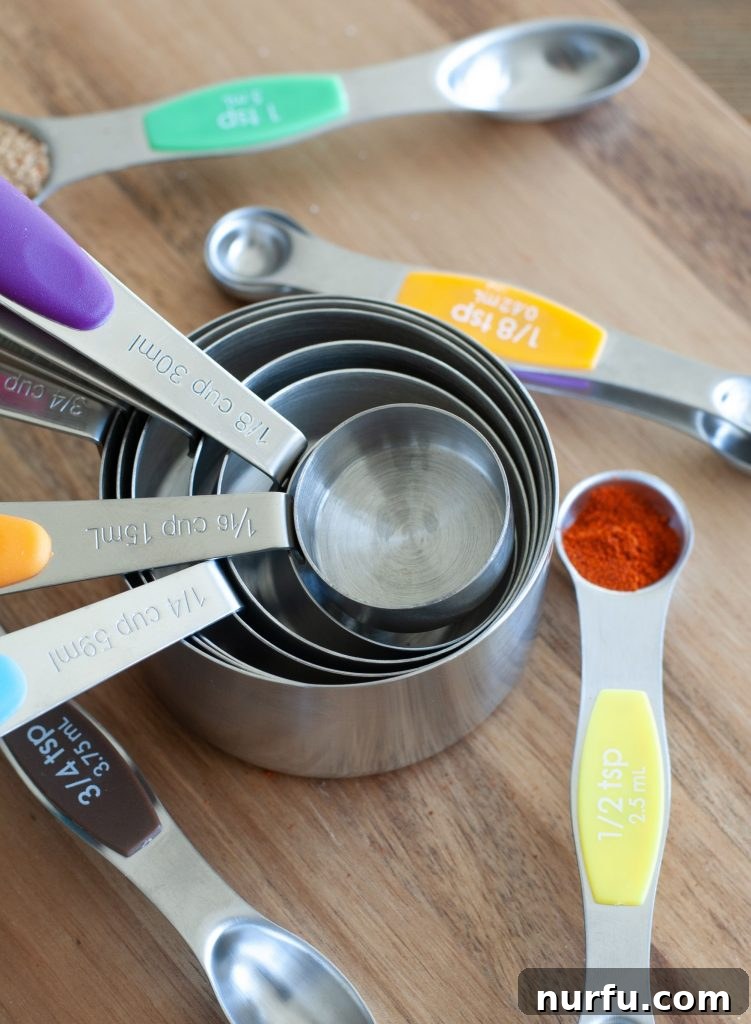
Having reliable and accurate measuring tools is as important as knowing the conversions themselves. Investing in a good set of measuring spoons and cups can significantly impact the consistency and quality of your cooking and baking.
After years of using the same mismatched set from college, I recently upgraded to a new collection, and the difference is remarkable. When choosing measuring tools, consider these features:
- Durability: Look for stainless steel or heavy-duty plastic that won’t bend, break, or fade over time.
- Accuracy: Ensure the measurements are clearly embossed or engraved, not just printed, as printed labels can wear off.
- Design:
- Magnetic or Nesting: Magnetic measuring spoons and cups are fantastic for organization, as they stick together and prevent individual pieces from getting lost in drawers. Nesting sets also save space.
- Narrow Spoons: For spices, consider spoons with elongated or narrow bowls that can fit into small spice jars without making a mess.
- Liquid Measuring Cups: Opt for clear glass or plastic cups with multiple measurement markings (ounces, cups, milliliters) and a comfortable handle.
- Easy to Clean: Dishwasher-safe materials are a big plus for convenience.
Beyond spoons and cups, consider adding a digital kitchen scale to your arsenal. A scale provides the ultimate precision for dry ingredients by measuring weight rather than volume, which is particularly beneficial for baking and converting international recipes.
Remember, accurate measurements are the foundation of great cooking. By understanding the relationships between different units, employing proper measuring techniques, and using quality tools, you’ll be well on your way to culinary mastery. Don’t forget to keep your printable Kitchen Conversions reference handy for those moments when you need a quick answer!
Download Your Kitchen Conversion Chart Reference Now!
Do you have more questions about measuring ingredients or other kitchen conversions? Feel free to share them in the comments below. Happy cooking!
Explore More Essential Kitchen Conversions
Ready to deepen your understanding of kitchen measurements? Check out these additional helpful guides:
- How many tablespoons in an ounce?
- How many ounces in a pound?
- How many ML in a shot?
- How many grams in a pound?
- How many ounces in a cup?
- How many cups in a quart?
- Oven temperature conversion