
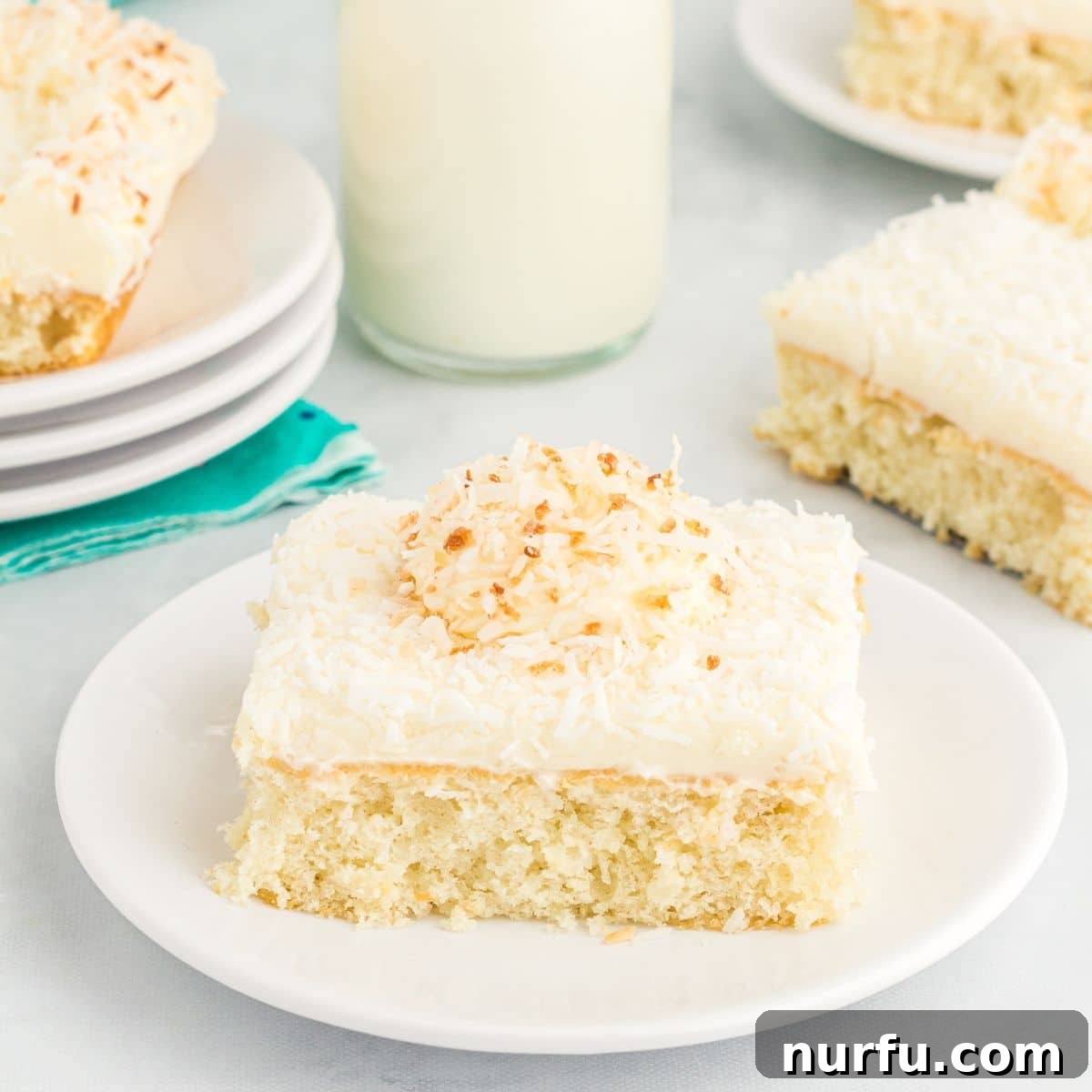
Indulge in the heavenly delight of this homemade Coconut Sheet Cake, a recipe meticulously crafted to bring joy to any occasion. Imagine a wonderfully moist coconut-infused cake, generously topped with a rich, tangy cream cheese frosting, and adorned with perfectly toasted coconut flakes. This exquisite dessert is truly the ultimate treat for every coconut enthusiast, promising a symphony of flavors and textures in every bite.
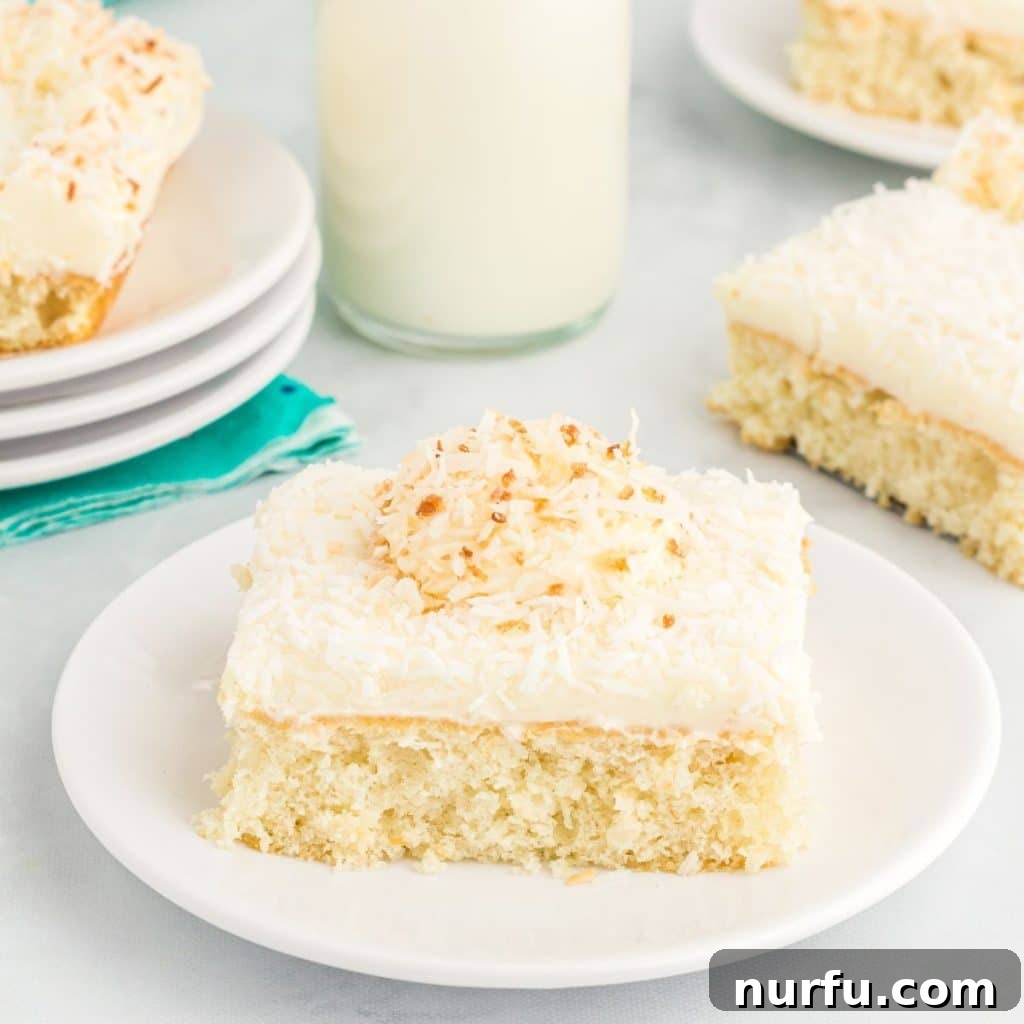
Sheet cakes are universally celebrated as an ideal dessert for parties, potlucks, and family gatherings due to their effortless preparation and ability to generously serve a large number of guests. Our exquisite coconut sheet cake stands out for several compelling reasons, making it a beloved choice for bakers and eaters alike:
- Irresistible Flavor: This cake bursts with authentic coconut flavor, thanks to a thoughtful combination of high-quality coconut extract and a generous amount of sweetened shredded coconut infused throughout the batter and frosting. Every mouthful is a tropical escape.
- Generous Portions: Designed to cater to a crowd, this recipe yields approximately 24 servings, making it perfect for celebrations, holidays, or simply ensuring everyone gets a delightful slice.
- Unmatched Moisture: What truly sets this cake apart is its incredible moisture. The secret lies in the blend of creamy coconut milk and rich sour cream, which work in harmony to create an unbelievably tender, melt-in-your-mouth texture that is simply irresistible.
Baking a homemade cake from scratch is a rewarding experience, and this coconut sheet cake recipe is designed to be straightforward yet yield spectacular results. Whether you’re a seasoned baker or new to the kitchen, you’ll find the process enjoyable and the outcome utterly delicious. It’s more than just a cake; it’s a celebration of flavor and the joy of sharing homemade goodness.
Essential Ingredients for Your Luscious Coconut Cake
The foundation of any exceptional cake lies in the quality and preparation of its ingredients. To ensure your coconut sheet cake achieves perfect consistency and flavor, paying close attention to a few details is key. Always make sure your butter is softened to the ideal texture, and that eggs, sour cream, and coconut milk have all reached room temperature. This crucial step allows the ingredients to emulsify beautifully, blending seamlessly into a smooth, homogenous batter that bakes evenly and results in the best possible cake texture.
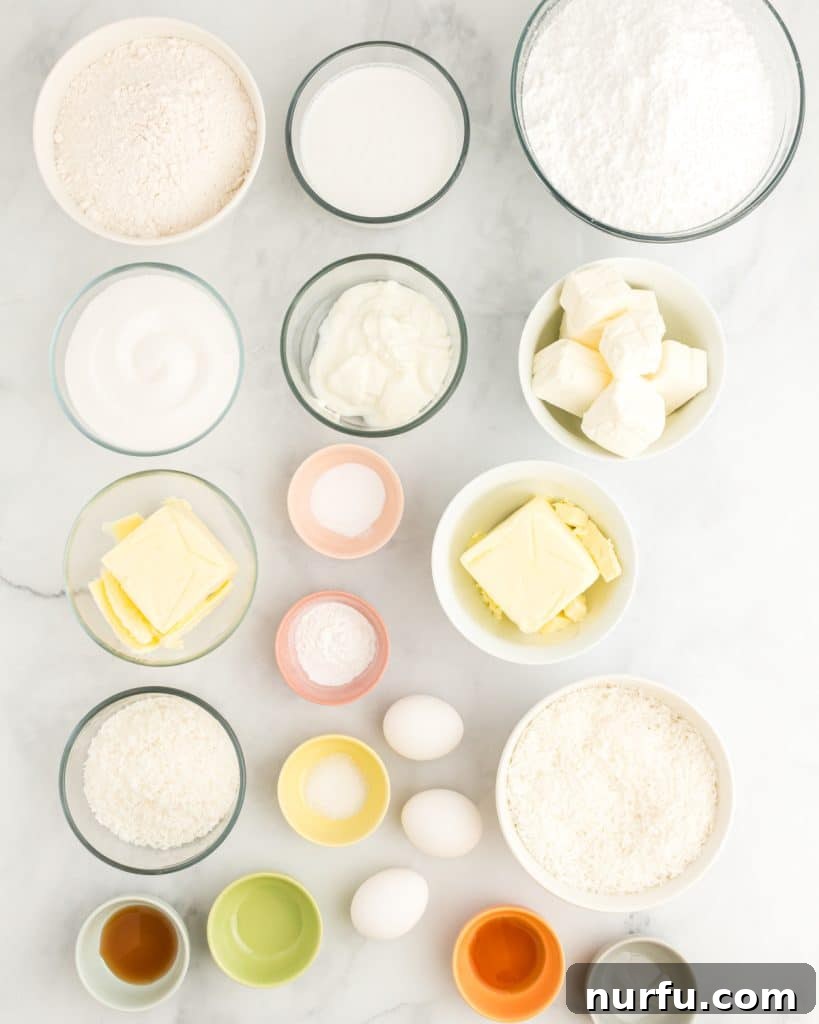
- For the Cake: You will need all-purpose flour for structure, baking powder and baking soda for optimal lift and tenderness, a pinch of salt to balance the sweetness, granulated sugar for sweetness, eggs for richness and binding, unsalted butter for flavor and moisture, vanilla extract and coconut extract to amplify the aromatic profile, creamy coconut milk and sour cream for unparalleled moisture, and finally, sweetened shredded coconut for that delightful texture and intense coconut flavor.
- For the Coconut Cream Cheese Frosting: To create the luxurious frosting, gather cream cheese for its tangy richness, powdered sugar for smooth sweetness, vanilla extract and coconut extract to complement the cake’s flavor, unsalted butter for creamy consistency, and more shredded sweetened coconut for sprinkling and added texture. Each ingredient plays a vital role in creating a balanced, flavorful, and unforgettable cake experience.
Crafting Your Masterpiece: A Step-by-Step Guide to Coconut Sheet Cake
Creating this irresistible coconut sheet cake is a straightforward and rewarding process. Follow these detailed steps to ensure a perfect, moist, and flavorful cake every time.
Step One: Prepare Your Baking Environment. Begin by preheating your oven to 350 degrees Fahrenheit (175 degrees Celsius). This ensures the oven is at the correct temperature when your batter is ready. Next, prepare an 18 x 13-inch sheet pan. Line it carefully with parchment paper, ensuring it extends slightly over the edges to create “handles” that will make it easier to lift the cooled cake later. Lightly spray the parchment paper with non-stick cooking spray to prevent any sticking. Set this prepared pan aside.
Step Two: Combine Dry and Wet Ingredients. In a medium-sized bowl, whisk together your dry ingredients: all-purpose flour, baking powder, baking soda, and salt. Make sure these are thoroughly combined to ensure leavening agents are evenly distributed. In a separate, large mixing bowl, begin by beating together the granulated sugar and softened unsalted butter on medium speed for approximately 2 minutes, or until the mixture becomes light, fluffy, and pale in color. Use a rubber spatula to scrape down the sides of the bowl periodically to ensure all ingredients are incorporated. Then, add the eggs one at a time, beating well after each addition. Incorporate the vanilla extract and coconut extract, continuing to beat until the mixture is light and well-aerated, about another minute. Finally, on low speed, mix in the coconut milk and sour cream just until combined, scraping the sides of the bowl as needed.
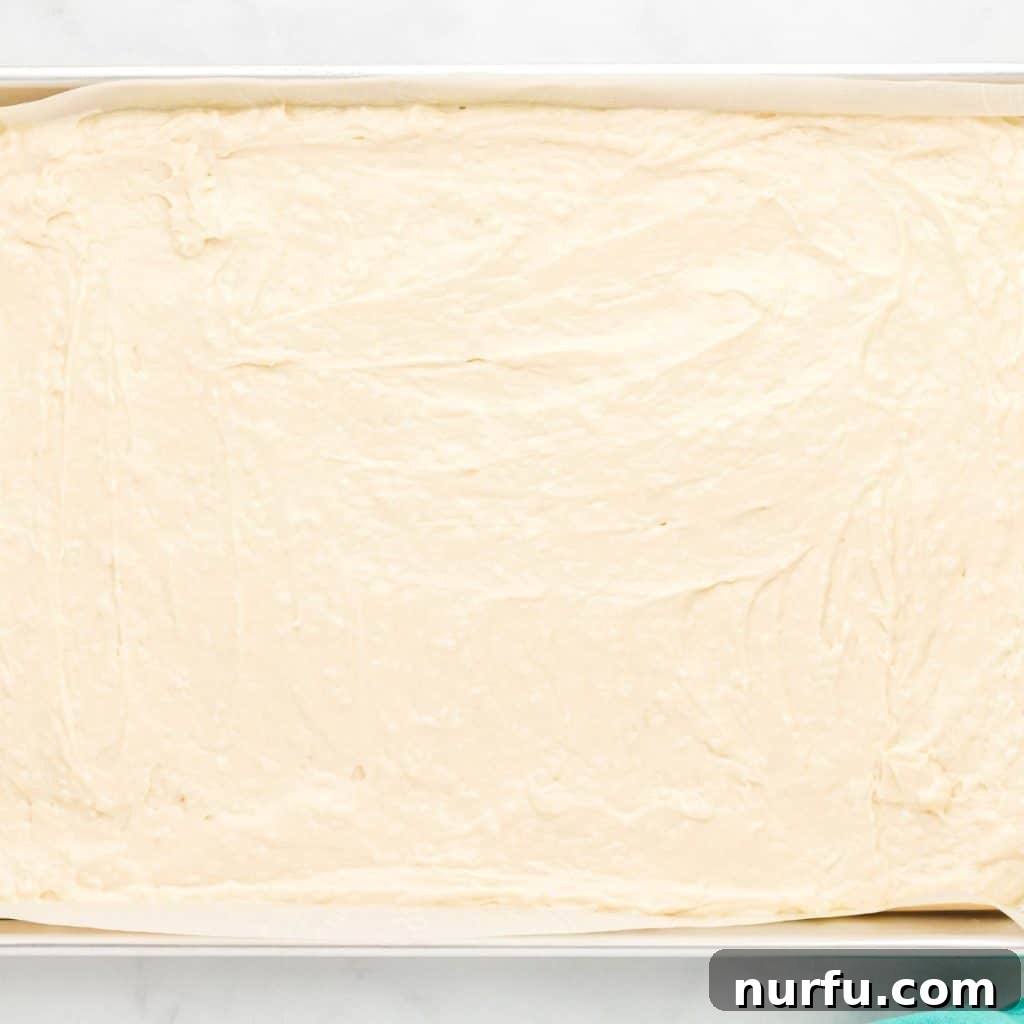
Step Three: Integrate Dry Ingredients and Coconut. With your mixer still on low speed, gradually add the dry flour mixture to the wet ingredients. Mix just until combined, being careful not to overmix, as this can lead to a dense, tough cake. Stop mixing as soon as no streaks of dry flour are visible. Gently fold in the shredded sweetened coconut using a spatula; stirring rather than beating helps maintain the cake’s tender crumb. Carefully pour the coconut cake batter into your prepared sheet cake pan, spreading it evenly with a spatula to ensure uniform thickness.
Step Four: Bake to Golden Perfection. Place the sheet pan into the preheated oven and bake for approximately 25 to 27 minutes, or until a wooden toothpick inserted into the center of the cake comes out clean. The cake should be lightly golden brown around the edges. Once baked, remove the cake from the oven and allow it to cool completely in the pan on a wire rack before attempting to frost it. A completely cooled cake is essential for the frosting to set properly.
Step Five: Prepare the Velvety Cream Cheese Frosting. While your cake is cooling, prepare the luscious cream cheese frosting. In a large mixing bowl, combine the softened cream cheese, softened unsalted butter, vanilla extract, and coconut extract. Beat these ingredients on high speed until the mixture is incredibly smooth and light, which usually takes about 1 minute. Gradually add the powdered sugar, one cup at a time, beating slowly until fully incorporated after each addition to avoid a cloud of sugar. Once all the powdered sugar is mixed in, increase the speed to high and beat for an additional 5 minutes until the frosting is exceptionally light, fluffy, and perfectly smooth. This extended beating time ensures a wonderfully airy consistency.
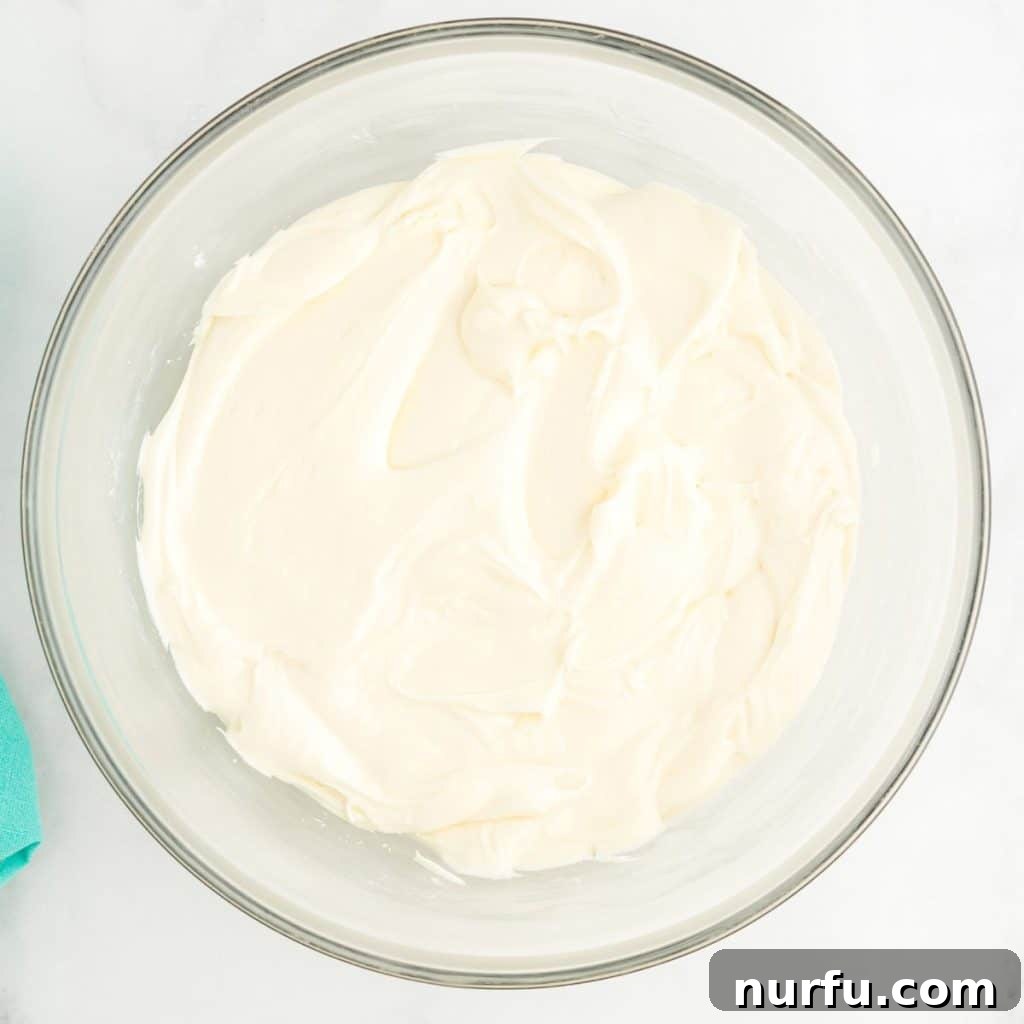
Step Six: Frost and Decorate Your Cake. Once the cake is completely cooled (this is critical to prevent the frosting from melting), gently spread an even layer of the prepared cream cheese frosting over the entire surface of the cake using an offset spatula. For a beautiful finish, sprinkle additional sweetened shredded coconut generously over the top of the frosted cake. For an extra touch of elegance and flavor, consider adding a perimeter of lightly toasted coconut flakes around the outside edge of the cake. This not only enhances the visual appeal but also adds a delightful nutty crunch. Refer to our tips below on how to perfectly toast coconut.
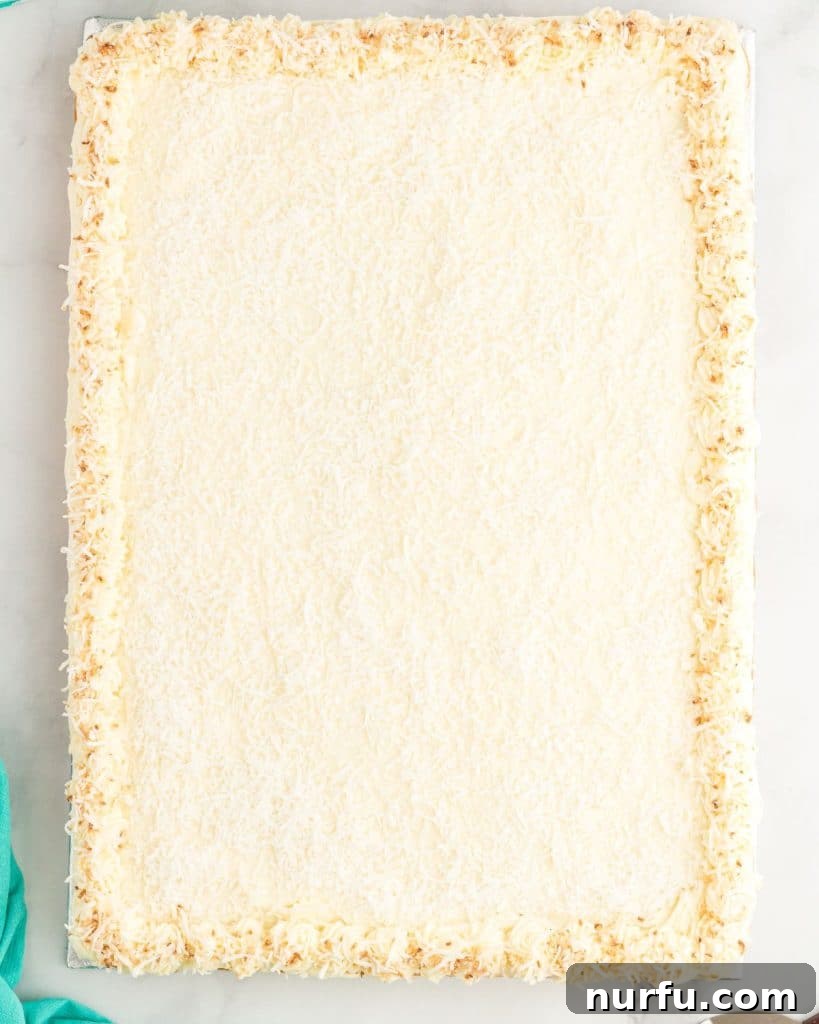
I often find that a delicate scattering of toasted coconut around the outer rim of the cake adds an extra layer of sophistication and depth of flavor. This simple embellishment truly elevates the presentation and taste. For instructions on how to achieve perfectly toasted coconut, please refer to the dedicated section below.
Expert Tips for Baking Success
Achieving a perfect homemade coconut sheet cake is simpler than you might think with these expert tips:
- It is incredibly important to measure out the flour accurately. Incorrect flour measurement is a common culprit for baking mishaps, leading to cakes that are either too dense and dry or too crumbly. For the most precise measurement, use a digital food scale to measure flour by weight (grams). If a scale isn’t available, employ the “spoon and scoop” method: gently spoon the flour from its container into your measuring cup until it’s overflowing, then level it off with a straight edge (like the back of a knife). Avoid scooping directly from the bag with your measuring cup, as this compacts the flour, resulting in up to 25% more flour than required, which will significantly alter your cake’s texture.
- Before opening your can of coconut milk, give it a very good shake. The cream and liquid in canned coconut milk often separate, with the thicker cream rising to the top. Shaking ensures a homogenous mixture, which is essential for consistent moisture and flavor in your cake batter.
- When selecting cream cheese for your frosting, always opt for the block style rather than the spreadable kind found in tubs. Block cream cheese has a firmer consistency and lower water content, which is crucial for achieving a thick, stable, and perfectly smooth cream cheese frosting. Spreadable cream cheese contains more water and stabilizers, which can result in a runny or greasy frosting.
- Patience is a virtue in baking, especially when it comes to frosting. Ensure your cake is completely and utterly cool before you even think about applying the frosting. If the cake is even slightly warm, the cream cheese frosting will melt, creating a messy and unappealing result. Plan ahead and allow ample cooling time, perhaps even placing the cake in the refrigerator for a short period to expedite the cooling process if you’re in a hurry.
- Don’t overmix the batter once the dry ingredients are added. Overmixing develops the gluten in the flour, leading to a tough, rubbery cake. Mix only until just combined, with no visible streaks of flour. A few small lumps are perfectly fine.
- For the best flavor, use good quality extracts. Pure vanilla extract offers a much richer flavor than imitation, and a good coconut extract is key to a vibrant coconut taste without being artificial.
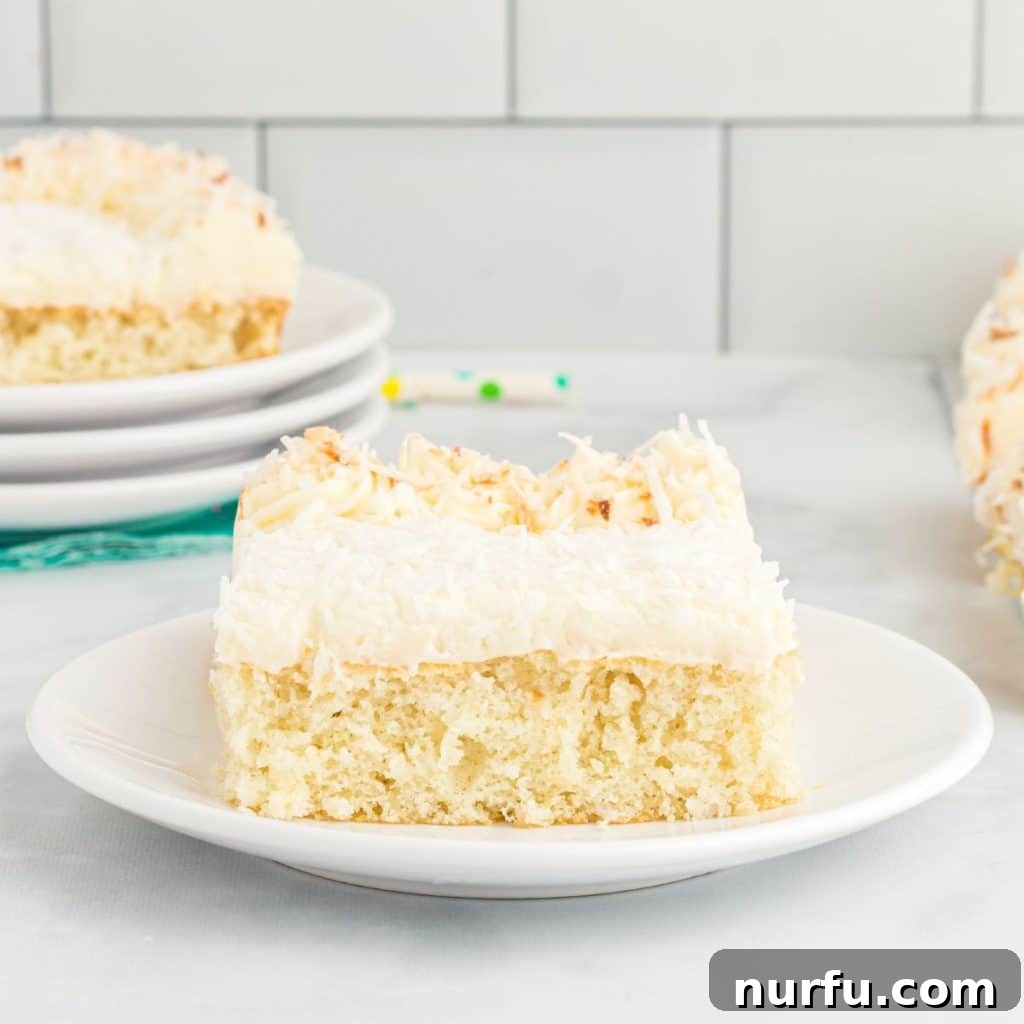
Storing Your Decadent Coconut Cake
Due to its luscious cream cheese frosting, this coconut sheet cake requires proper storage to maintain its freshness and flavor. It should always be stored in the refrigerator. To prevent the cake from drying out and to absorb any unwanted odors from the fridge, wrap it meticulously in food-safe plastic wrap or place it in an airtight container. When stored correctly, your delicious coconut cake will remain fresh and delightful for up to 4 days, allowing you to savor its wonderful taste over several days.
Effortless Cake Transfer: Moving Your Cake to a Board Without Damage
Transferring a delicate sheet cake from its baking pan to a decorative cake board can seem daunting, but with the right technique, it’s surprisingly simple and breakage-free. First and foremost, ensure the cake has cooled completely within its pan. Attempting to move a warm cake will almost certainly result in cracks or breakage. Once cooled, place a wire cooling rack directly on top of the cake, ensuring the rack is covered with a fresh sheet of parchment paper to prevent the cake from sticking to the rack. The parchment paper should be on the cake, and the wire rack on top of the parchment, facing your hands. With a firm but gentle grip, carefully invert the entire cake pan, wire rack, and parchment paper assembly so the cake is now upside down, resting on the parchment-lined wire rack.
Carefully lift the cake pan away from the inverted cake. The parchment paper you originally lined the pan with should now be on the top surface of your cake. Next, position your desired cake board (which will become the new bottom of your cake) squarely on top of the inverted cake. Using the same firm and gentle motion, flip the cake and board assembly back over once more. The cake will now be right side up, perfectly centered on its cake board, ready for frosting and decoration. This method minimizes direct handling of the cake, drastically reducing the risk of damage.
The Art of Toasting Coconut for Garnishing Your Cake
Toasting shredded coconut is a quick and easy way to enhance its flavor and add an appealing golden-brown crunch to your cake. The key to success is constant vigilance, as coconut can go from perfectly golden to burnt in a matter of seconds. To toast coconut, place the shredded coconut in a small, dry frying pan or skillet. Set your stovetop burner to the lowest possible heat setting. It’s crucial to stir the coconut constantly with a spatula or wooden spoon. This ensures even browning and prevents scorching. Continue stirring until the coconut flakes begin to turn a light, appealing golden-brown color. As soon as you notice this subtle change in color and smell a fragrant, nutty aroma, immediately remove the coconut from the hot frying pan. Transfer the toasted coconut onto a separate, cool plate to stop the cooking process. If left in the hot pan, even off the heat, residual heat can cause it to continue browning and quickly burn. Allow the toasted coconut to cool completely before sprinkling it over your frosted cake for a beautiful and delicious garnish.
To elevate this treat to an even more luxurious experience, try serving a slice of this magnificent coconut sheet cake with a scoop of creamy vanilla or refreshingly tropical coconut ice cream. The combination of warm cake and cold ice cream creates an unforgettable dessert pairing that is sure to impress.
If you find yourself enamored with the tropical allure of coconut and are craving more delightful treats, be sure to explore these amazing recipes: an incredible coconut cream pie that offers rich, custardy goodness, light and refreshing strawberry coconut bars perfect for a warm day, and our incredibly easy no-bake coconut balls for a quick and satisfying bite.
Explore More Irresistible Cake Recipes
If you love baking and delight in the joy of creating beautiful desserts, our collection of cake recipes offers a treasure trove of inspiration. Expand your baking repertoire with these fantastic options:
- 31 Amazing Bundt Cake Recipes: A diverse selection of elegantly shaped cakes for any occasion.
- 25 Delicious Ice Cream Cakes: Perfect for hot days, combining cake and a frozen treat.
- Delicate Apricot Nectar Cake: A wonderfully moist cake with a subtle fruity flavor.
- Classic Cherry Chip Cake: A nostalgic favorite filled with delightful cherry bits.
Coconut Sheet Cake
Pin Recipe
Rate Recipe
Print Recipe
Ingredients
- 2 1/2 cups all-purpose flour
- 2 teaspoons baking powder
- 1 teaspoon baking soda
- 1/2 teaspoon salt
- 3/4 cup unsalted butter softened
- 1 1/2 cups granulated sugar
- 3 eggs
- 1 teaspoon vanilla extract
- 1 teaspoon coconut extract
- 3/4 cup canned coconut milk
- 1/2 cup sour cream
- 3/4 cup sweetened shredded coconut
Frosting
- 12 ounces cream cheese softened
- 1 cup unsalted butter softened
- 1/2 teaspoon vanilla extract
- 1/2 teaspoon coconut extract
- 6 cups powdered sugar
- 1 1/2 cups sweetened shredded coconut
Instructions
-
Preheat oven to 350 degrees F (175 C).
-
Line one 18” x 13” sheet cake pan with parchment paper, allowing the paper to extend slightly higher than the sides for easier cake removal. Lightly spray the parchment paper with non-stick cooking spray and set aside.
-
In a medium bowl, whisk together the flour, baking powder, baking soda, and salt. Set aside.
-
In a separate large bowl, using a stand mixer or hand mixer on high speed, beat together the softened butter and granulated sugar until the mixture is light, fluffy, and well combined (about two minutes). Scrape down the sides of the bowl with a spatula as needed.
-
Add the eggs one at a time, beating well after each addition. Incorporate the vanilla extract and coconut extract, then beat on high until the mixture is fluffy and thoroughly combined (about 1 minute). Use a spatula to scrape down the sides of the bowl to ensure all ingredients are mixed evenly.
-
On low speed, beat the coconut milk and sour cream into the butter mixture just until combined (approximately 30 seconds). Scrape down the sides of the bowl to incorporate everything.
-
With the mixer on low speed, gradually add the dry ingredients to the cake batter. Beat just until combined; avoid overmixing. Use a spatula to scrape down the sides and bottom of the bowl, ensuring no streaks of white flour remain and there are no large lumps. Overmixing can cause the cake to become tough and prevent it from rising properly.
-
Gently stir (do not beat) the shredded coconut into the cake batter until evenly distributed.
-
Pour the batter into the prepared sheet cake pan and use a spatula to evenly distribute it across the pan.
-
Bake in the preheated oven for 26 to 27 minutes, or until a wooden toothpick inserted into the middle of the cake comes out clean. Remove the cake from the oven and allow it to cool completely on a wire rack before frosting.
Frosting
-
Frosting Directions: In a large bowl, beat the softened cream cheese, butter, vanilla extract, and coconut extract on high speed until the mixture is smooth and creamy (about 1 minute). Gradually beat in the confectioners’ sugar slowly until it is fully mixed in. Once all the sugar is incorporated, beat on high speed for about 5 minutes until the frosting is light, fluffy, and perfectly smooth.
-
Smooth an even layer of frosting over the completely cooled cake. Sprinkle generously with shredded coconut over the top of the frosting, or decorate as desired. For a special touch, I often sprinkle toasted coconut around the outside edge of the cake. Refer to the Notes section for tips on how to toast coconut.
-
Due to the cream cheese frosting, this cake must be stored in the refrigerator for up to 4 days. Wrap the cake thoroughly in food-safe plastic wrap or place it in a sealed, food-safe container to prevent it from drying out.
Notes
- It is important to measure out the flour accurately. Too much or too little flour will affect how the cake turns out. To accurately measure the flour, either use a food scale to measure out the grams exactly or use the spoon and scoop method. The spoon and scoop method means you put the measuring cup on the counter then use a spoon to scoop flour directly out of the bag and lightly sprinkle it into the cup. If you use the measuring cup to scoop directly from the bag, you’ll likely end up with 25% more flour than you actually need. This is because the flour gets packed down into the cup.
- Be sure to shake the can of coconut milk well before opening.
- Use the block style of cream cheese, not the spreadable kind (found in little tubs) that you use on bagels.
Nutrition
Nutrition information is automatically calculated, so should only be used as an approximation.